Claude Code v2.1.234 Major Updates - New /design skill that can design (research preview)

This page has been translated by machine translation. View original
This is Ishikawa from the Cloud Business Division. Claude Code v2.1.234 (released 2026-08-17) has been released. This is a release with many changes, and the substantial number of permission-related fixes stands out in particular. I'll also try out the new /design skill (research preview) that enables design work.
The previous update article is here.
Update Summary
v2.1.234 includes 51 changes. In this article's categorization, the breakdown is: 12 security, 15 fixes, 16 improvements, 4 new features, 2 breaking changes, and 2 performance improvements. Nearly a quarter of the total are permission- and trust-related changes, making this a release that focuses more on solidifying the foundation than adding features.
Additionally, a new /design skill (research preview) that enables design work has been introduced. I'll introduce how to actually use it.
Notable Updates
New Features
Sessions now automatically continue when the usage limit resets. When the claude.ai usage limit resets, sessions will now automatically continue. This can be turned off with "Continue automatically at usage limit" in /config. For those who have been having their work interrupted by hitting the usage limit, I feel this makes operations easier since you no longer need to worry about the timing of resumption.
A GitLab merge request badge has been added. It appears in the footer and status line. When the glab CLI is authenticated for a repository with a GitLab remote, MR !N is displayed with draft / pending / green status. For teams using GitLab, I feel it quietly makes a difference to be able to track merge request status without switching to a browser.
Bug Fixes
A crash via third-party gateways has been fixed. A problem was fixed where the app would crash upon receiving API responses containing thinking blocks missing the thinking field or text blocks missing the text field in the non-streaming fallback path. For those using Claude Code via third-party gateways, I expect this may reduce hard-to-diagnose crashes.
False rejections of sandbox execution in auto mode have been fixed. A problem was fixed where, after conversations were compacted in very long sessions, auto mode would repeatedly re-evaluate and reject network access for sandbox execution commands. I feel the difference will be most noticeable for those running long sessions in auto mode.
Security
NT namespace paths on Windows are now rejected. This covers remote file reading, session restoration, CLAUDE.md includes, workflow scripts, and file uploads. This closes pathways that allowed file access without user approval and hardens the system against NTLM credential leakage vectors. For those running Claude Code on Windows, I feel this update is worth prioritizing.
Secrets no longer appear in MCP diagnostic output. Scope conflict warnings are now displayed in the configured ${VAR} format, and connection failure details now show only the server's origin. For those passing MCP server credentials via environment variables, I feel the barrier to sharing diagnostic output with colleagues or in issues has been lowered.
Permission preview masking no longer obstructs approval decisions. Credential masking in relayed permission previews no longer hides commands, paths, and destinations from approvers. Large private key blocks continue to be fully masked as before. For operations where permission approvals are delegated to another person, I feel the necessary information for making approval decisions is finally all there.
Update Details
Items covered in "Notable Updates" are excluded.
New Features
- The
CLAUDE_CODE_PROJECT_DIR_NAMEenvironment variable (optional) has been added. - A
selection:clearkey binding action has been added, allowing a key to be assigned to clear text selections within the app. It also works in the agent view.
Security
- Restricted handling of account email addresses: An instruction to Claude was added to use them only for user identification and not to send them to unrelated services unless requested.
- Fixed session-scoped permission answers being discarded: When answering tool permission prompts from background sub-agents, session-scoped answers including denials were being discarded.
- Fixed marketplace allowlist host mismatch:
strictKnownMarketplaceswas accepting SCP-format git marketplace sources with hosts different from the ones git actually connects to. - Fixed permission settings being lost when switching to fullscreen renderer: Accepting the "Try the new fullscreen renderer?" confirmation was restarting the session without carrying over the permission mode, tool allow/deny rules, and model and effort flags.
- Fixed incorrect answers to permission re-confirmation prompts: When an IDE diff tab was closed during re-confirmation, the previous input could answer the new prompt.
- Additional permission-related fixes include: carrying over
--allowed-tools/--disallowed-toolswhen switching via/tui, warnings for repository-wide scope during trust confirmation, restricting relay destinations in permission previews, and fixing gaps in API token masking.
Performance
- The context cost of loading the built-in
claude-apiskill has been reduced from approximately 200k+ tokens to approximately 25k tokens by switching referenced documentation to on-demand loading. - Mantle: The startup admin-pin availability check is now skipped when a model is already selected in the main loop.
Improvements
/permissionscan now be opened during work: Rule changes also apply to the remainder of the current turn./add-dir <path>can now also be used during work, and in the fullscreen TUI, the/autocompact,/theme,/help,/config, and/advisordialogs can be opened mid-turn.- Your own prompts are also rendered in Markdown: In the transcript, your entered prompts are now displayed with syntax-highlighted code blocks, inline code, and lists, just like responses.
- Session titles are now shorter and more specific: Short names (e.g., "Login button bug") are now generated instead of paraphrased sentences (e.g., "Fix the login button on mobile").
- Esc no longer clears text selections: In fullscreen mode, interrupts and screen dismissals continue to work as before, while mouse selection ranges remain highlighted.
/goalno longer waits indefinitely: When/goalhas been waiting more than 30 minutes due to a background task, Claude will now check in on the task's status (can be disabled withCLAUDE_CODE_GOAL_CHECKIN_MINUTES=0).- Additional minor improvements include: syncing permission mode / effort in Remote Control, handling of session lists in
SendMessageandListAgents, more detailed API error messages, and automatic clearing of/goalon unrecoverable errors.
Fixes
- Fixed operations around
!shell commands: Issues were fixed where dialogs such as/permissionsopened during execution were closed upon command completion, and where queued commands edited with the up arrow key were sent to the model as plain text. - Fixed behavior of queued messages: Queued messages no longer reappear in prompt history, and Esc during selection no longer interrupts the turn.
- Fixed file sending in Remote Control: Files sent to users in sessions hosted by the desktop app or VS Code are now uploaded and can be opened on smartphones or the web.
- Fixed startup stalling on Windows: When
~/.claude.jsonwas read-only, repeated rename retries were causing startup to stall. - A subtly welcome fix: A problem where characters were missing when copying text inside modals, such as OAuth URLs in
/login, in fullscreen mode has been fixed. For those who have experienced needing to redo/loginafter failing to copy the URL, this is a subtle but effective fix. - Additional numerous minor bug fixes include: display of Markdown horizontal rules, rendering speed for messages containing special Unicode, destination resolution in
SendMessage, misreading of git remote hosts, and dropped messages between sessions.
Breaking Changes and Deprecations
The "Default teammate model" setting has been removed from /config. Agent team teammates now use the leader's model if none is specified at spawn time. claude setup-token now errors on unexpected additional arguments. Previously these were silently ignored.
Trying Out the New /design Skill (Research Preview)
The /design skill brings the Claude Design artboard workflow (the method of laying out multiple proposals side by side to choose from) to the CLI and Desktop, built on top of Artifacts. Running /design generates an editable artboard, and you can select one proposal, refine it, and have Claude implement it directly from there.
How to Use (Examples)
/design Spring new menu A4 flyer
/design Internal admin dashboard, mock is fine
/design SaaS landing page, match the existing UI
Simply write what you want to create in one line, and multiple proposals (artboards) appear laid out on a single pan/zoomable canvas. Once opened, you can click elements to edit them directly, and PNG/PDF export is also available.
What It's Good For
- Screen-related work - UI mockups, screen flows, wireframes
- Web - landing pages, banners, social media graphics
- Print - posters, flyers, tri-fold brochures (1 page = 1 artboard), memos and reports (single-page layout)
What Helps Improve Accuracy When Provided Upfront
- When running within a repository, nothing additional is needed. It reads existing design systems, components, and tokens, and adds new screens with colors, fonts, border radii, and spacing all matched.
- Otherwise: brand guides, reference images, screenshots of existing screens, intended use and size, and the target audience.
- If the visual direction hasn't been decided, I can provide 2–4 rough proposals for you to choose from.
Additional Notes
- For revisions, just say something like "make the header in B larger" in conversation, and the same link will be updated.
- This is an early preview of the Claude Design canvas editor running inside Claude Code, so it does not have all the same features as claude.ai/design.
Trying "/design Spring New Menu A4 Flyer"
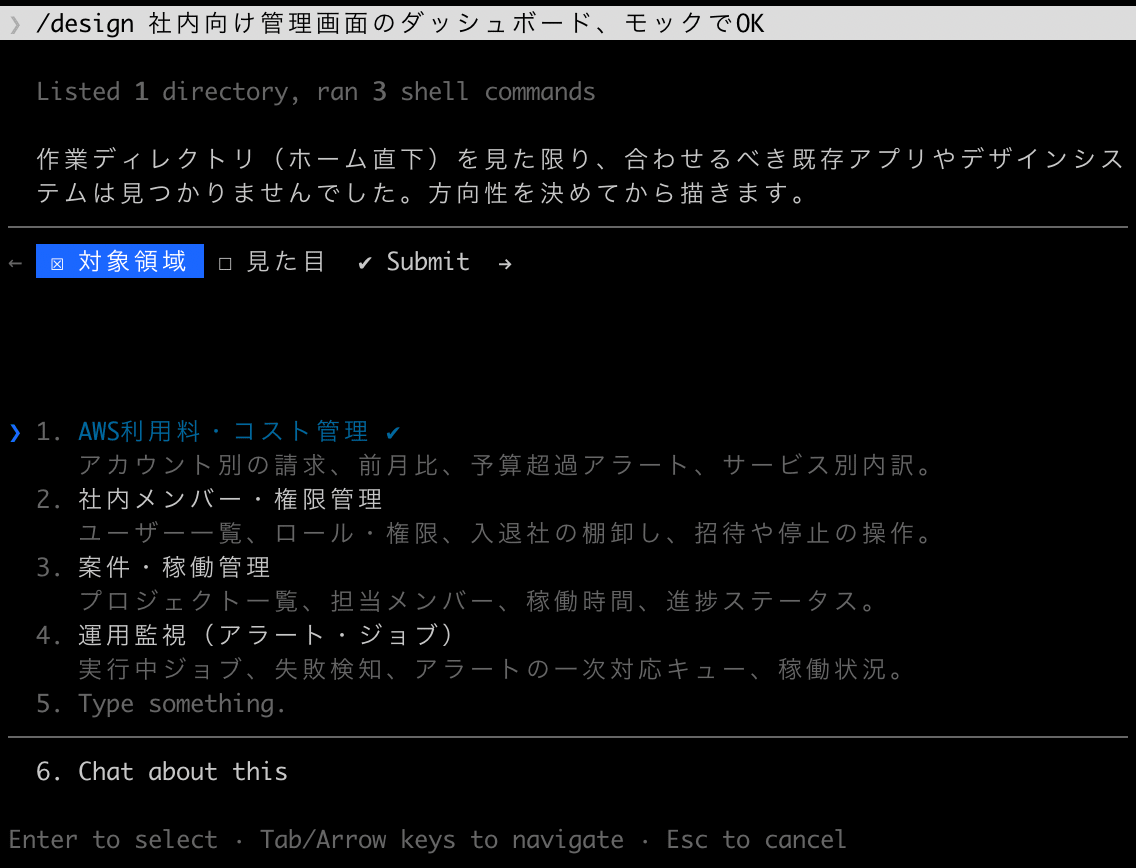
I'll run the sample prompt "/design Spring new menu A4 flyer" as-is. I answer each of the questions.
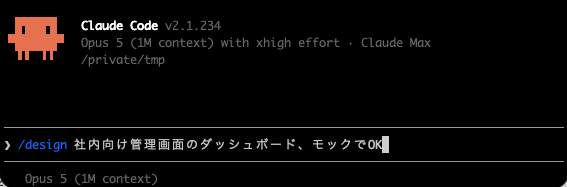
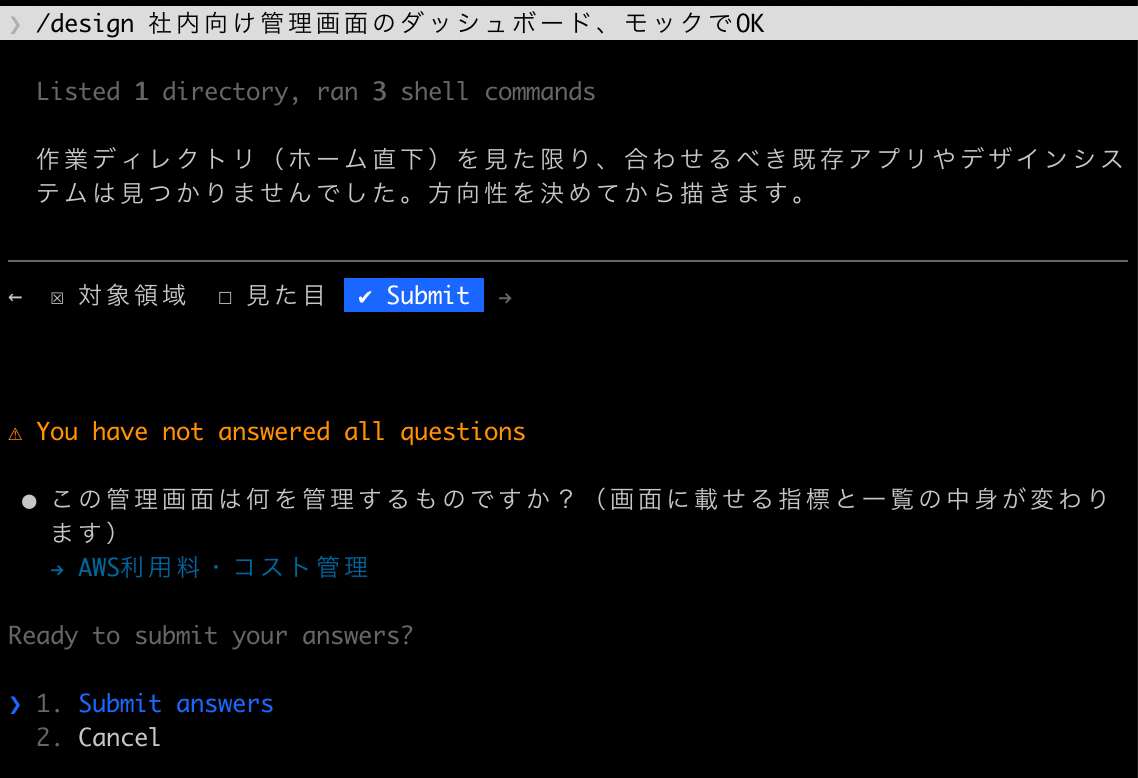
The target area is "AWS usage fees / cost management."
The visual style is ". Dark / high-density (data-first)."
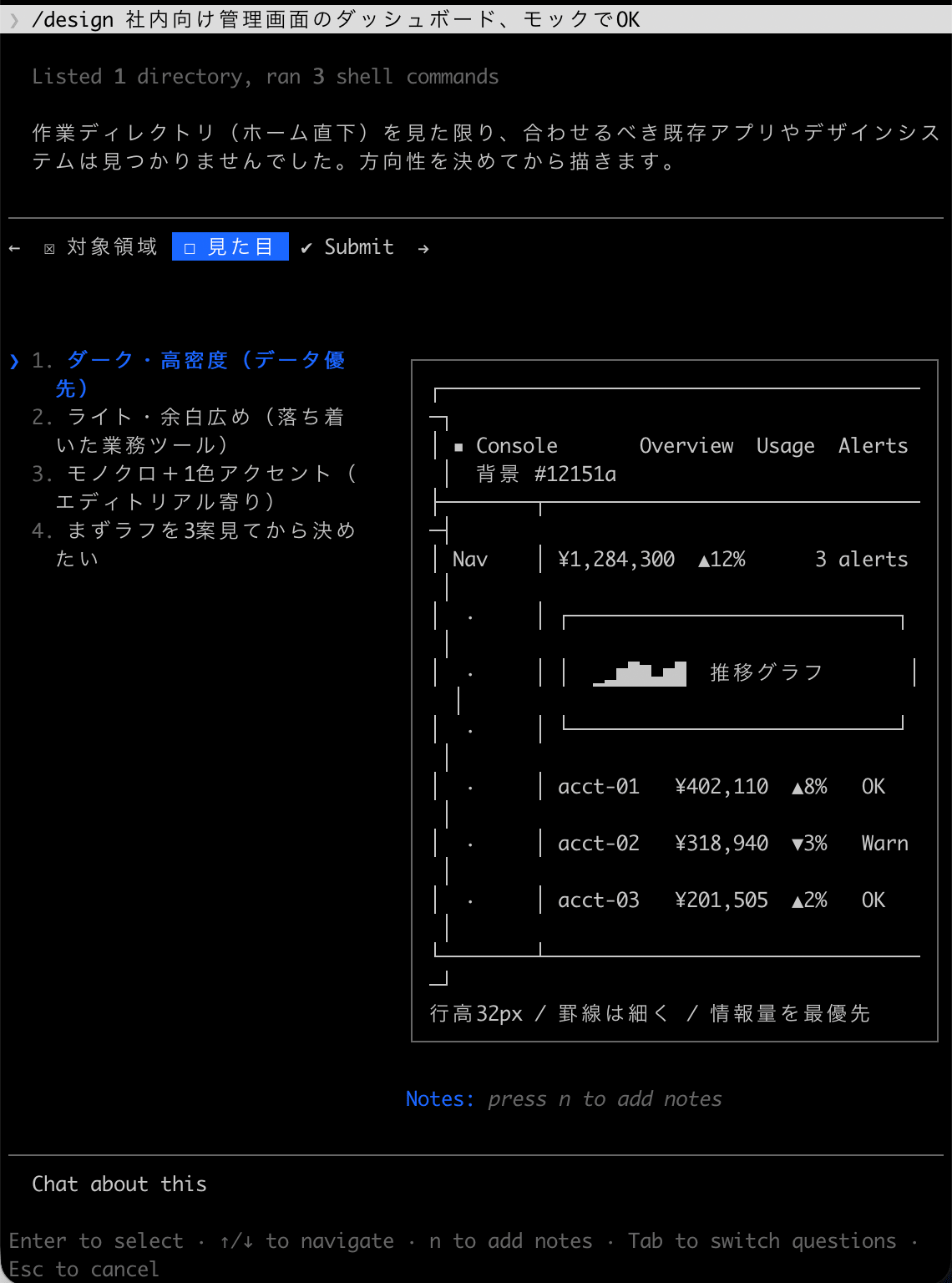
I confirm the answers with the above content.
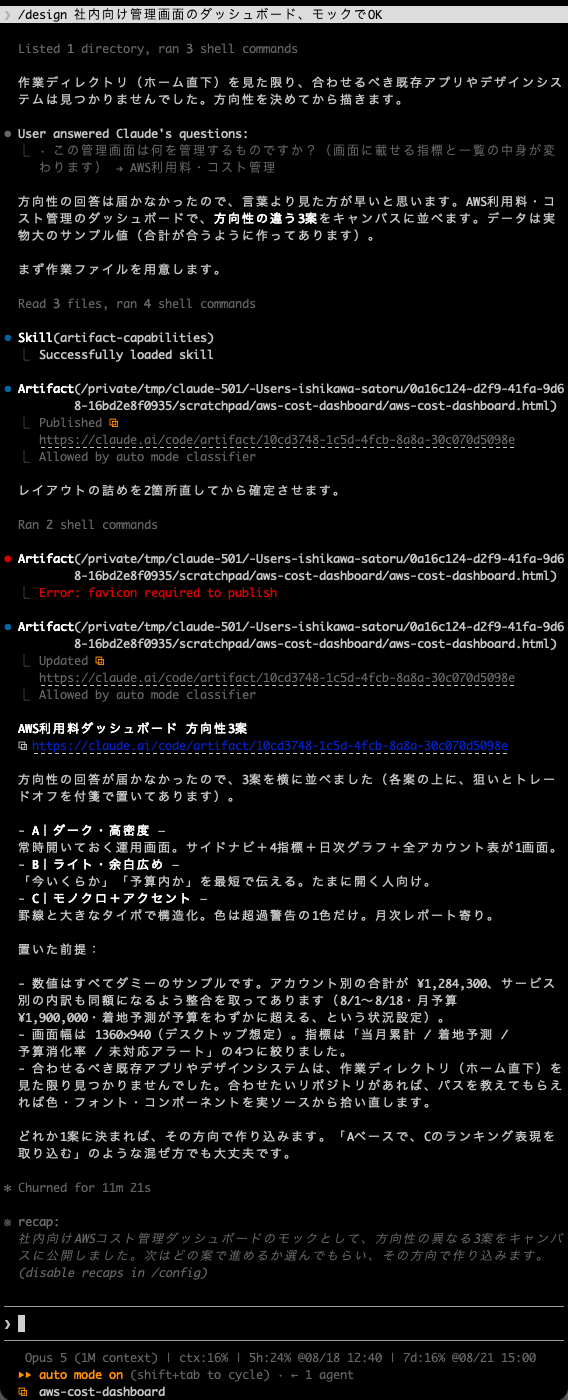
A design is generated based on the answers. As the X post also mentions "built on artifacts," it appears to be a repurposing of Artifacts.
In my environment, when generation was complete, a browser launched automatically and three design proposals were displayed side by side.
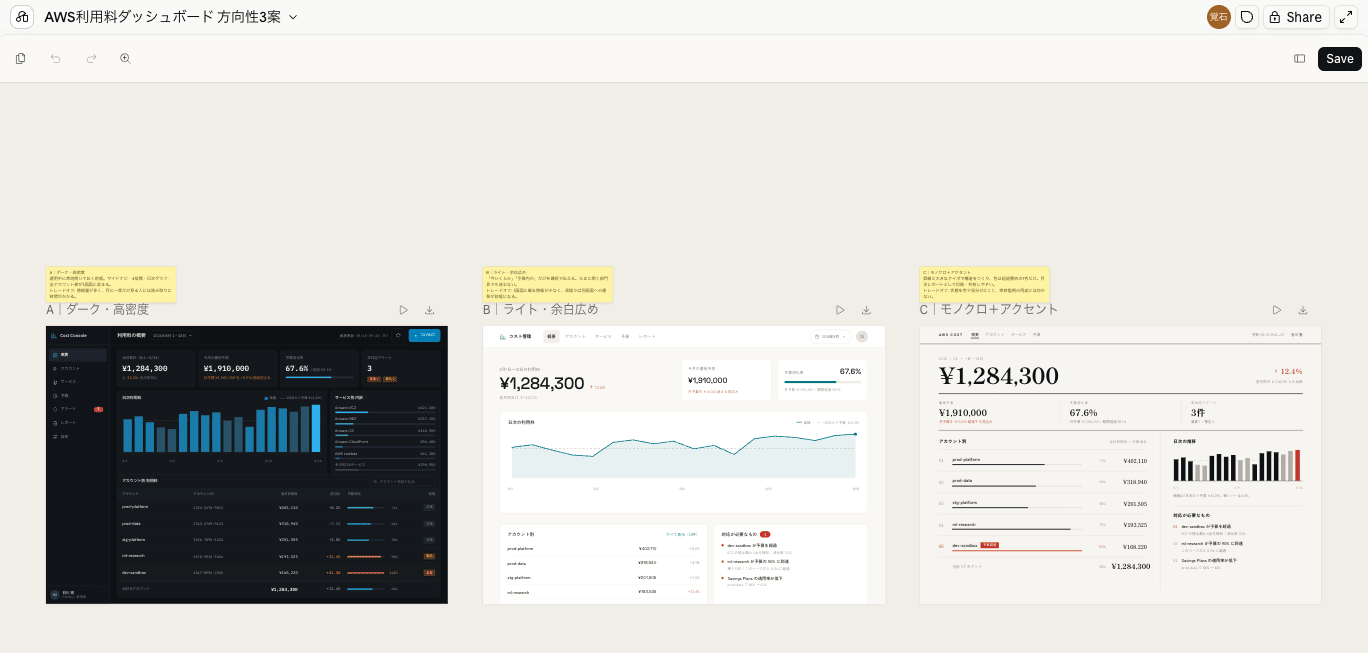
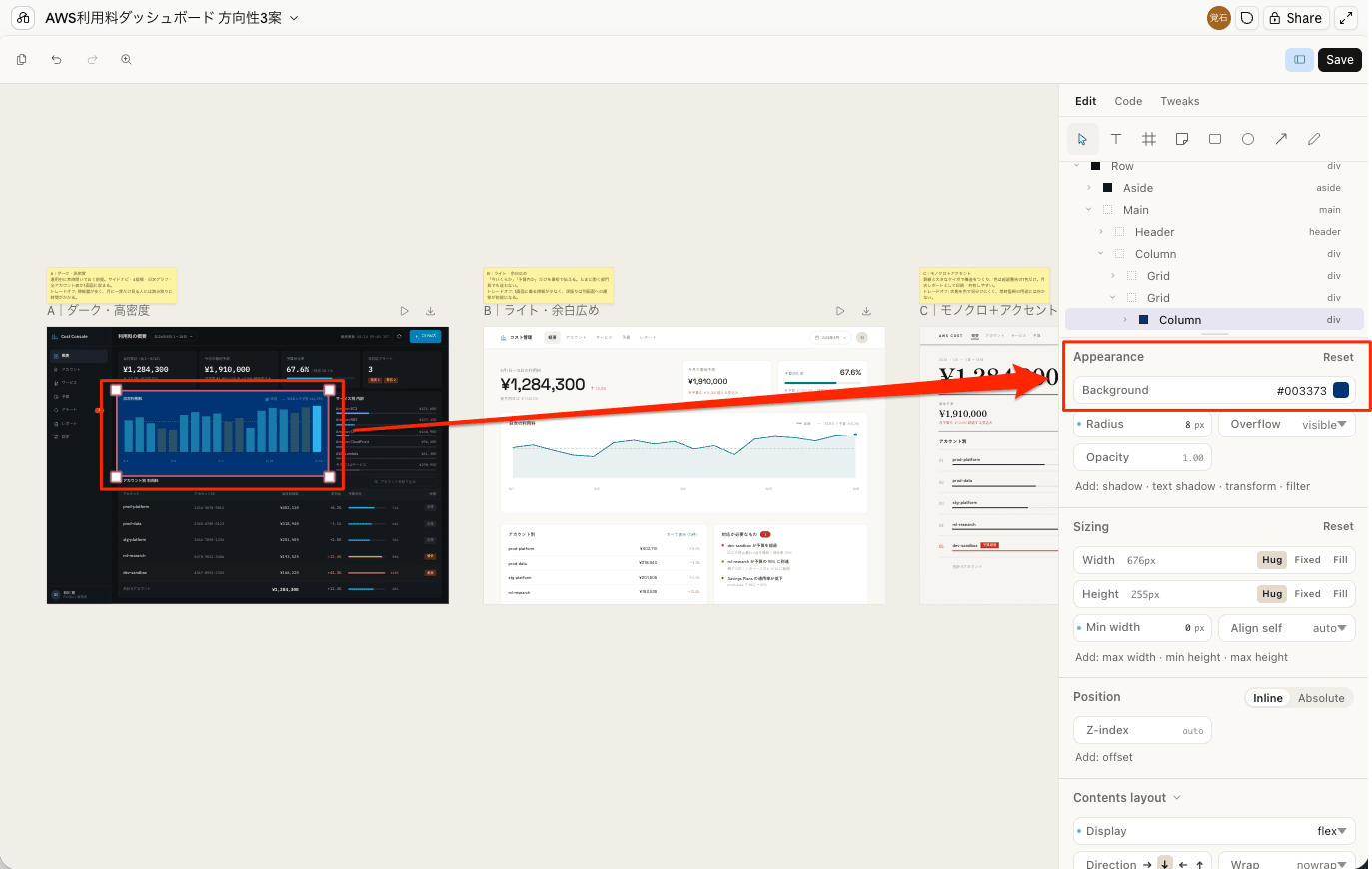
Selecting a design element allowed me to change its properties in the Claude Design canvas editor and see the changes reflected in real time.
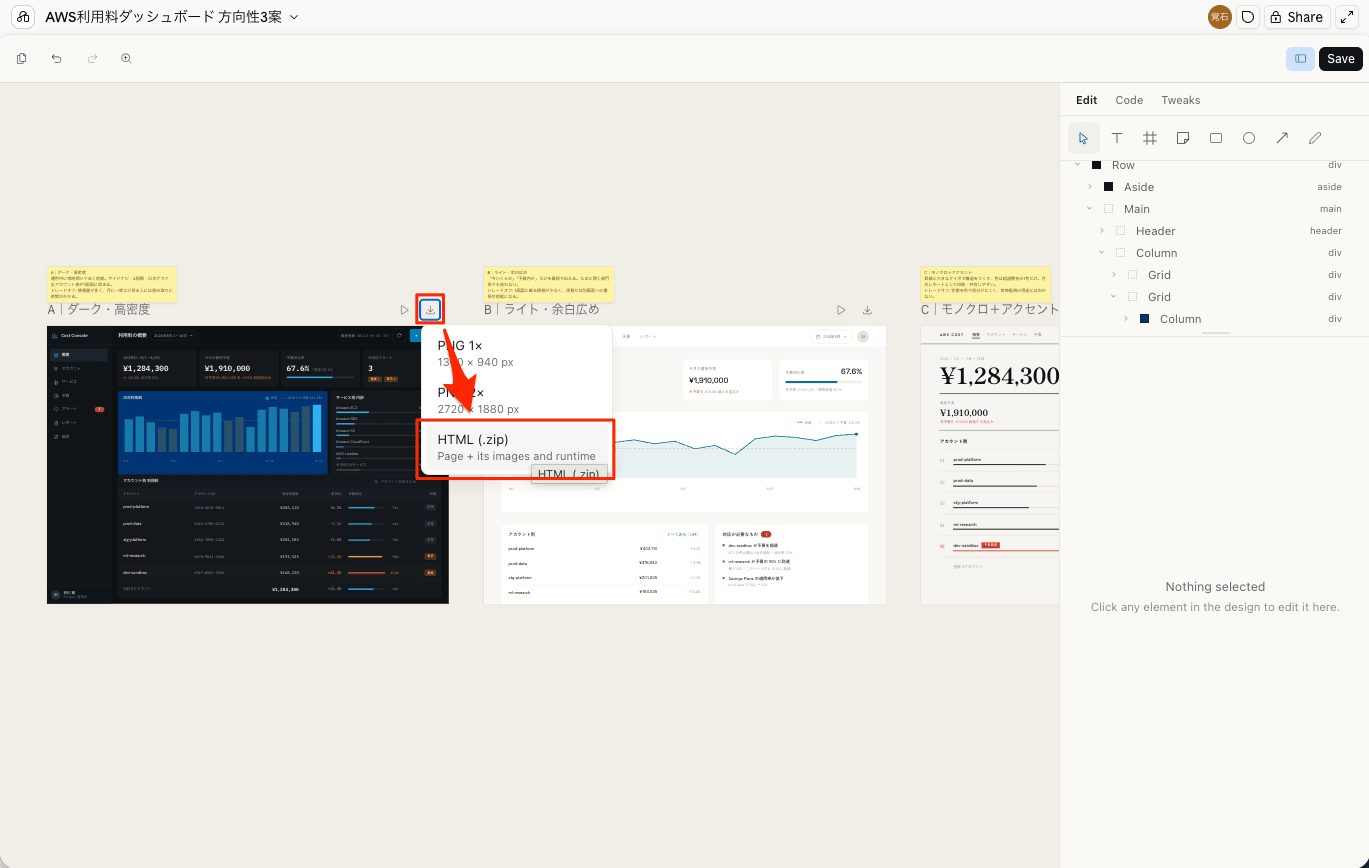
Once changes are complete, you can download in any of the following formats.
- PNG 1x (1360 x 940 px)
- PNG 2x (2720 × 1880 px)
- HTML (.zip) (Page + its images and runtime)
Having the artboard workflow cultivated in Claude Design available from Claude Code in the explicit form of a Skill is very convenient.
Closing
v2.1.234 feels like a release that collectively closes the gaps in permission handling. The bugs lined up here—session-scoped denials being dropped, allow/deny rules being lost on restart, approvers not being able to see the key content—are all of the "supposed to be working but wasn't" variety. The /design skill (research preview) is also an update I look forward to seeing develop further.
References