I tried setting a spending limit with Claude Enterprise

This page has been translated by machine translation. View original
Hello! I'm Takakuni (@takakuni_) from the Cloud Business Division Consulting Department.
Recently, I've been receiving many inquiries about Claude Enterprise.
Since I've had the opportunity to test Claude Enterprise, I'd like to summarize information about usage and spending limits in this article.
Usage and Spending Limits
First of all, Usage-based Enterprise plans bill token usage on a pay-as-you-go basis according to standard API rates.
Usage billing
On usage-based Enterprise plans, usage is charged separately from your seat fee and is based on actual token consumption at standard API rates. For current per-model pricing, see our API pricing page.
Since token usage is not included in the seat fee, you can set spending limits to prevent unlimited costs.
Usage isn't included in the seat fee. Every token your team uses—in chat, Claude Code, or Cowork—is billed at standard API rates on top of your seat cost. For full details on how usage billing works for your plan, see How am I billed for my Enterprise plan?
About Spending Limits
Spending limits can be set at both organization and individual levels.
If you need cost predictability, admins can set spend limits at the organization or user level.
The lower limit takes priority.
These limits work hierarchically — a user cannot exceed their individual limit or the organization limit, whichever is lower.
There are several ways to purchase Claude Enterprise, but for Sales-assisted plans, when you reach the usage limit, you can either raise the cap or wait until usage resumes at the start of the next billing period. Keep this in mind.
Sales-assisted plans: If a spend cap is reached, an Owner or Primary Owner can raise the cap, or usage will resume at the start of the next billing period. Contact your account manager with questions.
Permissions
To set spending limits, you need Owner or Primary Owner permissions.
Trying It Out
Let's actually set spending limits.
Checking Default Values
First, let's check the default values.
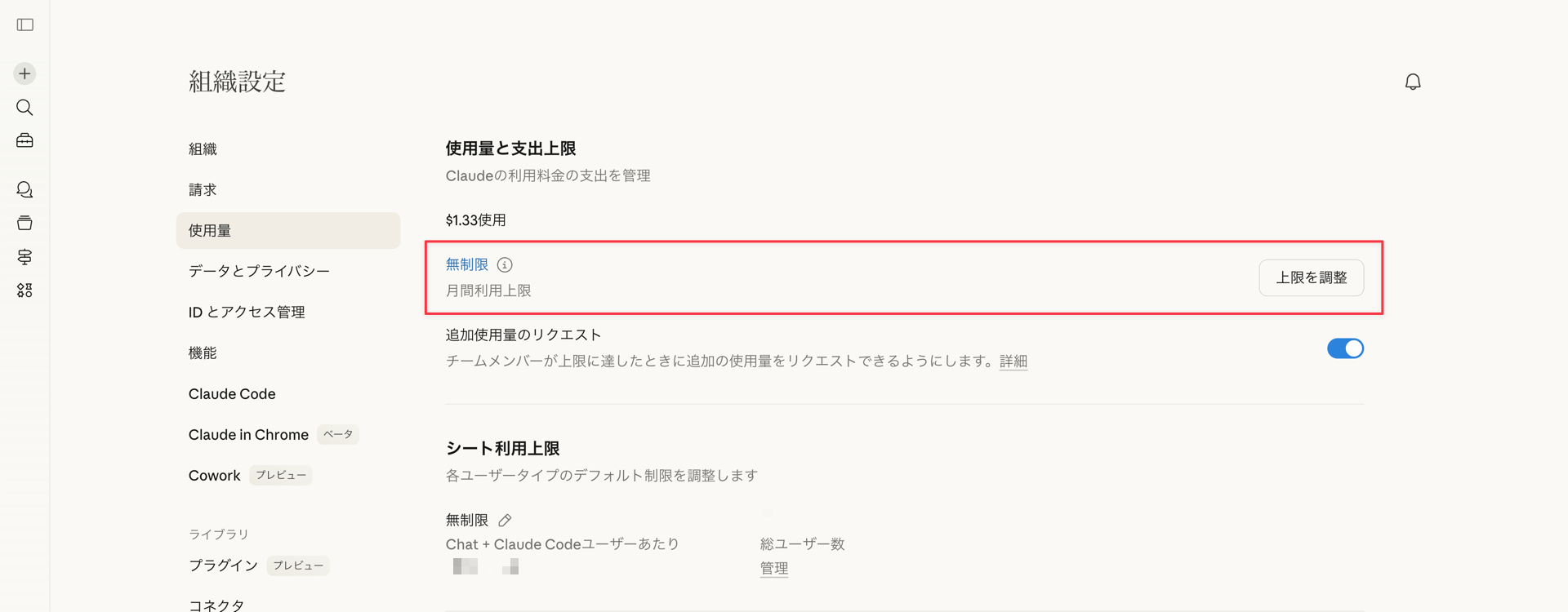
The organization's monthly usage limit is set to Unlimited.
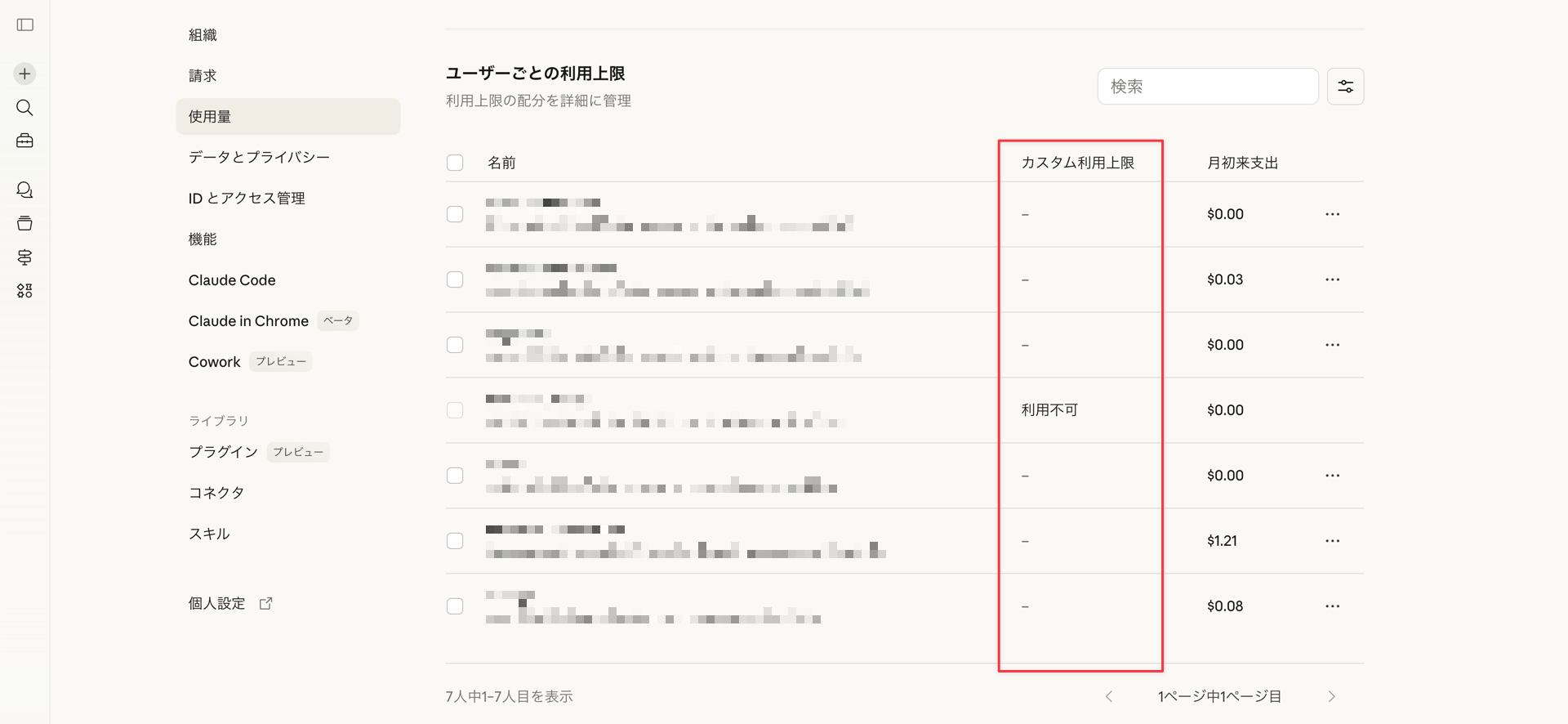
Let's also check the "per-user usage limits." By default, it seems nothing is specifically set.
There is one user marked as "Unavailable." This user has Primary Owner permissions. Therefore, it seems that spending limits cannot be set for Primary Owners.
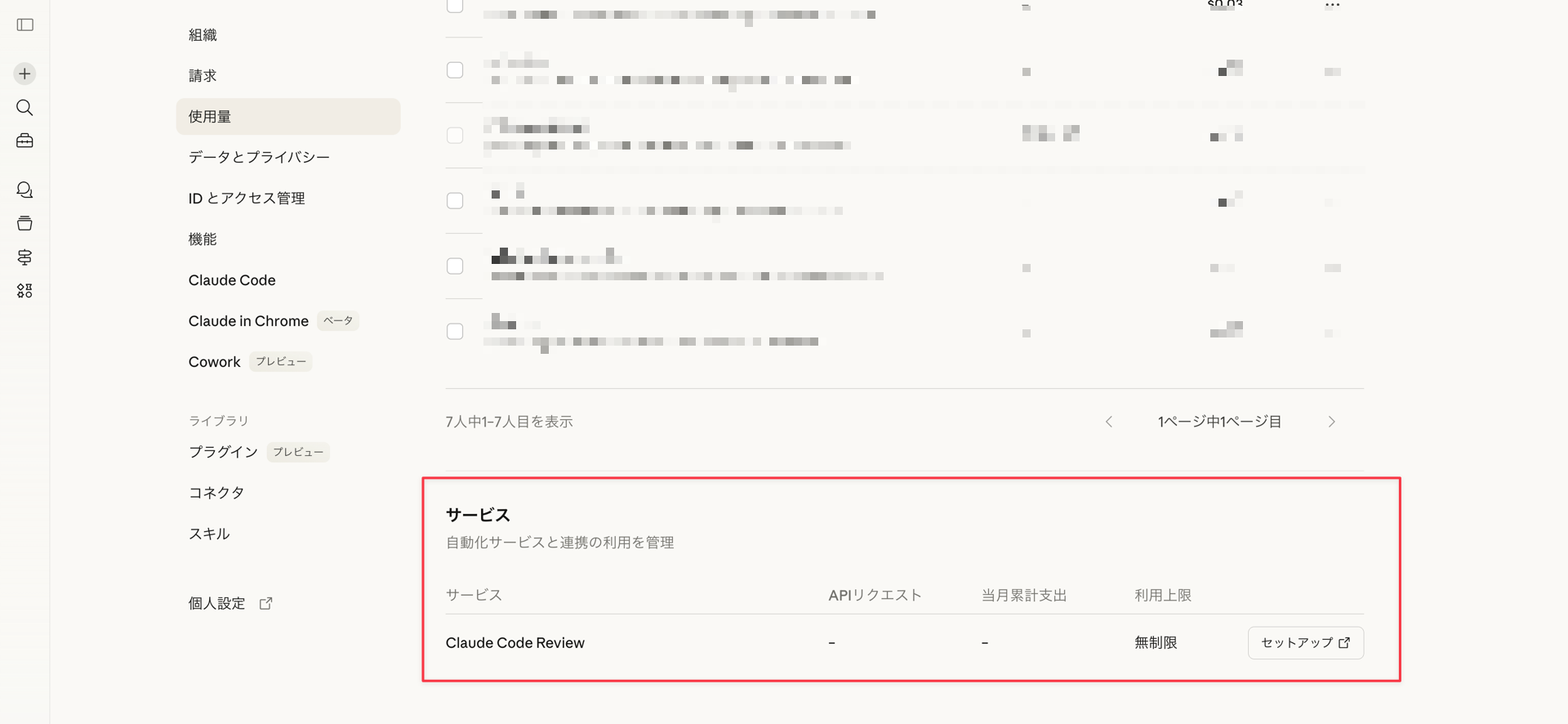
It looks like usage limits can also be set per service. Currently, Claude Code Review is displayed.
Setting Spending Limits
For this test, I'll set the organization usage limit to $3 and the individual usage limit to $2.
Setting Organization Usage Limit
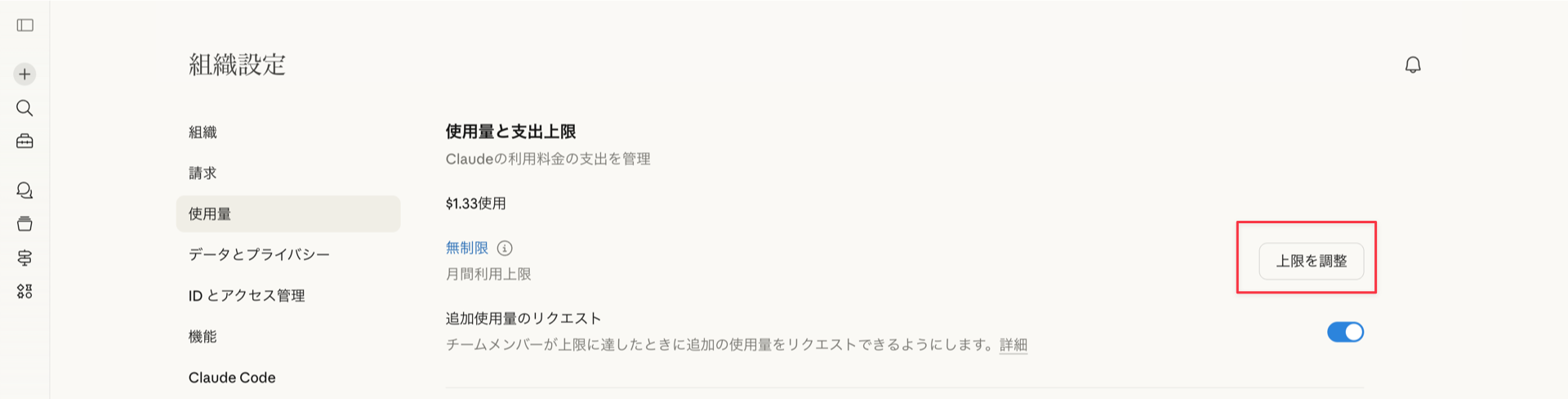
From Usage, click "Adjust limit" under "Usage and Spending Limit."
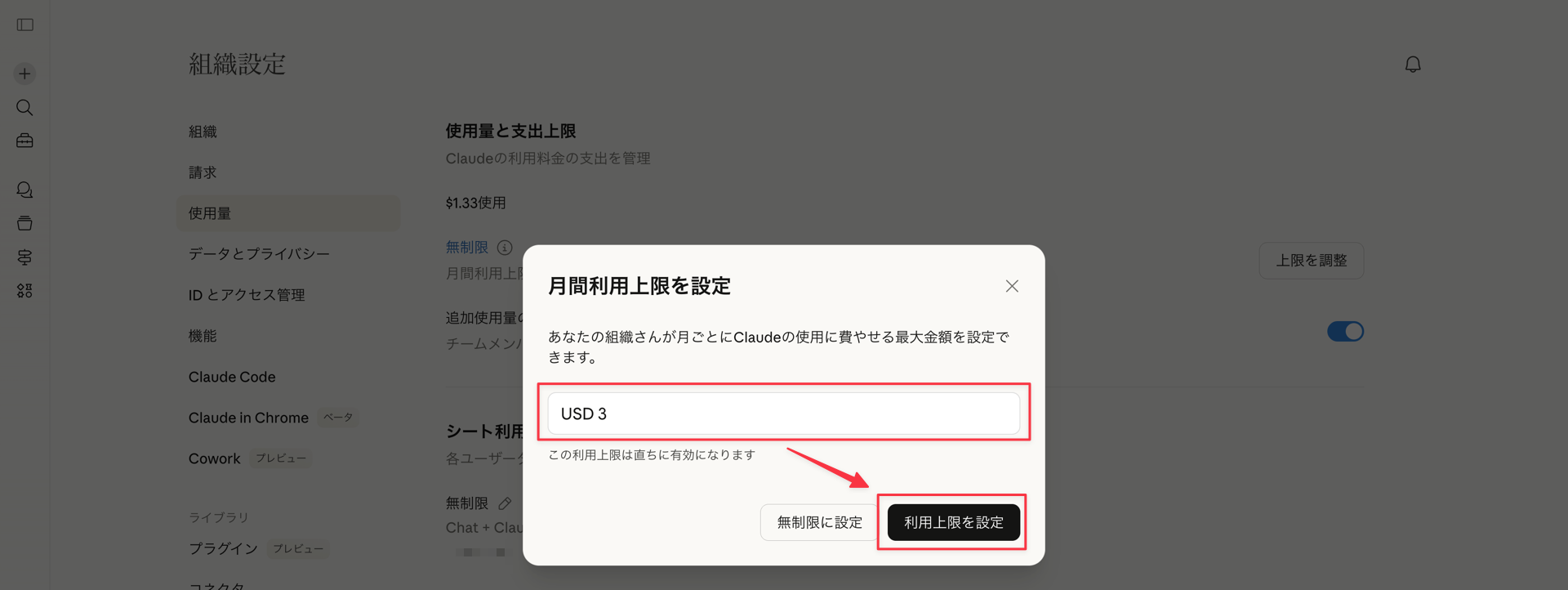
Set it to $3 and click "Set usage limit."
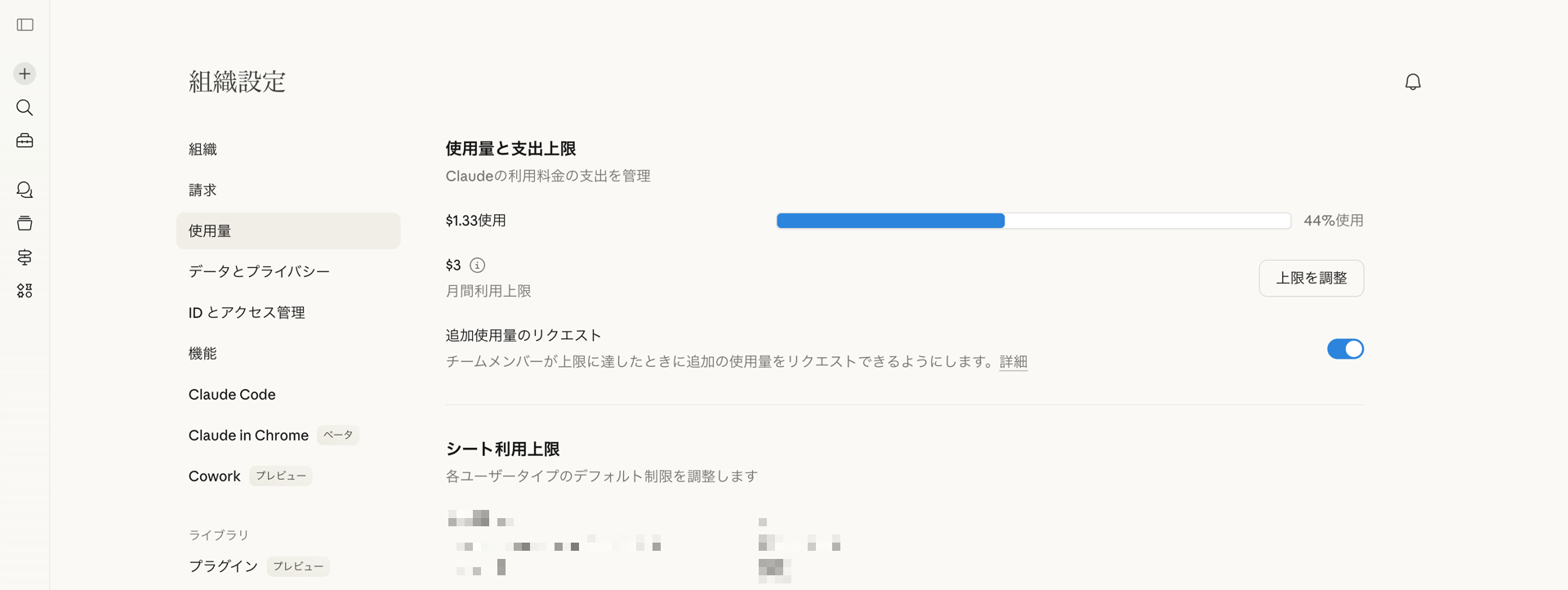
The gauge has been set based on current usage.
Setting Individual Usage Limit
Next, let's set an individual usage limit.
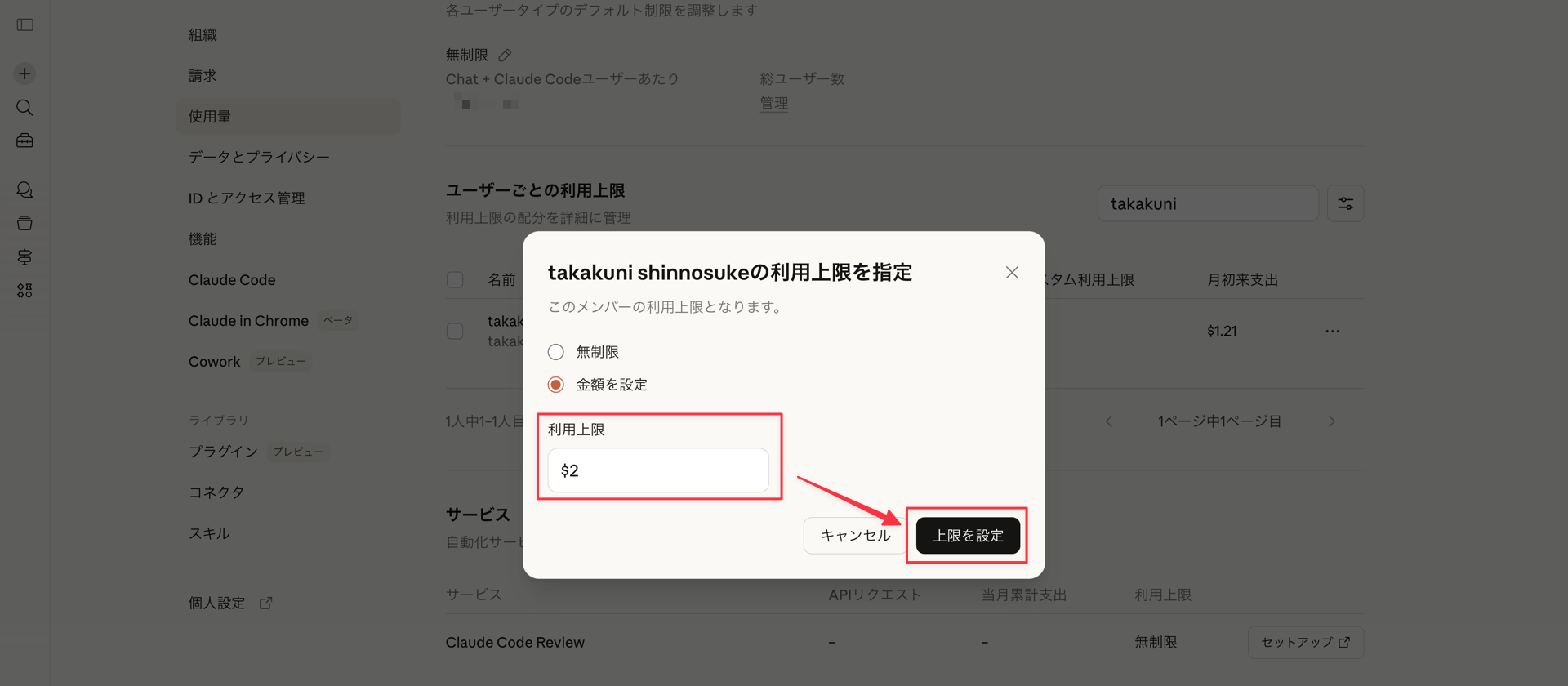
From "Per-user Usage Limits," click edit limit for the target user.
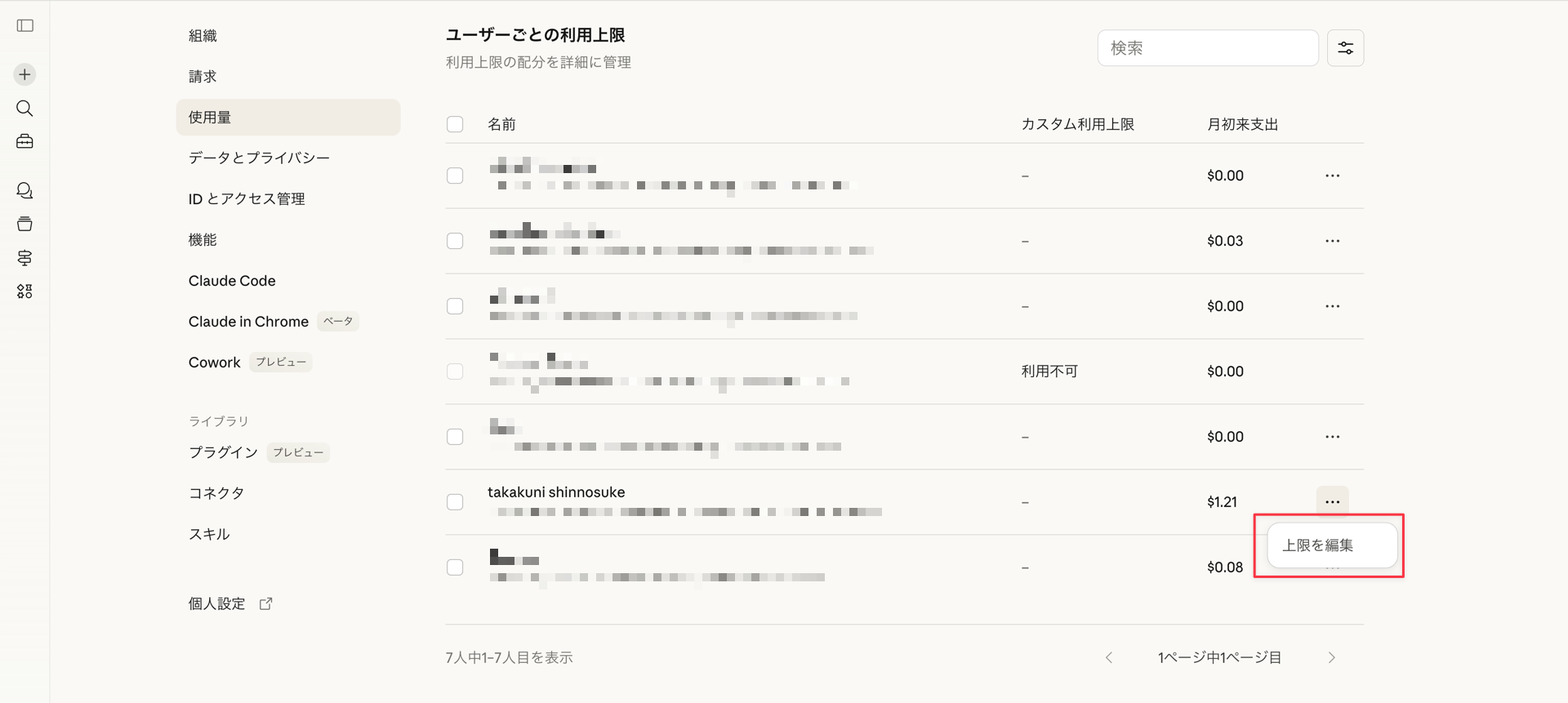
For this test, I'll set it to $2 and click "Set usage limit."
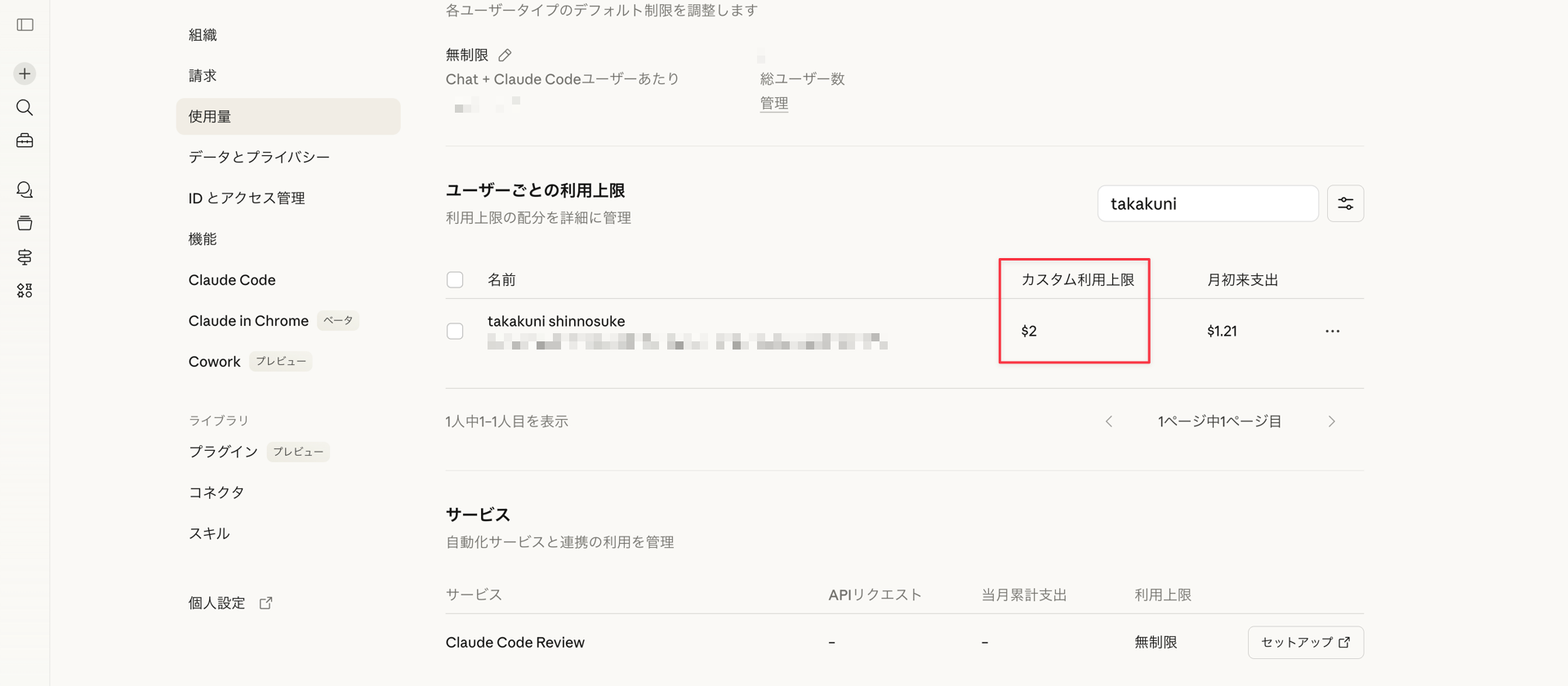
It's been set to $2.
Exceeding the Spending Limit
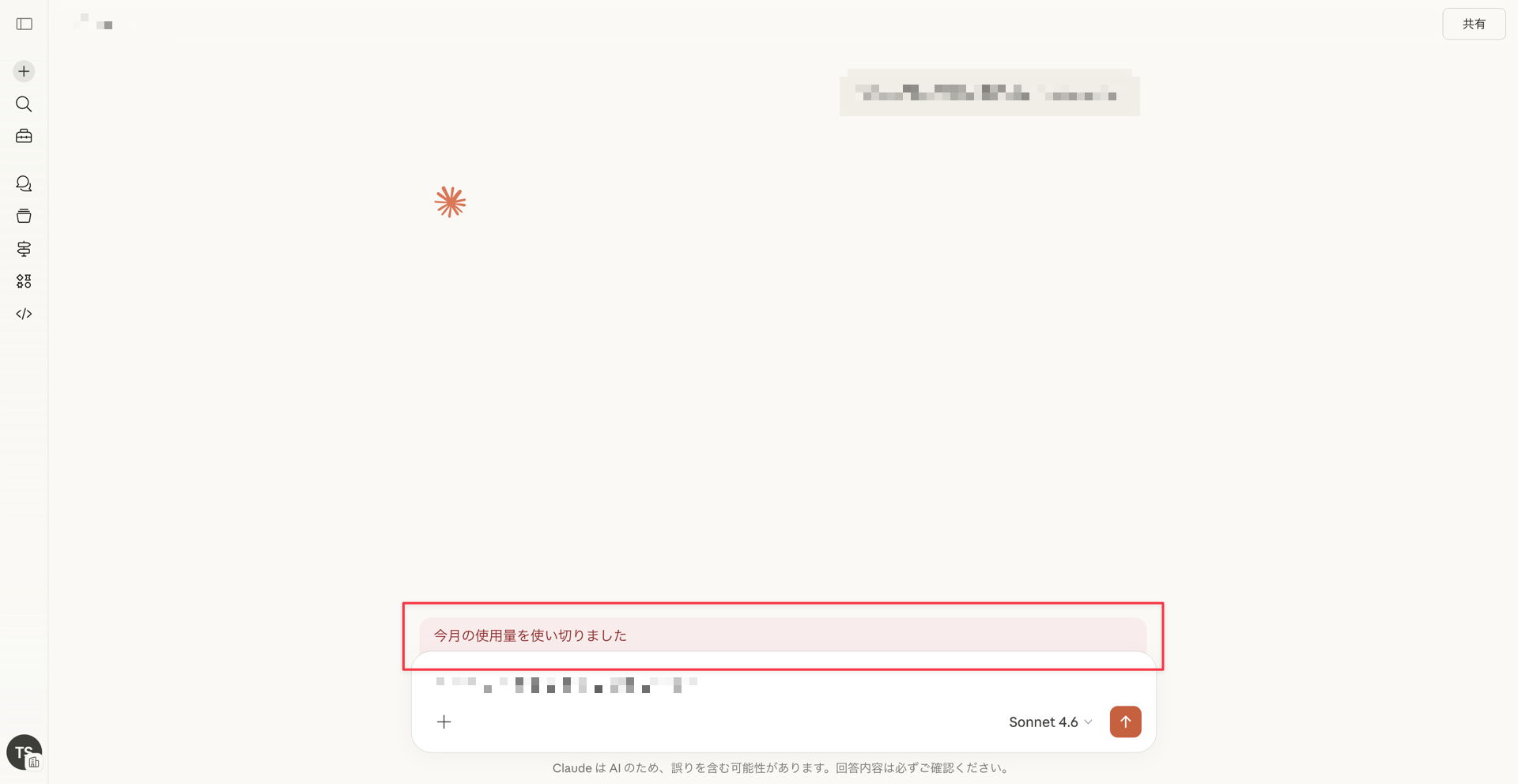
When trying to use more than $2, I reached the usage limit as shown below.
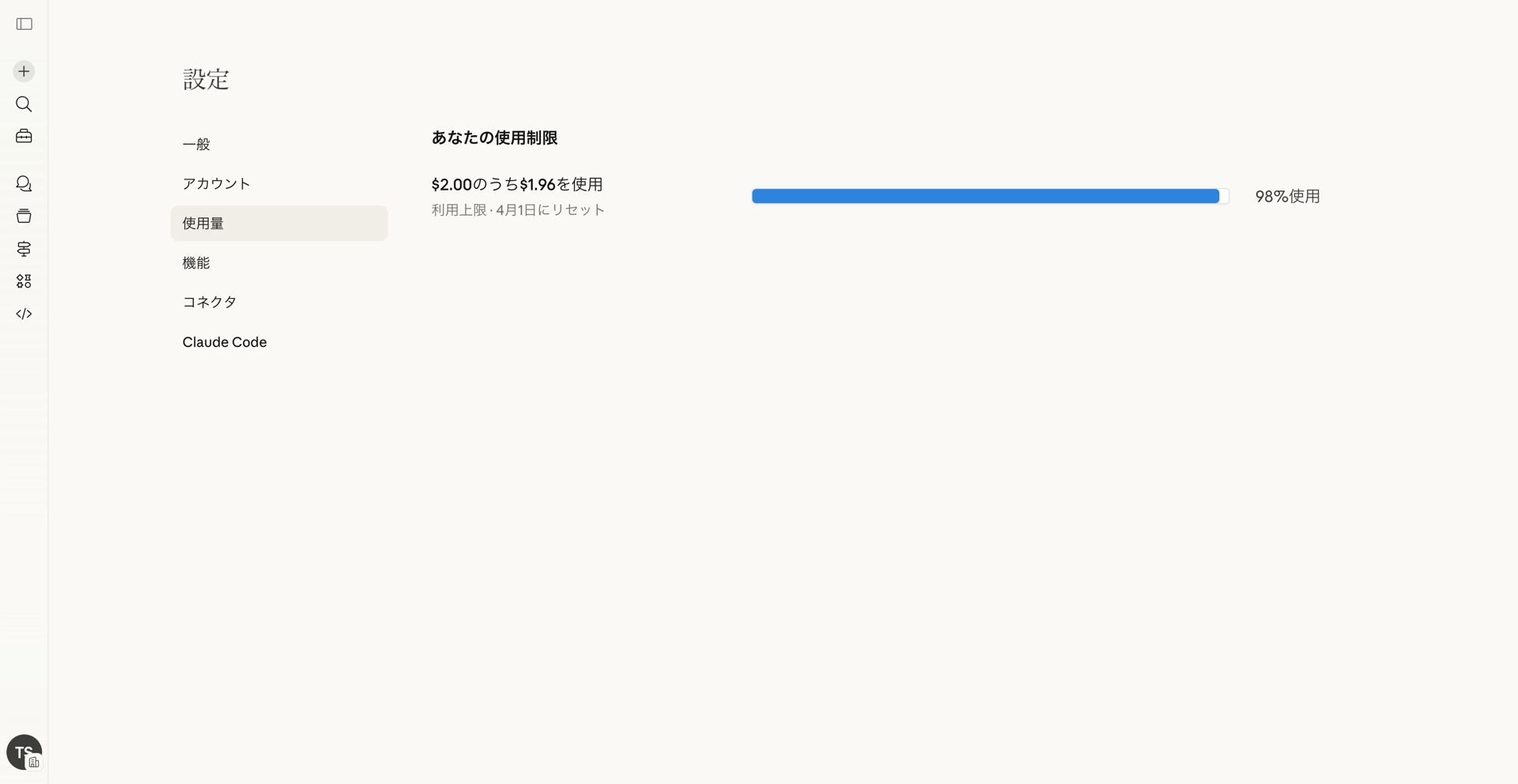
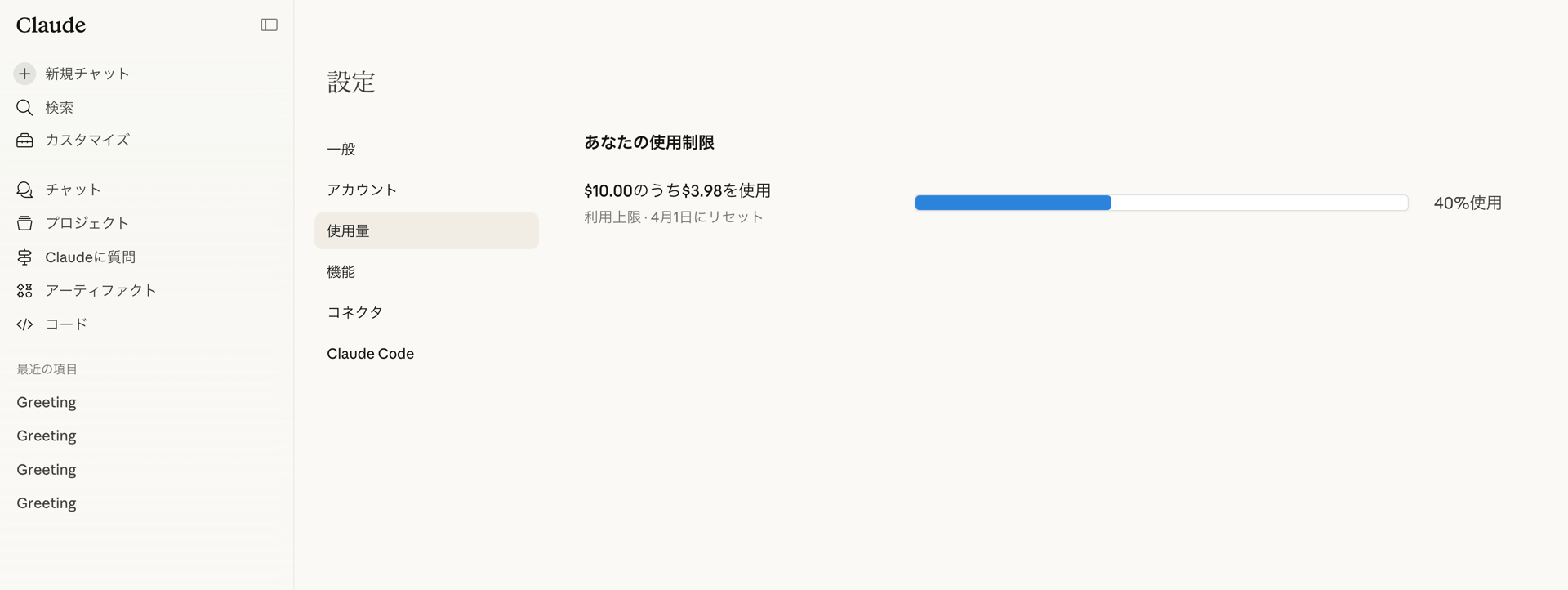
The personal usage screen also shows that I'm right at the usage limit.
Next, let's consider a scenario where the individual usage limit is removed and only the organization spending limit is in place.
When reaching the spending threshold, a notification appeared as shown below.
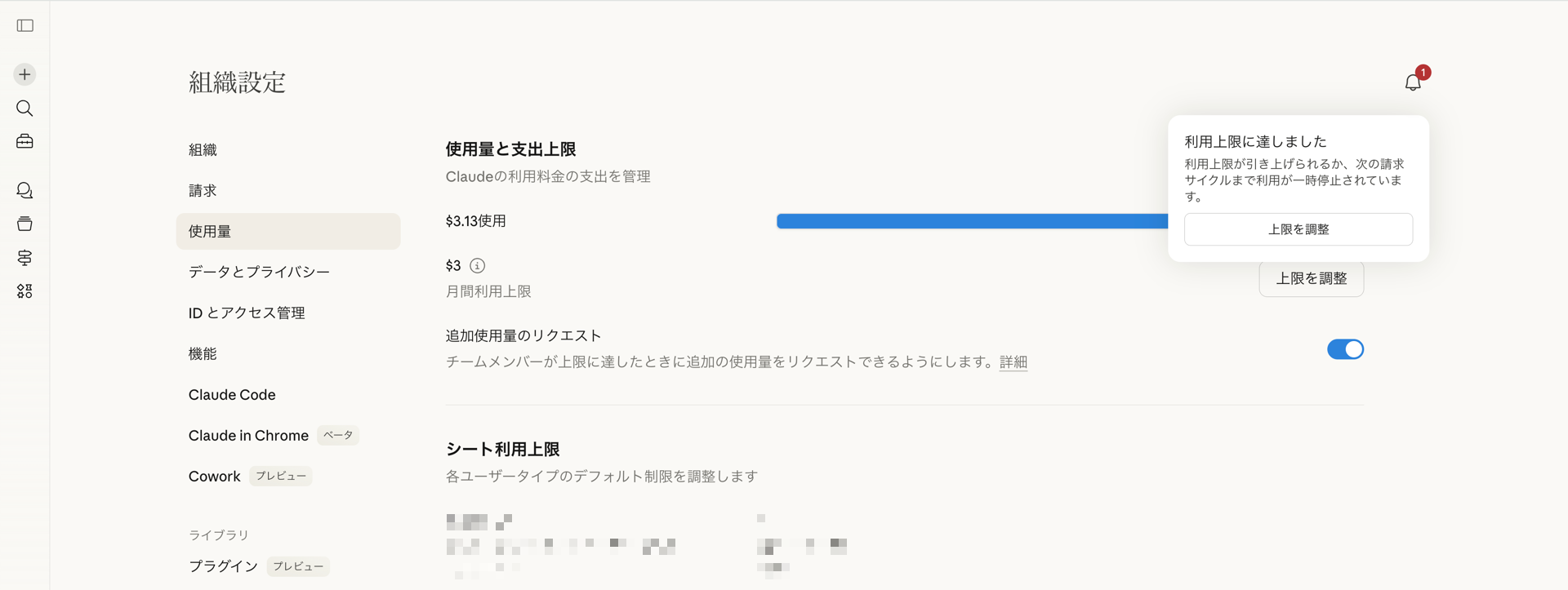
Although I set it to $3, it slightly overflowed to $3.13.
While I couldn't find documentation specifically for Usage-based Enterprise plans, for Extra usage limit, token consumption is calculated after the request processing is completed, so the last request can cause the limit to be exceeded.
The system probably uses a similar mechanism for token spending limits.
It's possible to slightly exceed your defined usage limit. Our system checks if you're within your limit before you're allowed to make a single request or send a message. Once the request is processed, we calculate your token consumption, which means you may bypass your limit with that request. Once this happens, any subsequent requests will be blocked.
When only the organization spending limit is set, individual usage is marked as "Unlimited,"
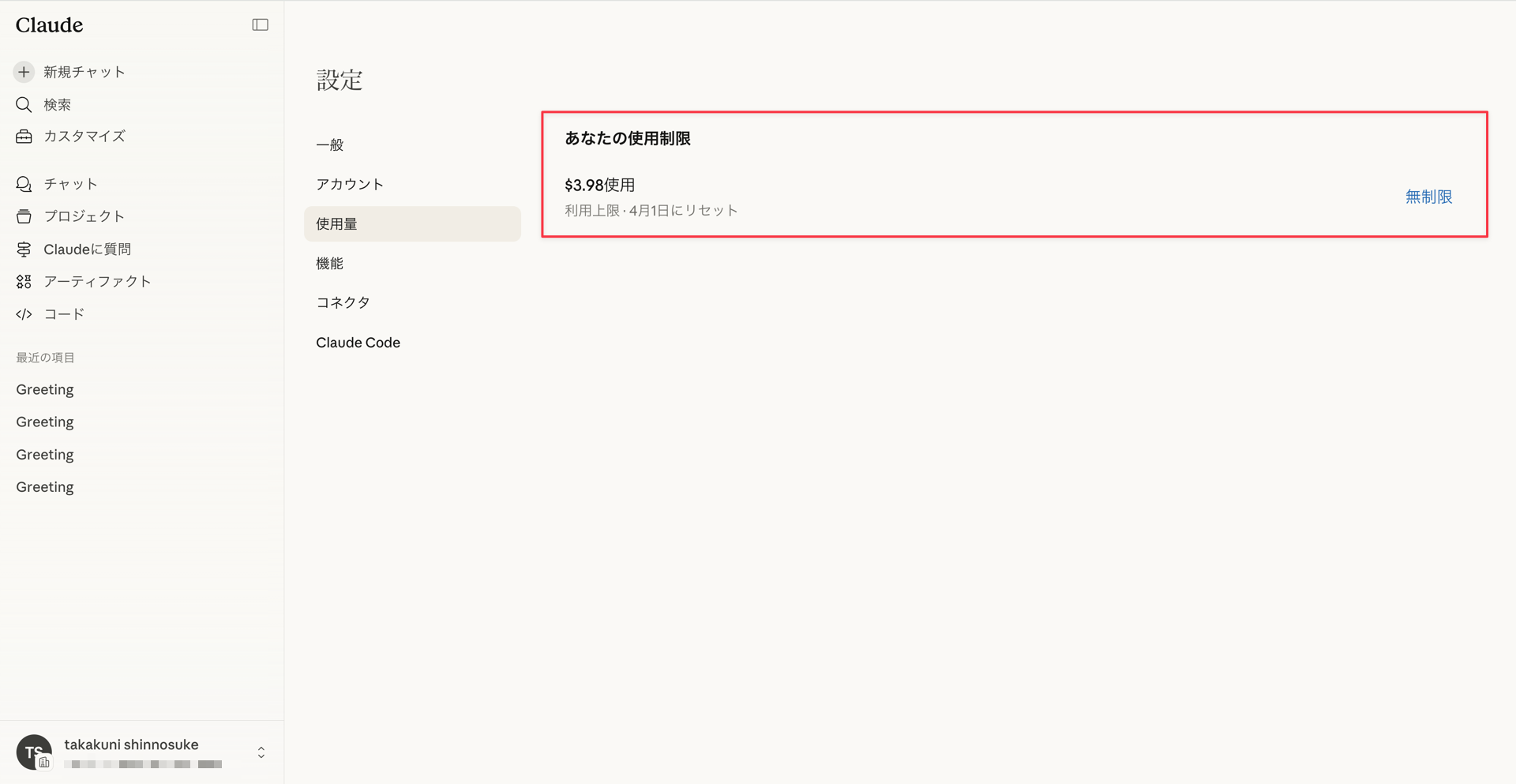
When the spending threshold is reached, it displays: "Your organization has reached its monthly usage limit. We've notified your administrator."
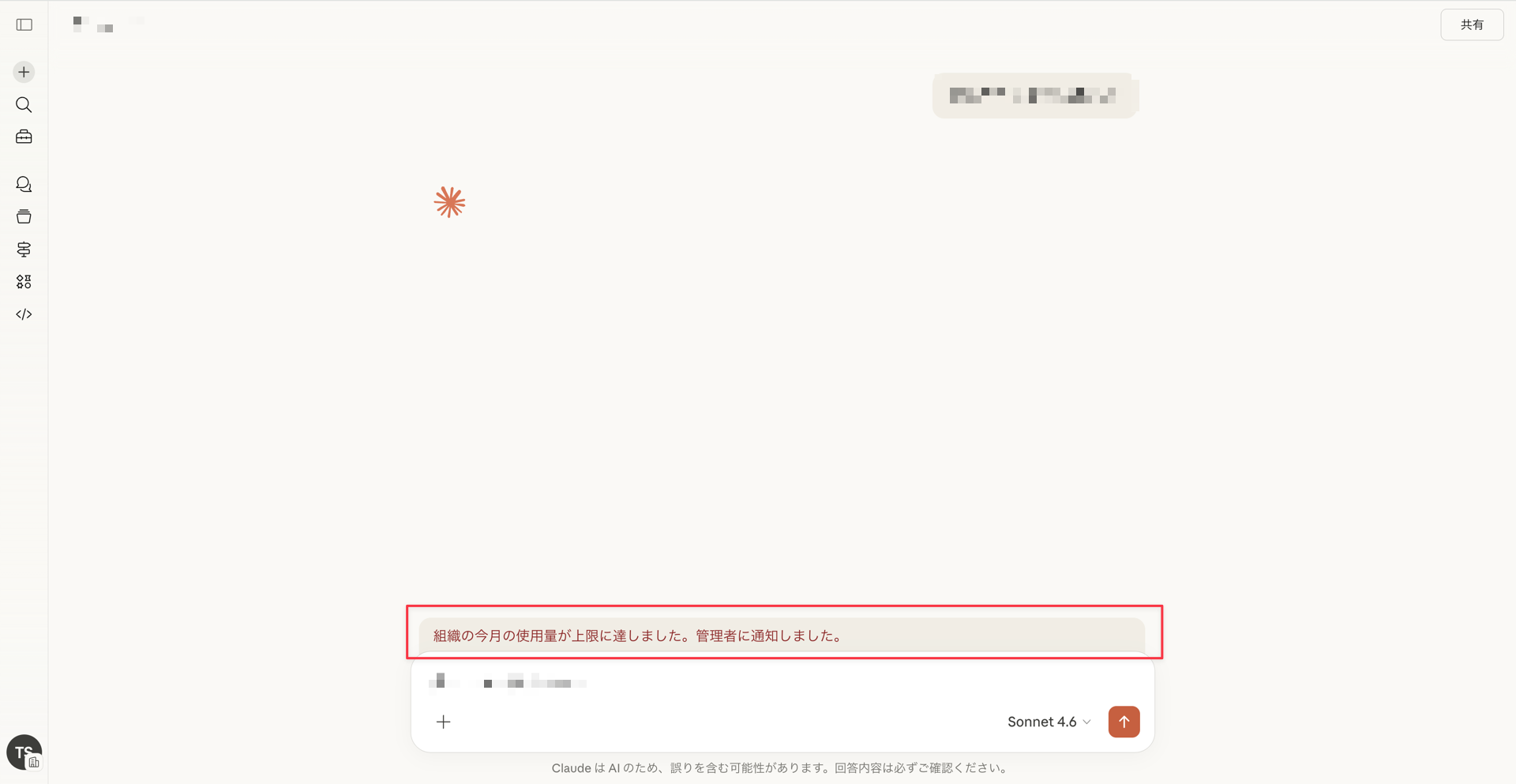
Setting Default Spending Limits
While you can set spending limits per individual, doing so for many users can be cumbersome.
In such cases, you can set a default spending limit to avoid having to configure each user individually.
From "Seat usage limit," click the pencil button,
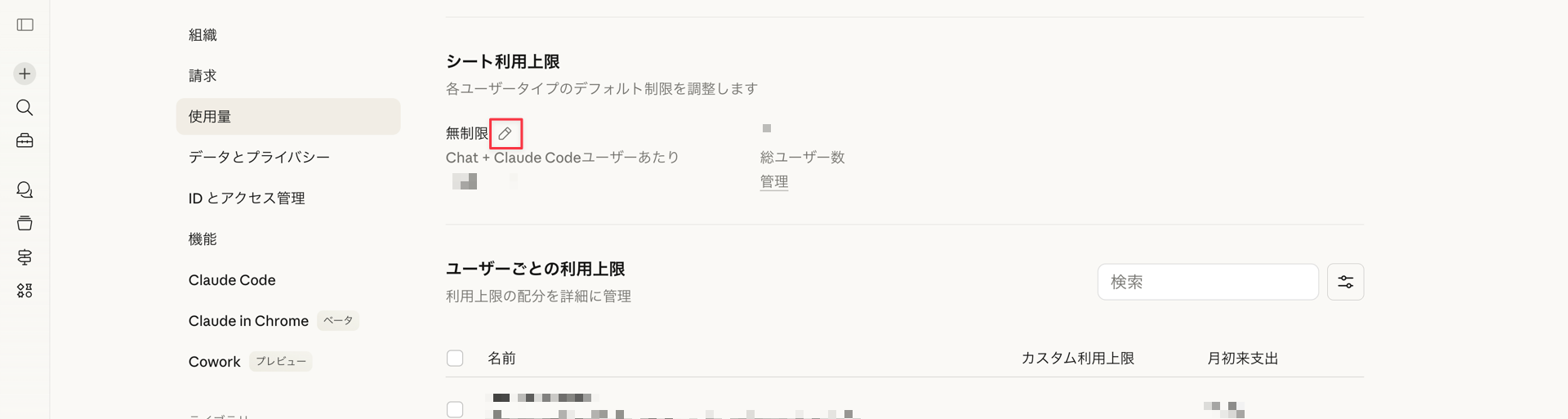
and set the limit.
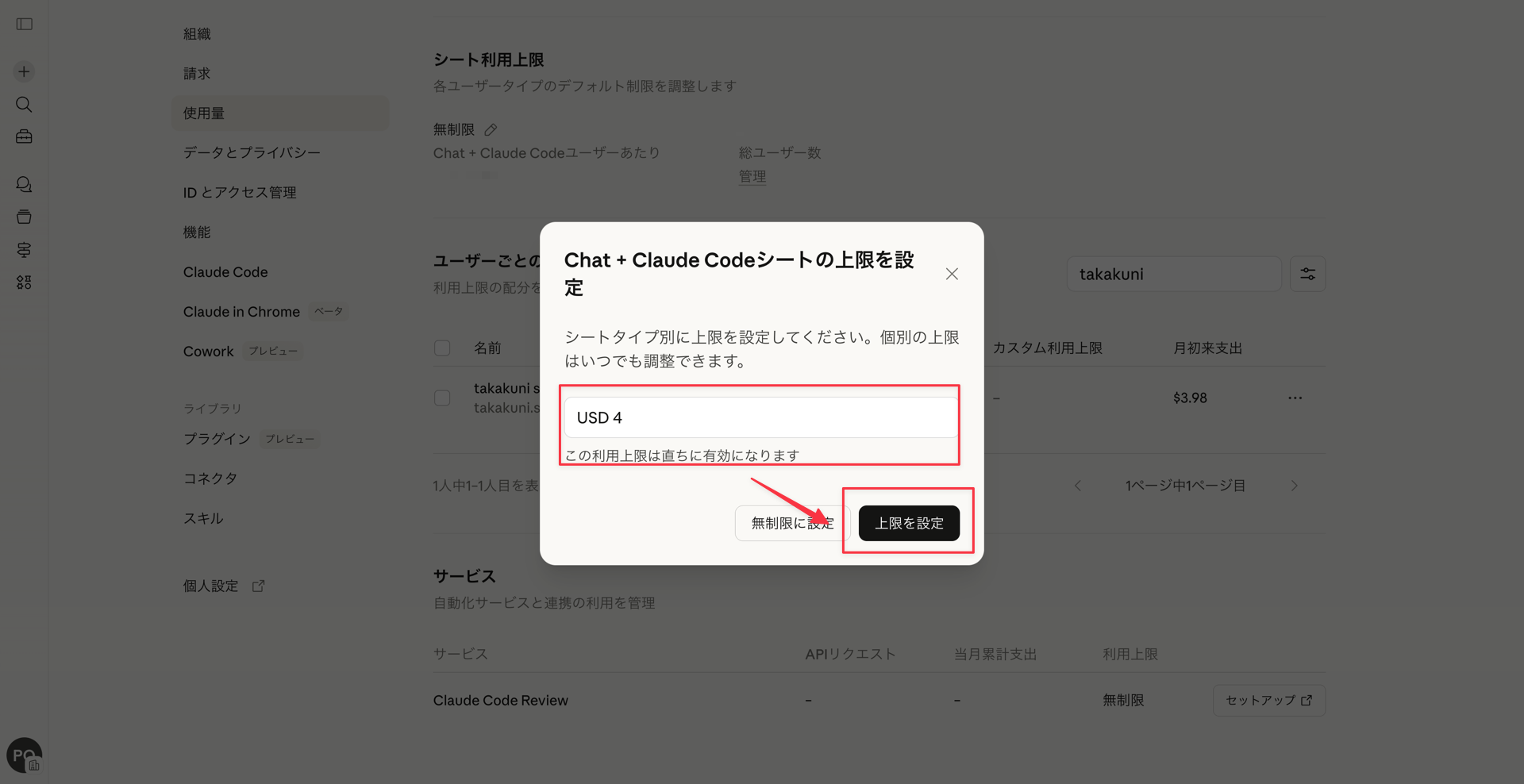
Even though no custom usage limit has been set for users,
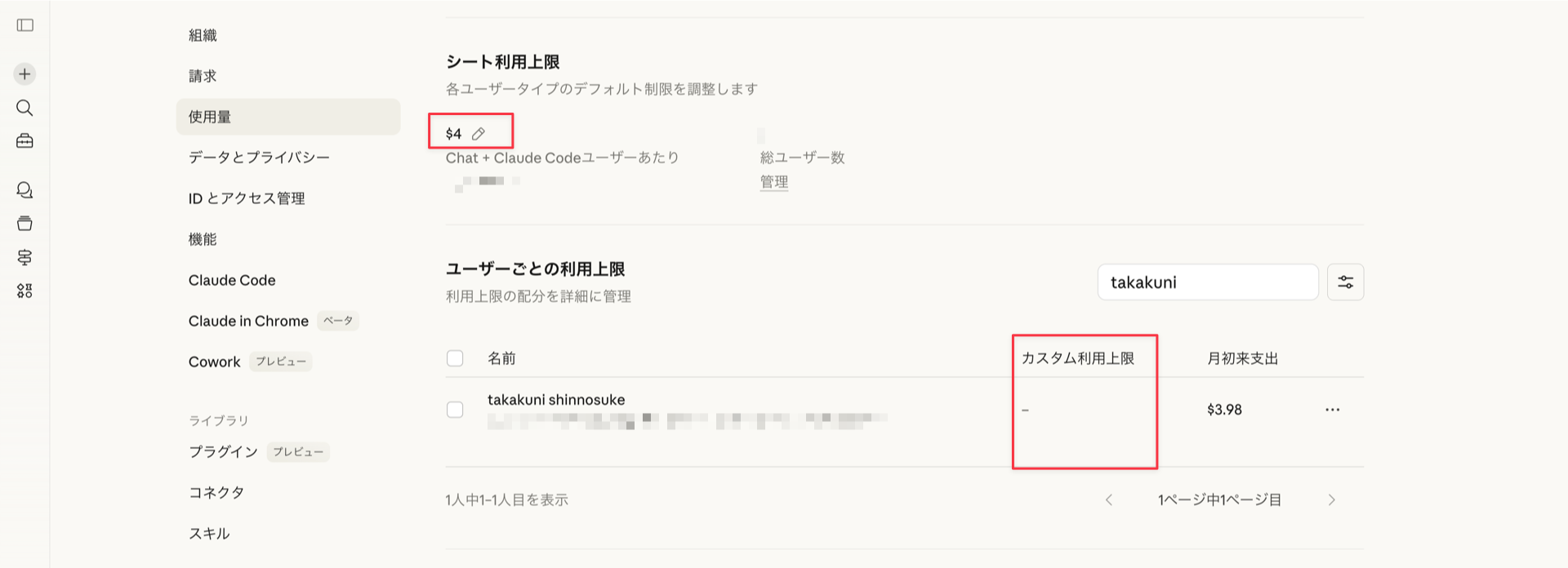
the $4 we just set is reflected in the usage amount.
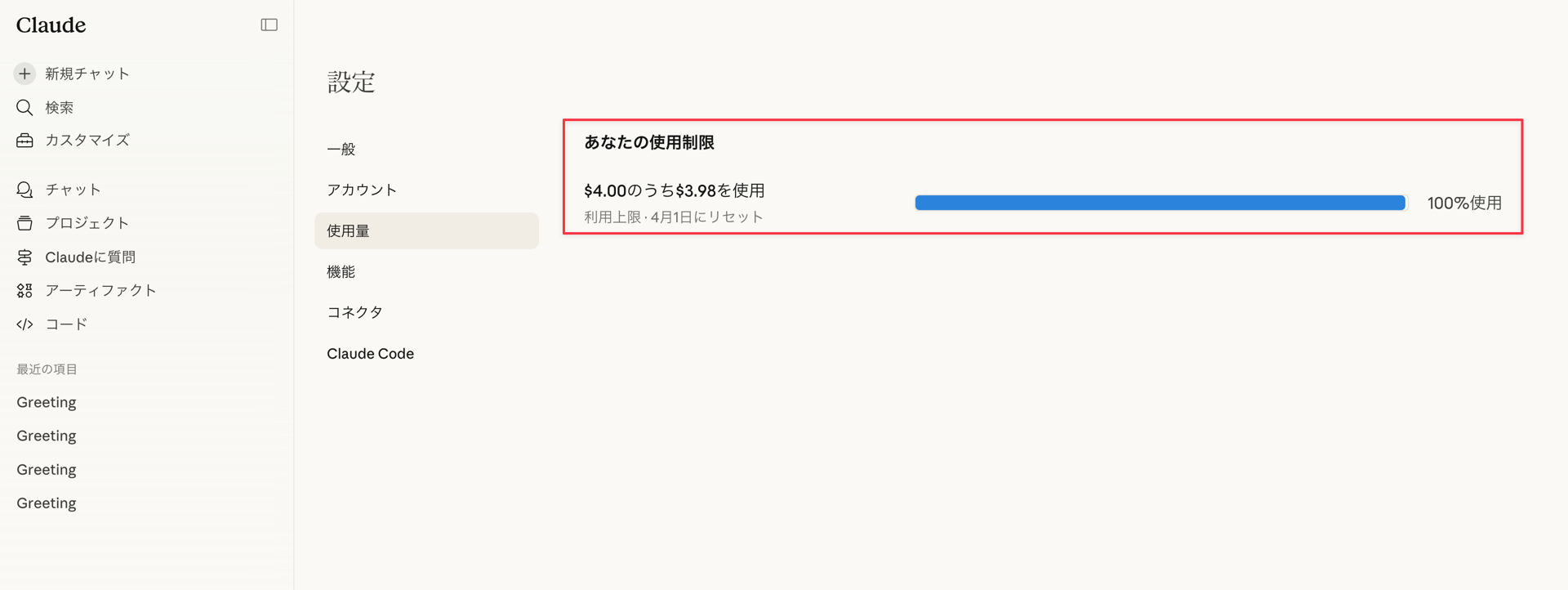
Since this is just the default setting, when a custom usage limit is set for individual users,
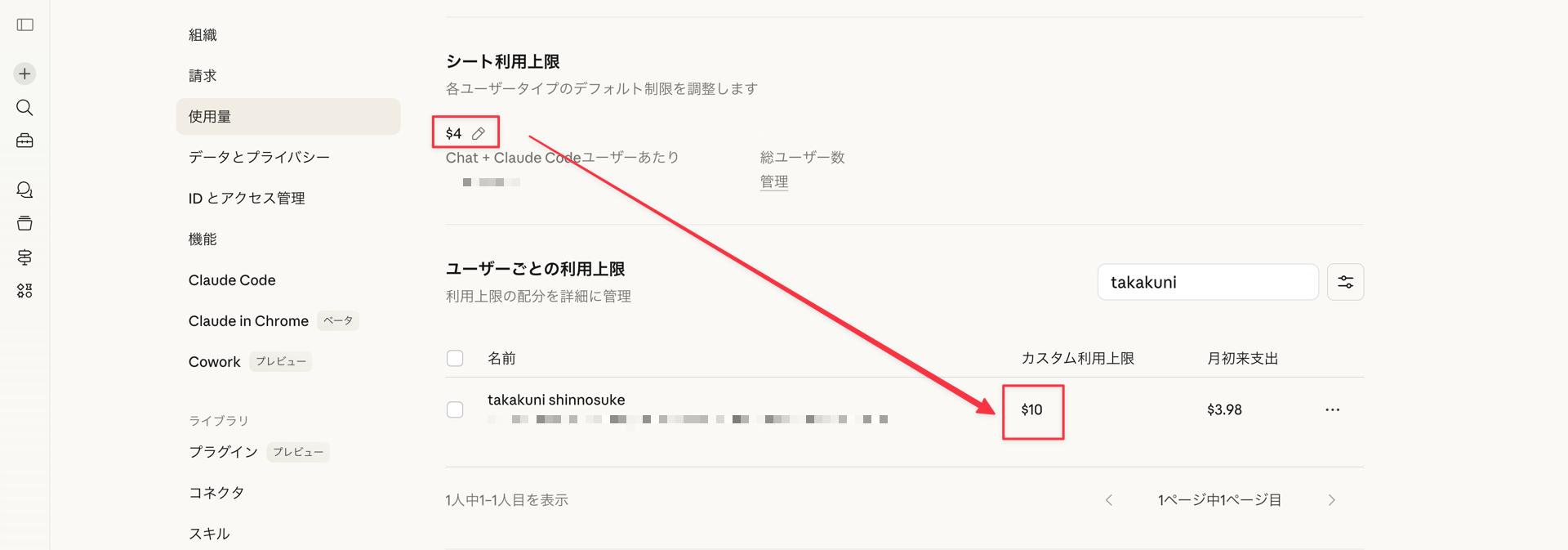
the individual custom usage limit takes priority and is reflected as the user's threshold.
Summary
That concludes "Setting Spending Limits in Claude Enterprise."
Since it's a pay-as-you-go model, managing costs is an important consideration.
Due to how the calculation works, there might be slight overflows, so if you have a fixed budget, it's better to set the threshold with some margin rather than exactly at your limit.
There don't seem to be graduated alerts, so you might need to implement something yourself or consider other solutions.
This was Takakuni (@takakuni_) from the Cloud Business Division Consulting Department!