
AWS Graviton 5-powered M9g EC2 instances have been released in preview #AWSreInvent

This page has been translated by machine translation. View original
Hello! I'm Takakuni (@takakuni_) from the Cloud Business Division's Consulting Department.
At the end of last year's re:Invent 2025, the "M9g" general-purpose instance equipped with the latest generation AWS Graviton5 processor was announced in preview.
M9g Instance
To reiterate, the M9g instance is an instance type equipped with the latest generation AWS Graviton5 processor.
Compared to the AWS Graviton4-based M8g instances, it has been announced that it can provide up to 25% better computing performance and higher networking and Amazon EBS bandwidth.
Graviton5
From here, I'll introduce Graviton5.
Although both sessions had almost the same content, Graviton5 was introduced at re:Invent 2025.
Let me summarize the evolution of Graviton5.
AWS Graviton: The best price performance for your AWS workloads
AWS Graviton: The best price performance for your AWS workloads
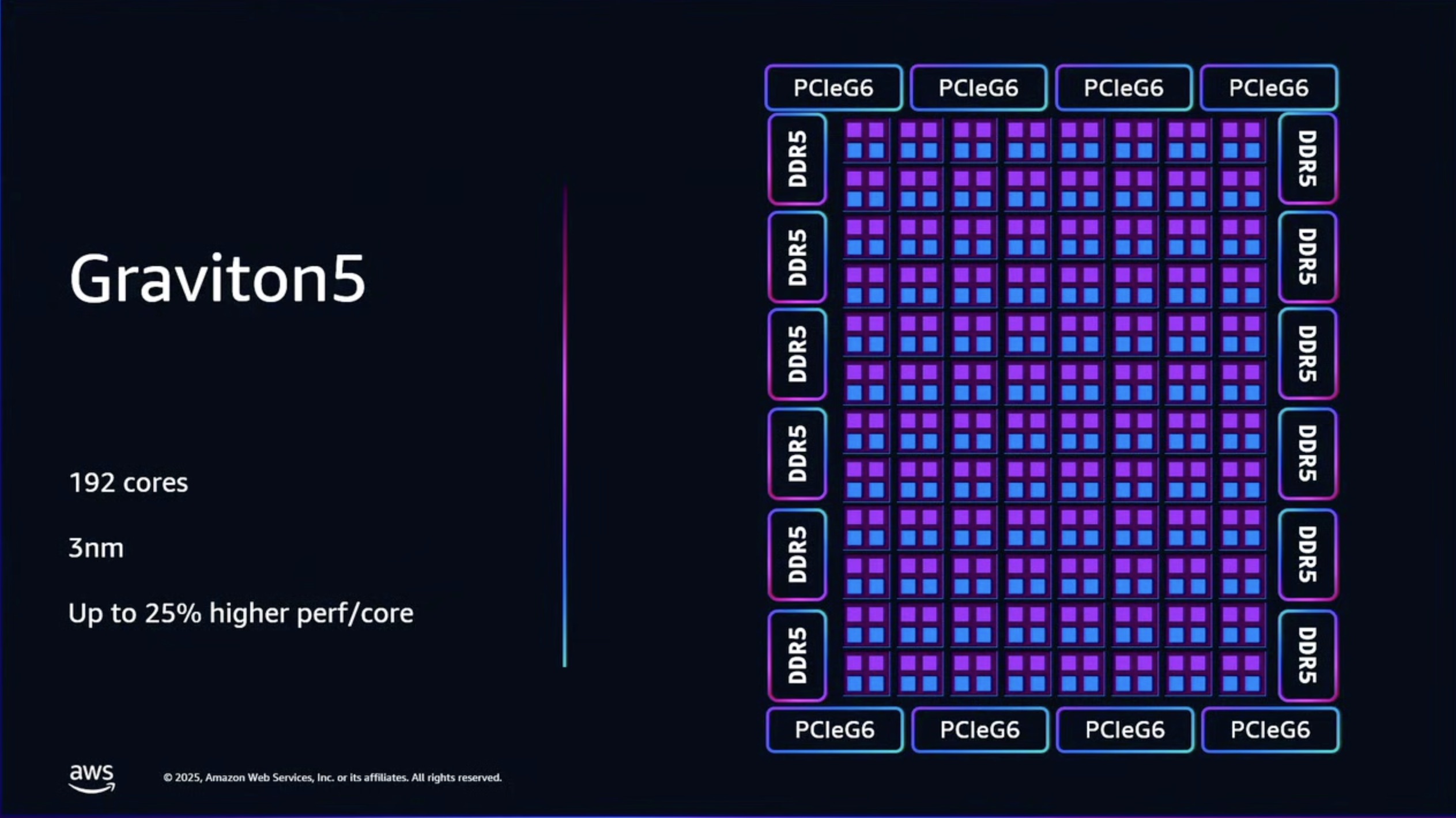
Cores per chip doubled to 192
Graviton5 is designed with 192 cores (Neoverse V3) per chip in a single-socket configuration. The previous generation Graviton4 adopted a dual-socket configuration (maximum total of 192 cores) connecting two 96-core (Neoverse V2) processors.
While Graviton4 could provide up to 192 cores across the entire system, when memory access occurred across processors, there was increased latency and reduced bandwidth due to NUMA.
With Graviton5's single-socket configuration, NUMA latency has been reduced by about 33%, and bandwidth has improved.
Going forward, even with single-socket configurations, NUMA will continue to be used to reduce memory latency, with a design that includes two NUMA regions so that cache and DRAM controllers are closer to the cores.
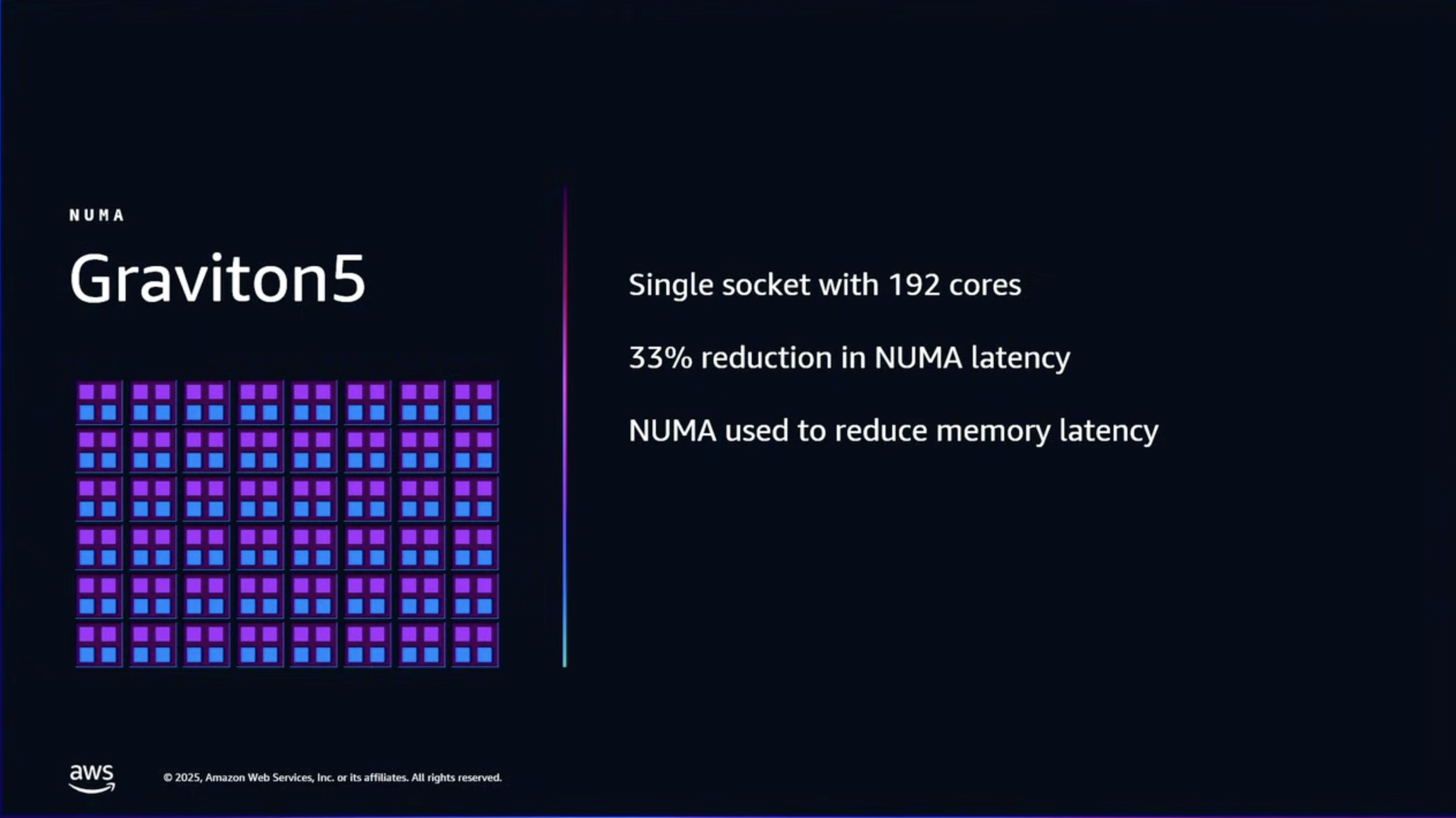
L3 Cache Expansion
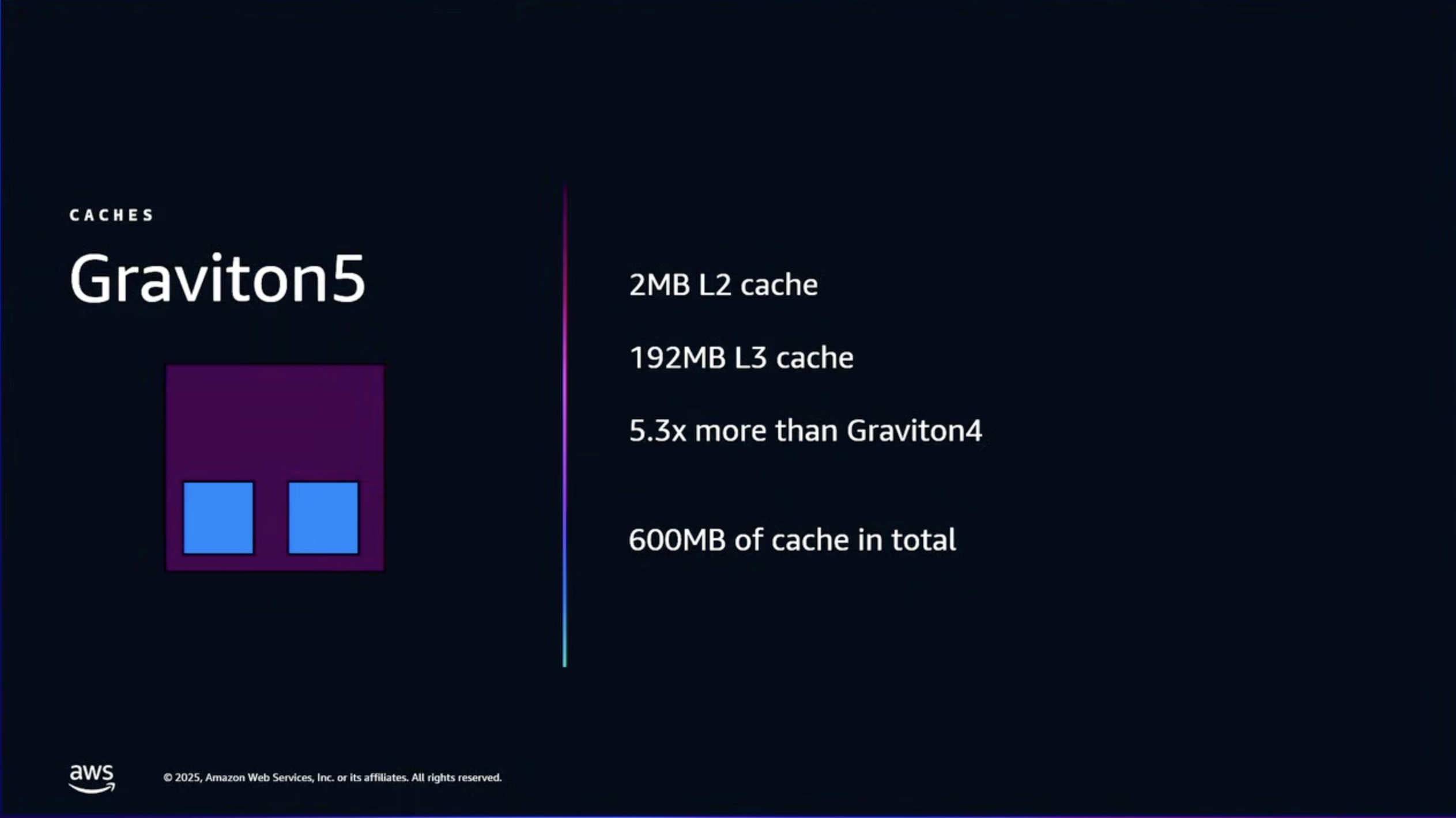
Next is the expansion of the cache area.
Graviton5 has increased the L3 cache to 192 MB. This is 5.3 times larger than Graviton4 (36 MB). This is expected to reduce the frequency of DRAM access. There was no expansion of the L1 and L2 cache areas.
(In the session, they commented that L1 couldn't be expanded due to physical issues, which was interesting.)
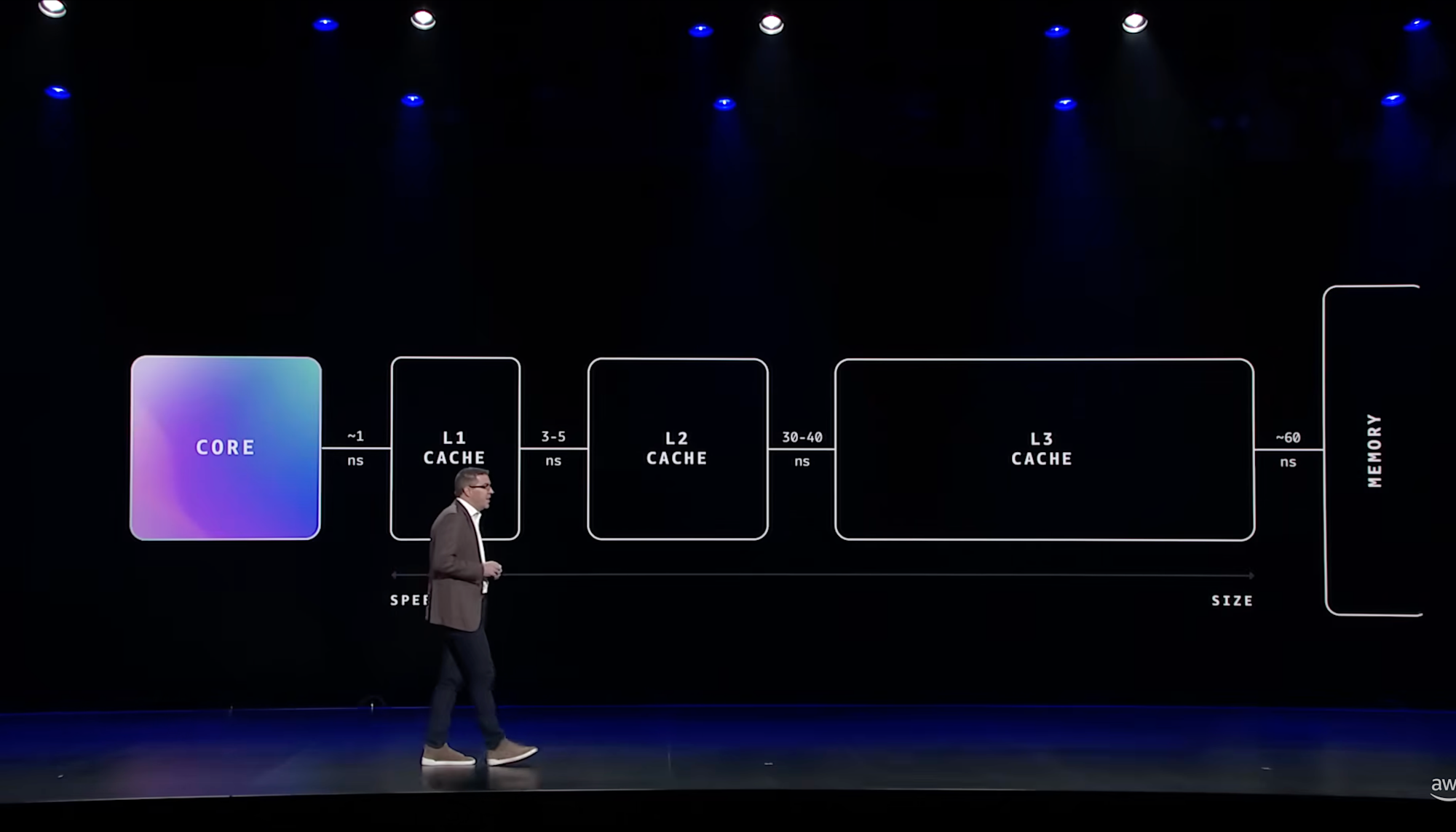
Digressing slightly, in the Keynote, Dave Brown expressed that "access to DRAM can take up to 100 ns, which is a very long time from a CPU cycle perspective, and that's why we love large caches."
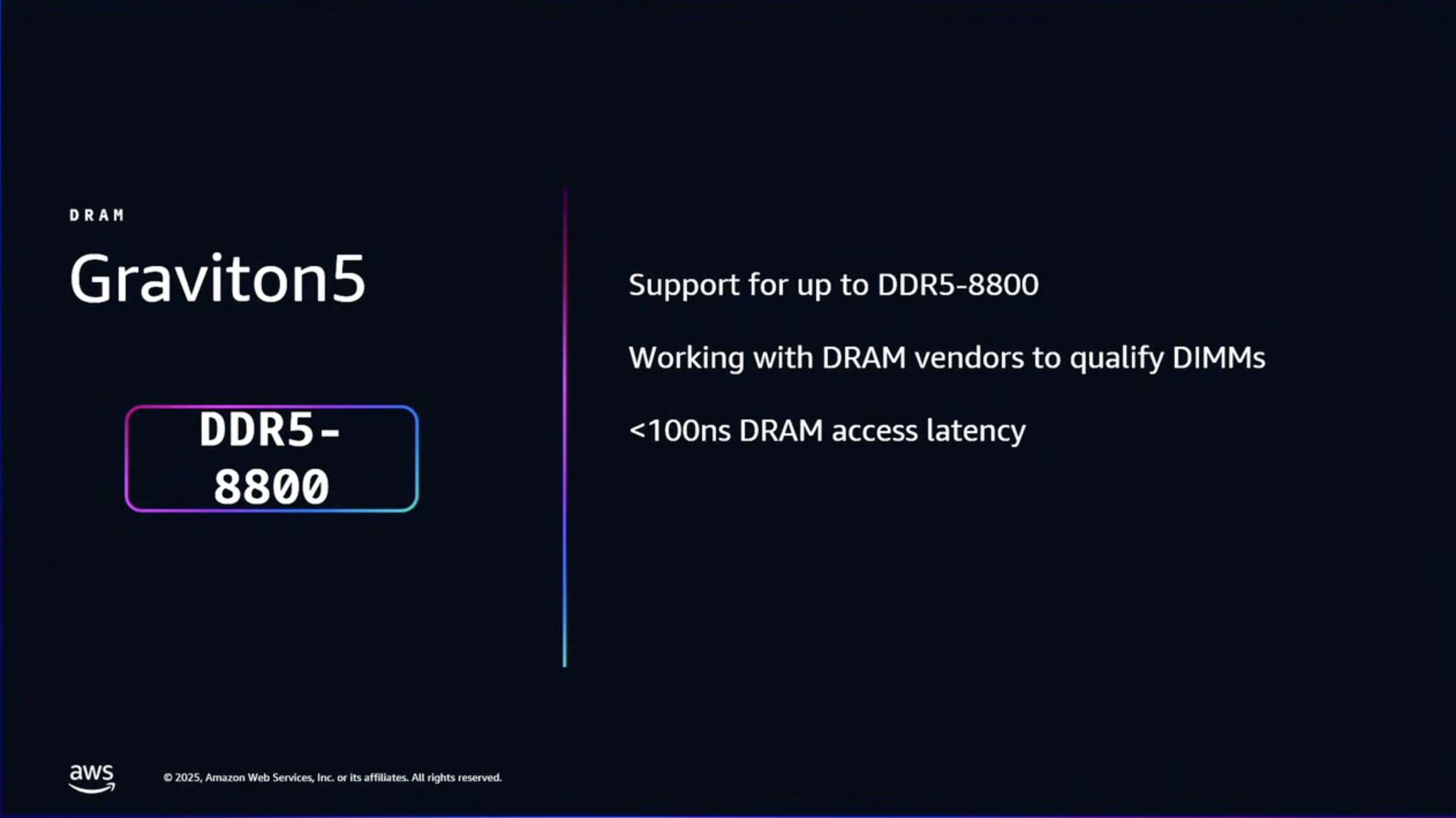
DDR5-8800
DRAM access cases have also been improved.
Graviton5 adopts DDR5-8800, reducing DRAM access latency to under 100 nanoseconds (about 15%).
Looking at the image, there are 12 modules per chip.
PCIe Gen 6
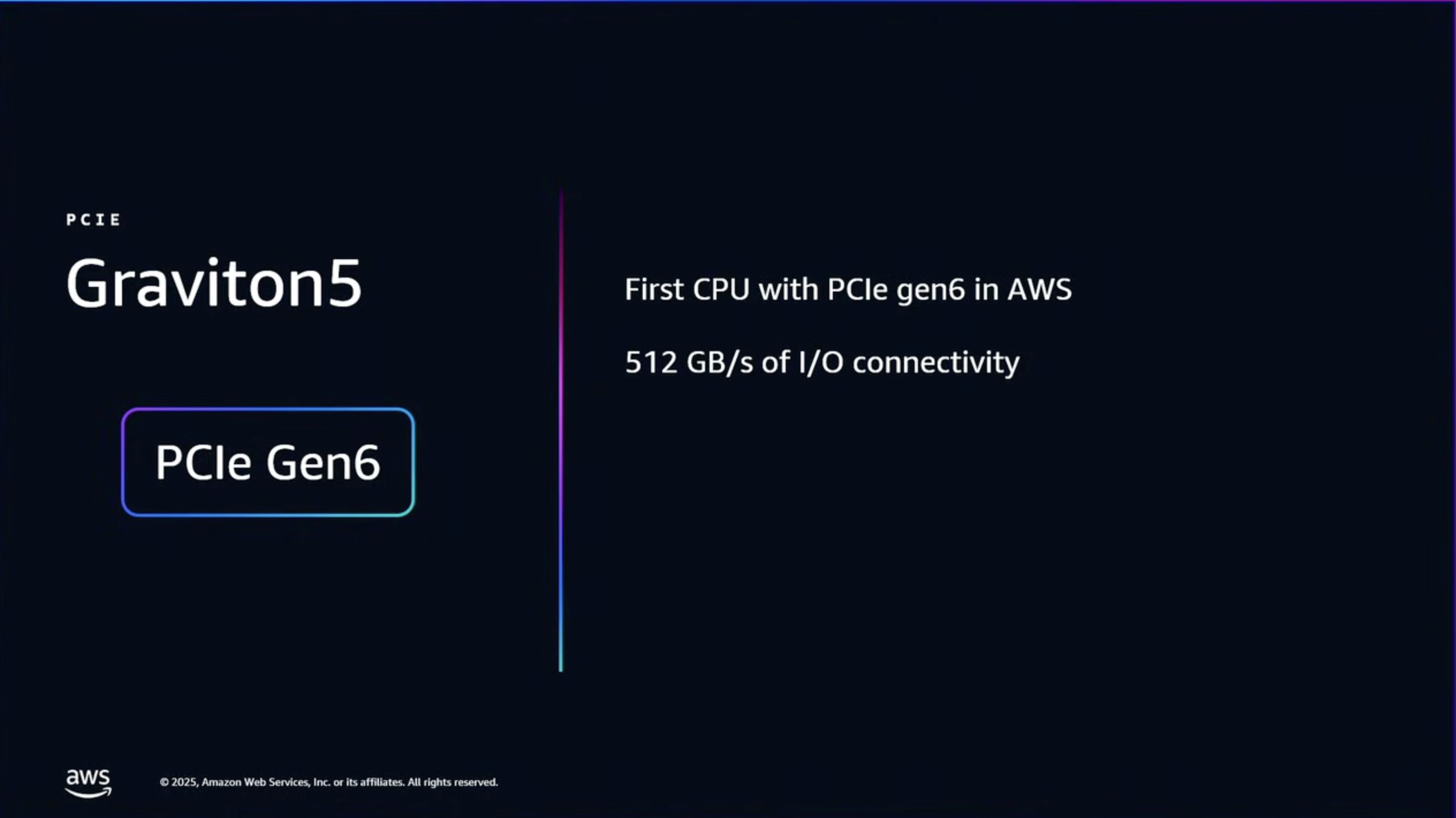
Finally, I/O performance. Graviton5 adopts PCIe Gen 6, achieving I/O connectivity of about 0.5 terabytes/second.
Usage via Form
Currently, M9g instances are available only for cases approved after submitting the usage application form below. (Looking forward to GA!)
Summary
That concludes "AWS Graviton 5-equipped M9g EC2 instances released in preview."
Looking at the Black Belt materials, C9g and R9g are scheduled for release in 2026.
This was mainly about Graviton5, but it was a good opportunity to learn about the changes happening with each generation!
This was Takakuni (@takakuni_) from the Cloud Business Division's Consulting Department!