Auth0 2025: 8 Updates I'm Personally Interested In

This page has been translated by machine translation. View original
Introduction
Auth0 released numerous updates throughout 2025. Many of you may have been too busy with daily tasks to keep up with all of them.
This time, I'll review the Auth0 updates released in 2025 (though I haven't verified all of them) and introduce eight new features that caught my attention, for those who are already using Auth0 or considering implementing it.
1. Japanese Support for Auth0 Dashboard & Documentation
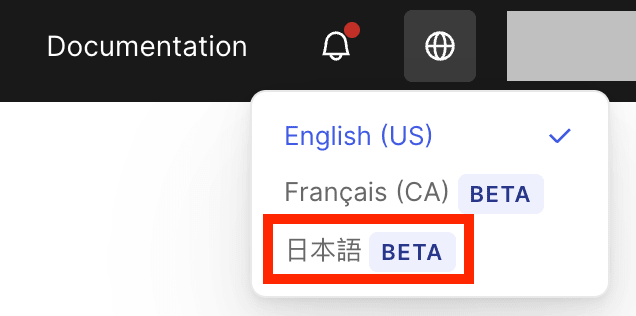
For many years, the Auth0 dashboard was only available in English, but Japanese support was finally added in March 2025.
This is a welcome update for users in Japan.
2. Auth for GenAI: Authentication Infrastructure for AI Agents
As the use of generative AI agents expands, Auth0 now provides an authentication and authorization suite for AI agents.
For reference, check out my colleague's blog: GA in November 2025! Auth0 for AI Agents - I wasn't quite convinced of its "benefits" so I used the quickstart to verify that "AI cannot answer beyond the user permissions it's executing with"
Official documentation: Auth0 for AI Agents
3. Multiple Custom Domain Support for Tenants (Early Access)
Until now, Auth0 tenants could only set up one custom domain, but Multiple Custom Domains (MCD) is now available as an Early Access feature.
For businesses operating multiple brands as they grow, the ability to manage multiple domains in a single tenant allows for more flexible operations.
Check out this blog where I tested it: I Tried Auth0's Multiple Custom Domain (MCD) Feature (Early Access)
4. Non-Unique Emails (Open Early Access)
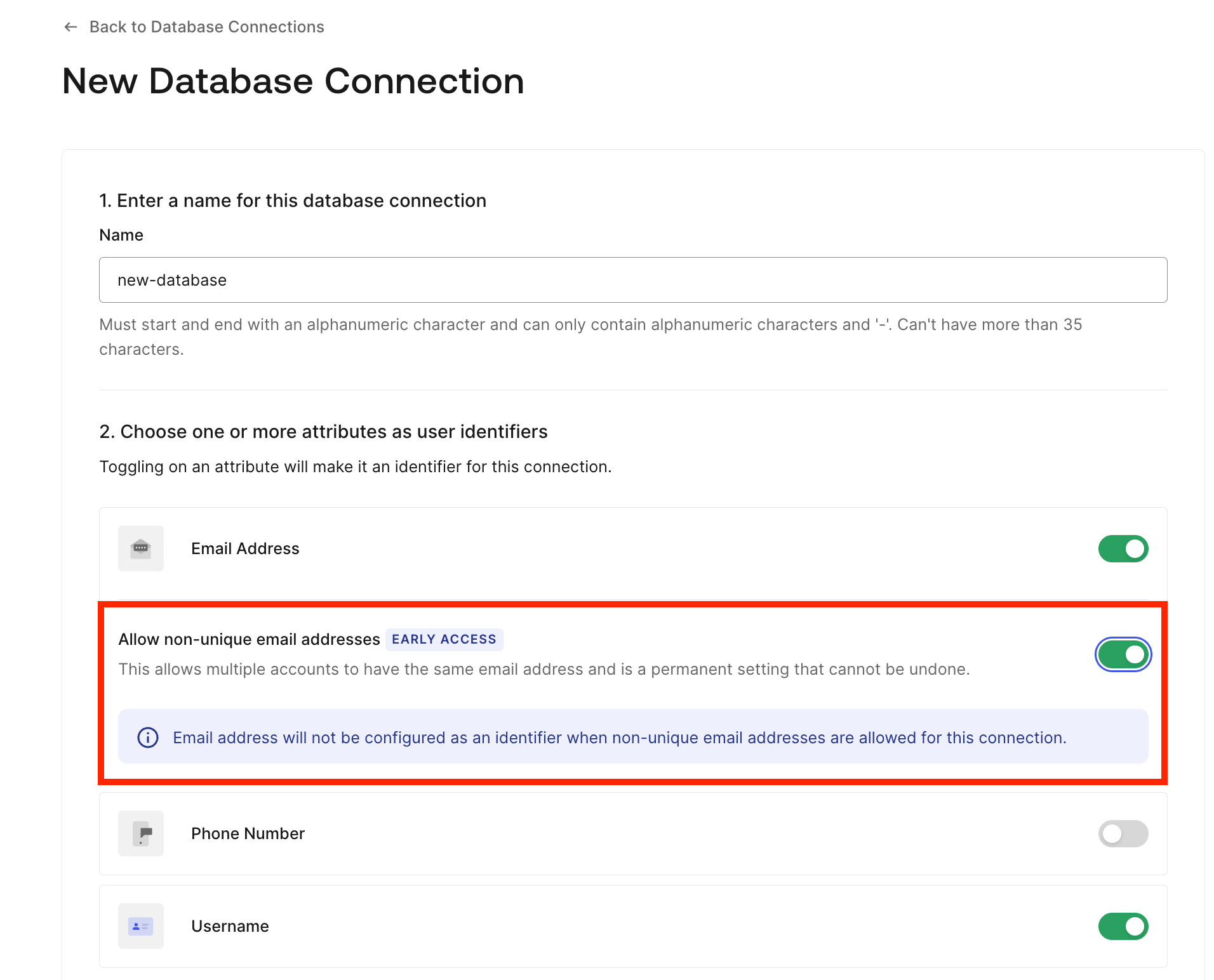
Traditionally, email addresses served as unique identifiers for users within Database Connections, but Non-Unique Emails is now available. Note that this only applies to newly created Database Connections and cannot be applied to existing ones.
Official documentation: Non-Unique Emails
5. Dry Run Feature Added to Auth0 Deploy CLI
I previously wrote about migrating tenant settings using Auth0 Deploy CLI: Migrating Tenant Settings with Auth0 Deploy CLI Tool (export/import)
The import command was:
a0deploy import --config_file config-import.json --input_file tenant.yaml
Now, by adding the --dry_run flag, you can preview the changes that will be applied to the target tenant before actually applying them:
a0deploy import --config_file config-import.json --input_file tenant.yaml --dry_run
This makes applying changes to production environments safer by allowing you to see which resources will be created, updated, or deleted in advance.
6. Tenant Access Control List (Tenant ACL) Now GA
Access Control Lists (ACL) at the Auth0 tenant level have become Generally Available.
Previously, you had to implement ACLs in Actions or APIs, but now you can manage ACLs directly in tenant settings.
Check out this blog where I tested it: Blocking Access from Specific IPs with Auth0's ACL Feature
7. Enhanced Auth0 Support Center
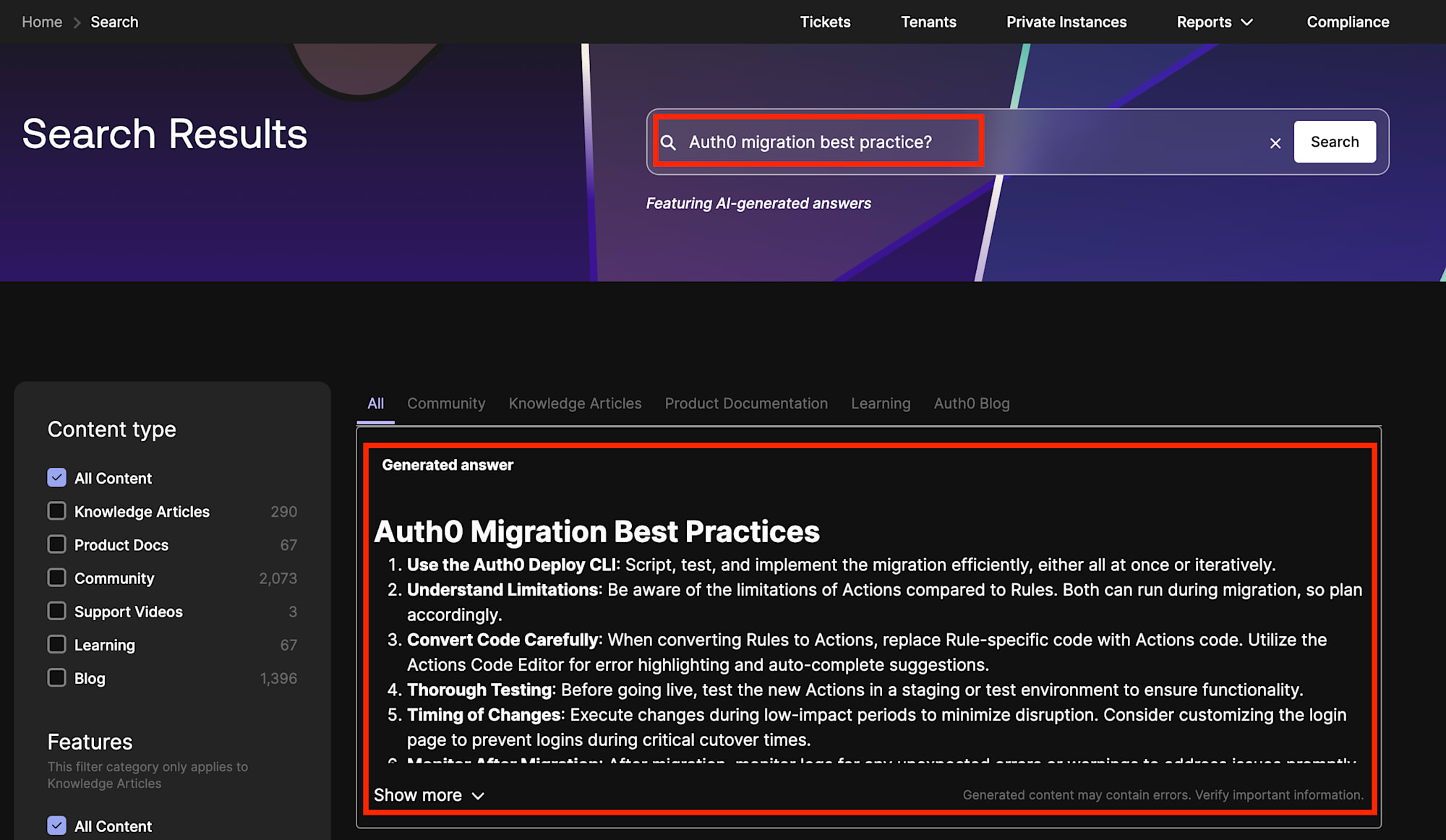
The Auth0 Support Center has been enhanced and now provides an official knowledge base and AI-powered Summarized Solutions feature.
Previously, when issues arose, you had to search for related articles or community answers individually, but now you get summarized answers powered by AI.
Note that as of February 2026, Summarized Solutions is only available in English. Searching in Japanese has low accuracy and doesn't trigger Summarized Solutions. We hope for multilingual support in the future.
8. Organization Discovery by Domain (Early Access)
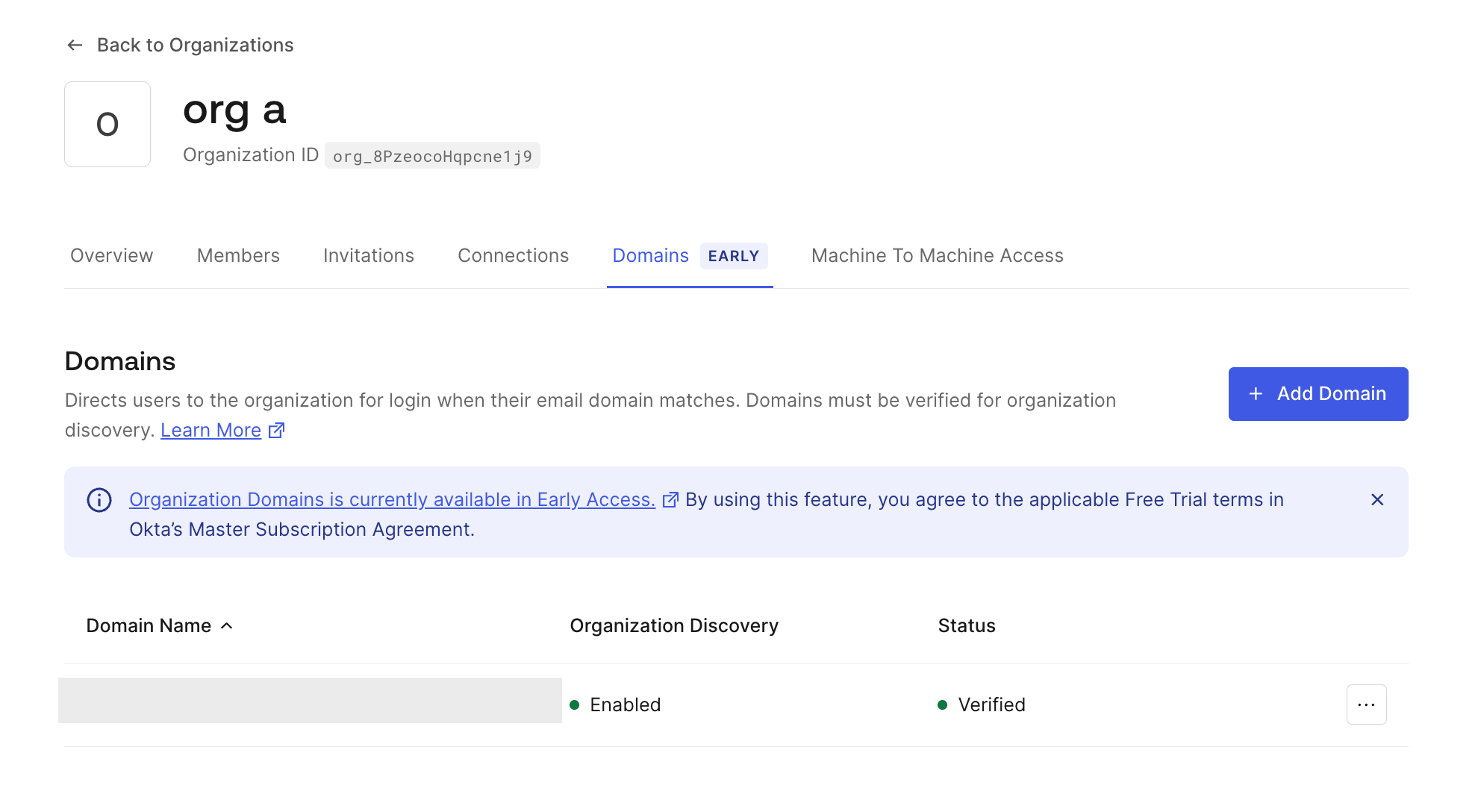
Domain-based discovery for custom login flows in Auth0 Organizations is now available as an Early Access feature.
By linking multiple email domains in the Organization's Domains settings, the system can automatically detect which Organization a user belongs to during login.
Conclusion
2025 was a year with many updates for Auth0. It includes updates that developers will appreciate, such as authentication infrastructure for AI agents and Japanese language support.
There are many more updates besides those covered in this article, so if you're interested, check out the Auth0 Official Blog and Changelog.