![[Report] Deploy AI Apps at Blazing Speed Next to Your Data - Introducing App Runtime & Cortex SDK #SWTokyo26](https://images.ctfassets.net/ct0aopd36mqt/4kFYCMTvi9ucEtpiAfvm01/b605f81aa314b1fdbc86f8fee275fb43/eyecatch_snowflakeworldtourtokyo2026.webp?w=3840&fm=webp)
[Report] Deploy AI Apps at Blazing Speed Next to Your Data - Introducing App Runtime & Cortex SDK #SWTokyo26

This page has been translated by machine translation. View original
This is Suzuki from the Data Business Division.
"SNOWFLAKE WORLD TOUR TOKYO 2026" was held on September 10–11, 2026.
This article is a report blog for the session 'Deploy AI Apps at Lightning Speed Next to Your Data - Introducing App Runtime & Cortex SDK'.
This was a session covering Snowflake App Runtime, which became generally available this month, and the Cortex Code Agent SDK, currently available in preview.
Some of the features introduced during the session are in preview or relate to future roadmap items. Please refer to the latest official documentation for availability.
(Safe harbor and disclaimer projected at the beginning of the session)
This article introduces the key points as understood by the author based on the content viewed.
Presenter
- Tsubasa Kanno
- Snowflake G.K.
- Principal Solution Engineer, Solution Engineering Division

Introduction to the Content
1. Benefits of Snowflake App Runtime
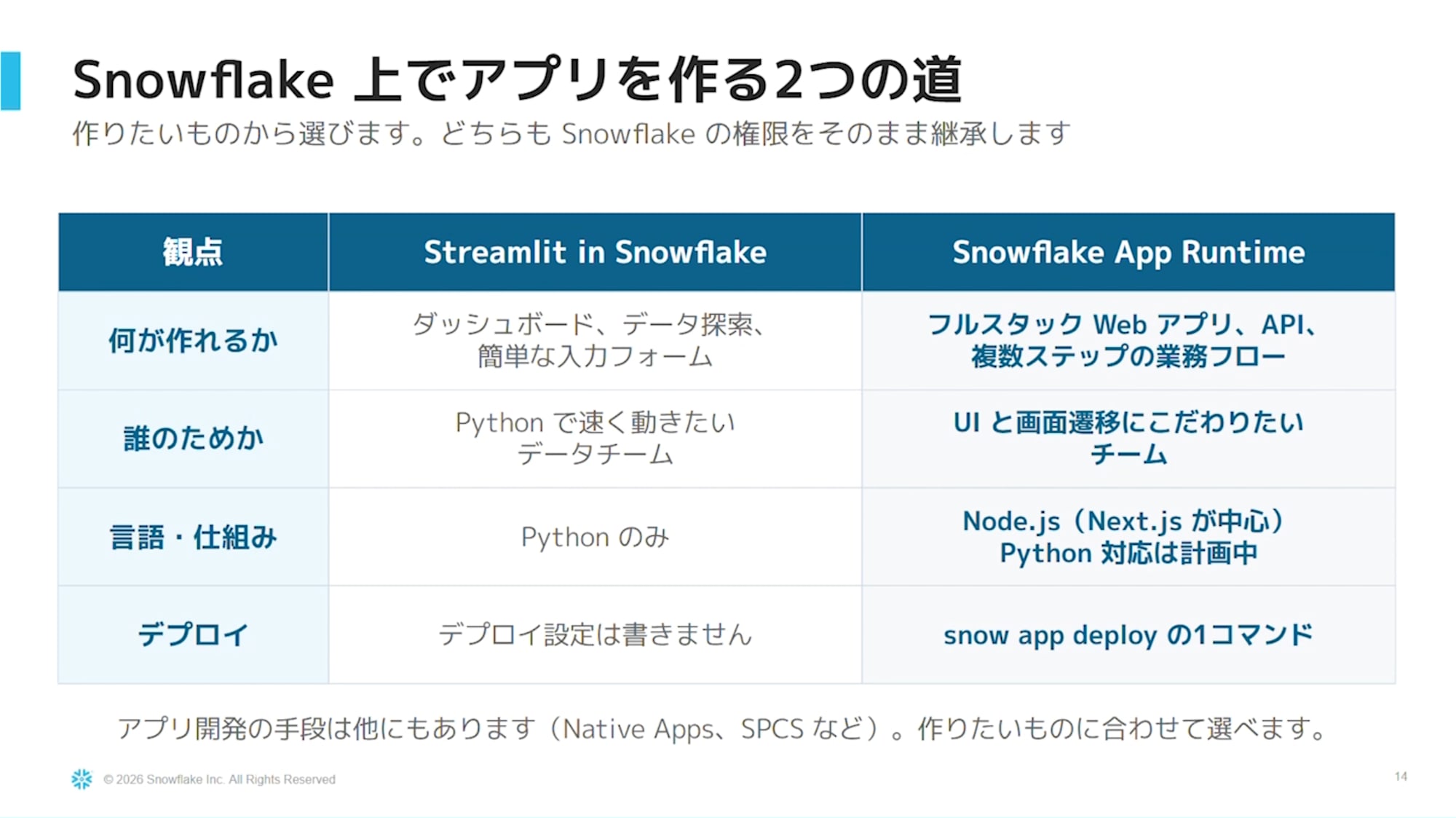
An overview and features of Snowflake App Runtime were explained.
I was able to understand that the following are among the key benefits. These are likely features that many Snowflake users have been hoping for.
- Direct access to Snowflake data from the app is possible
- Two types of permission control are available: app execution role and Caller's Rights
- The same governance as Snowflake can be applied, including RLS (row access policies) set on tables
- Deployment is possible with just the
snow app deploycommand, so users don't need to worry about Docker-related operations and can focus on developing the app itself - All apps can be managed in Snowsight, preventing them from going untracked and making audits easier
- Authentication is automatically handled
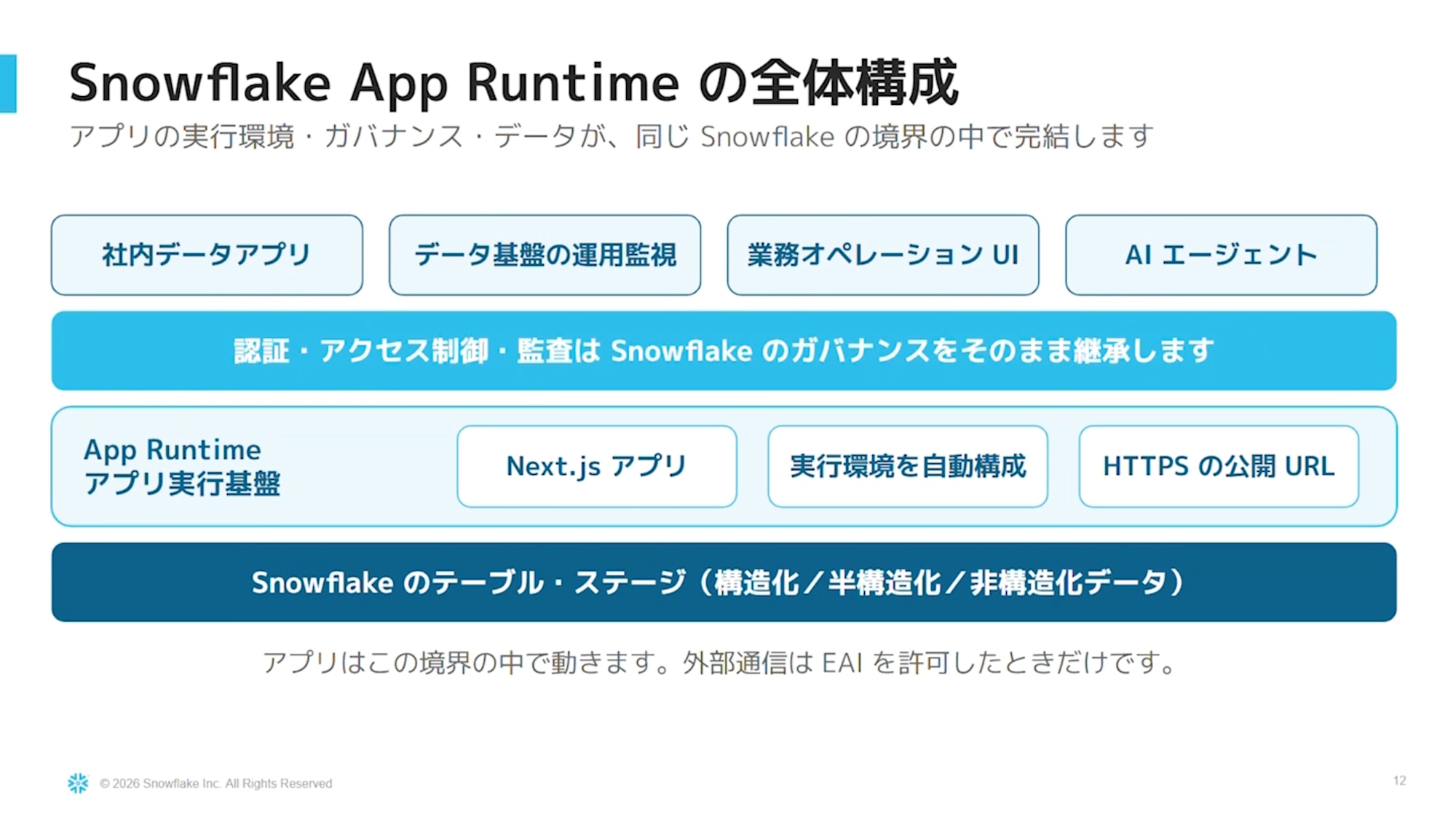
I had a strong impression that Snowflake App Runtime deployment was closely tied to CoCo, but it was also mentioned that development is possible from any tool. Development from CoCo is extremely convenient, but it also seems easy to use for those who usually develop outside of CoCo, or for those who want to verify some implementation manually and build a deployment pipeline using the snow app deploy command.
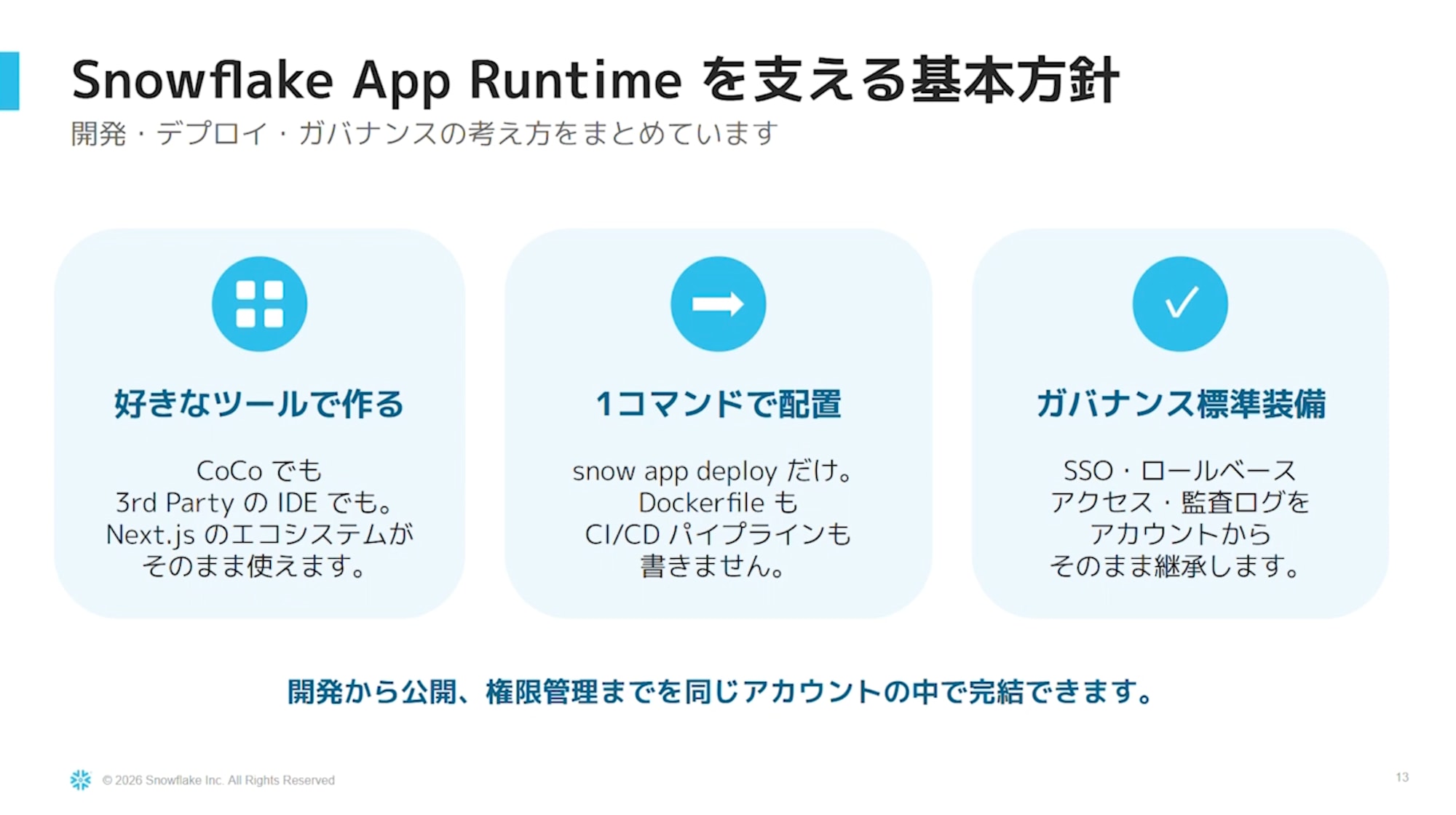
Also, when it comes to building lightweight applications in Snowflake today, Streamlit apps are often compared to Snowflake App Runtime. It made sense to me that Snowflake App Runtime is better suited for web applications with more complex screen transitions.
Of course, those who want the benefits mentioned above, or who regularly use Next.js, may well choose App Runtime.
2. Introduction to Deployment Example Using CoCo
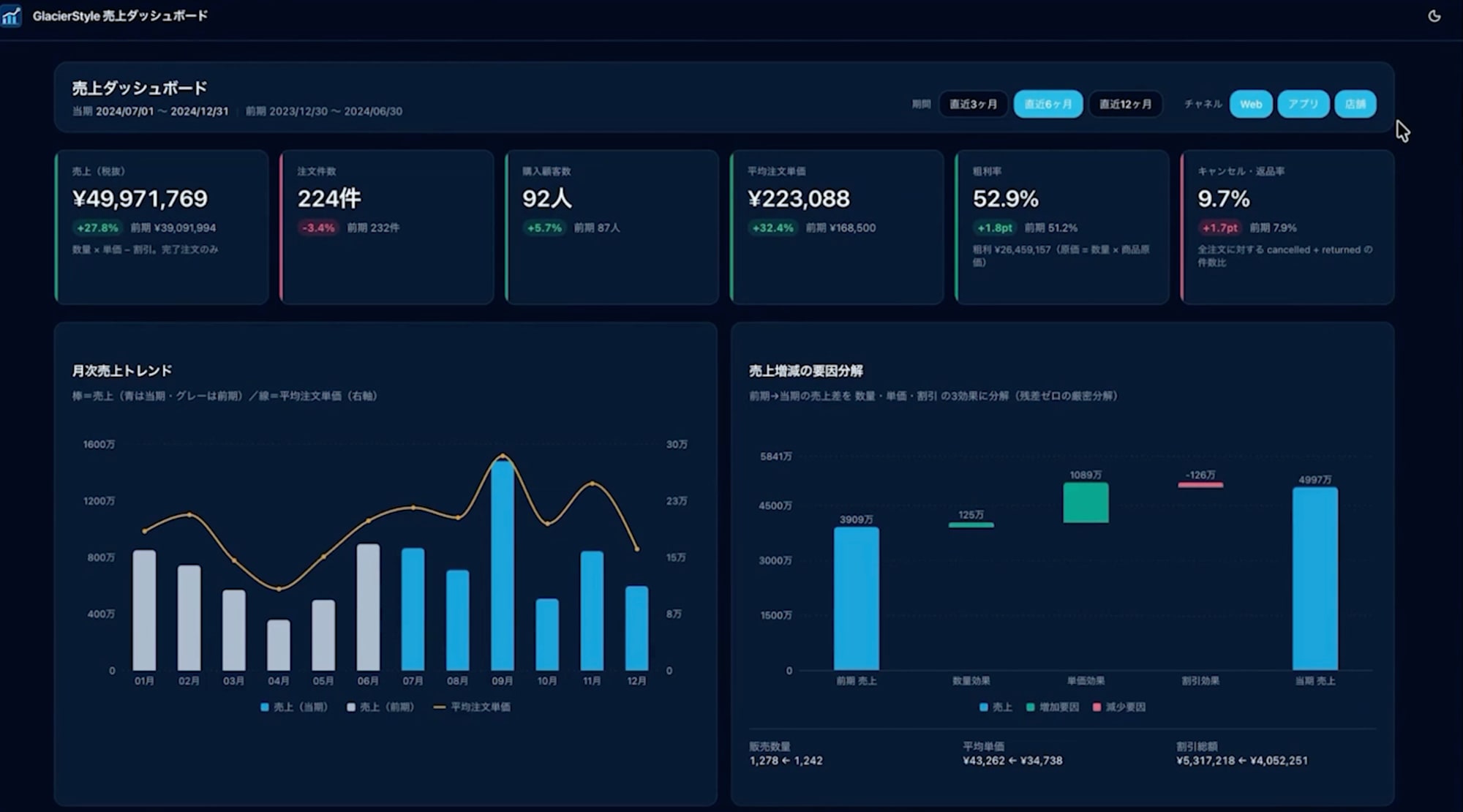
A demo of deploying from CoCo Desktop was also shown, and we could see how easily a data app gets deployed.
Development was done from CoCo Desktop using snowflake-apps skills.
Even with just a small amount of input after specifying a data source, a data dashboard was built, which looked extremely convenient.
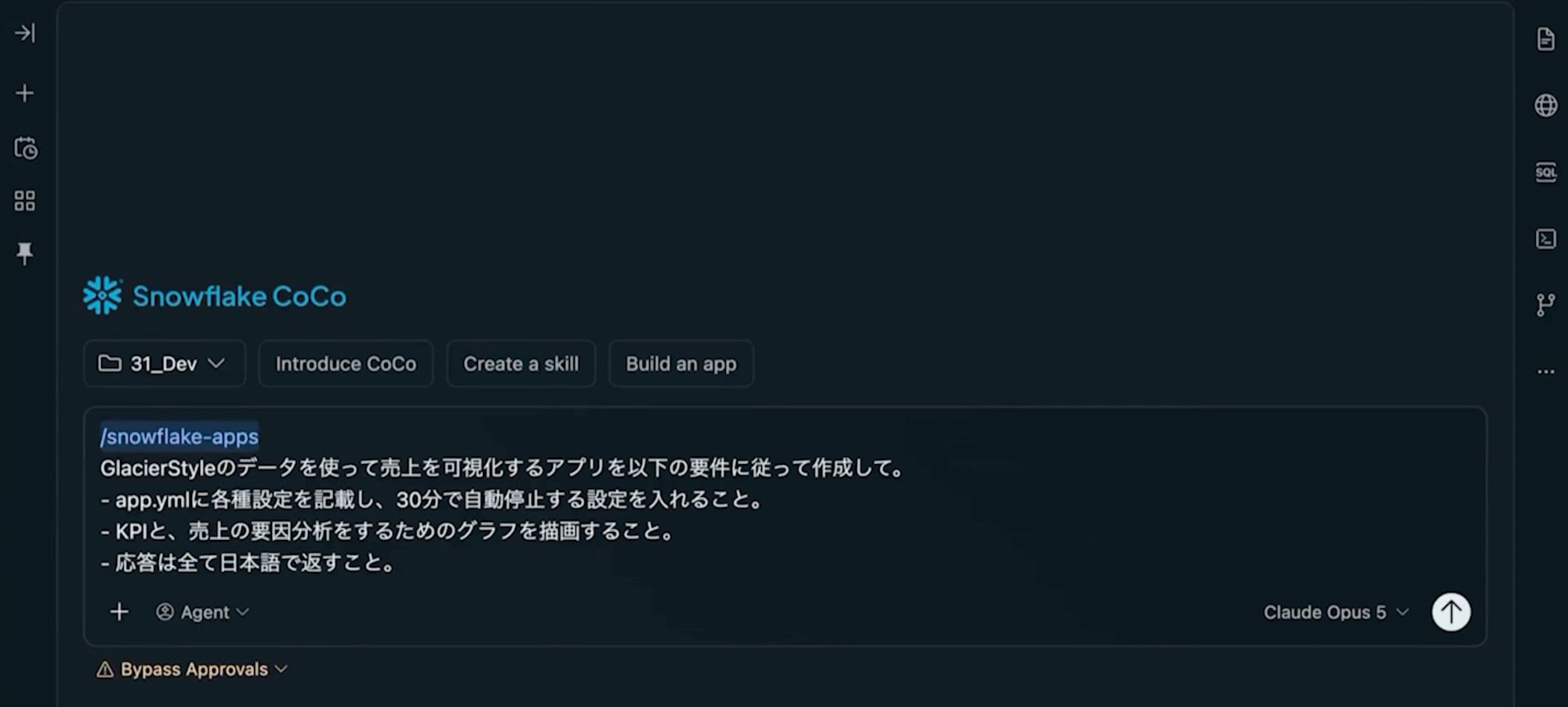
I was a bit concerned about whether metrics might be implemented carelessly in the previous example, but when there were any unclear points, it properly asked for clarification.
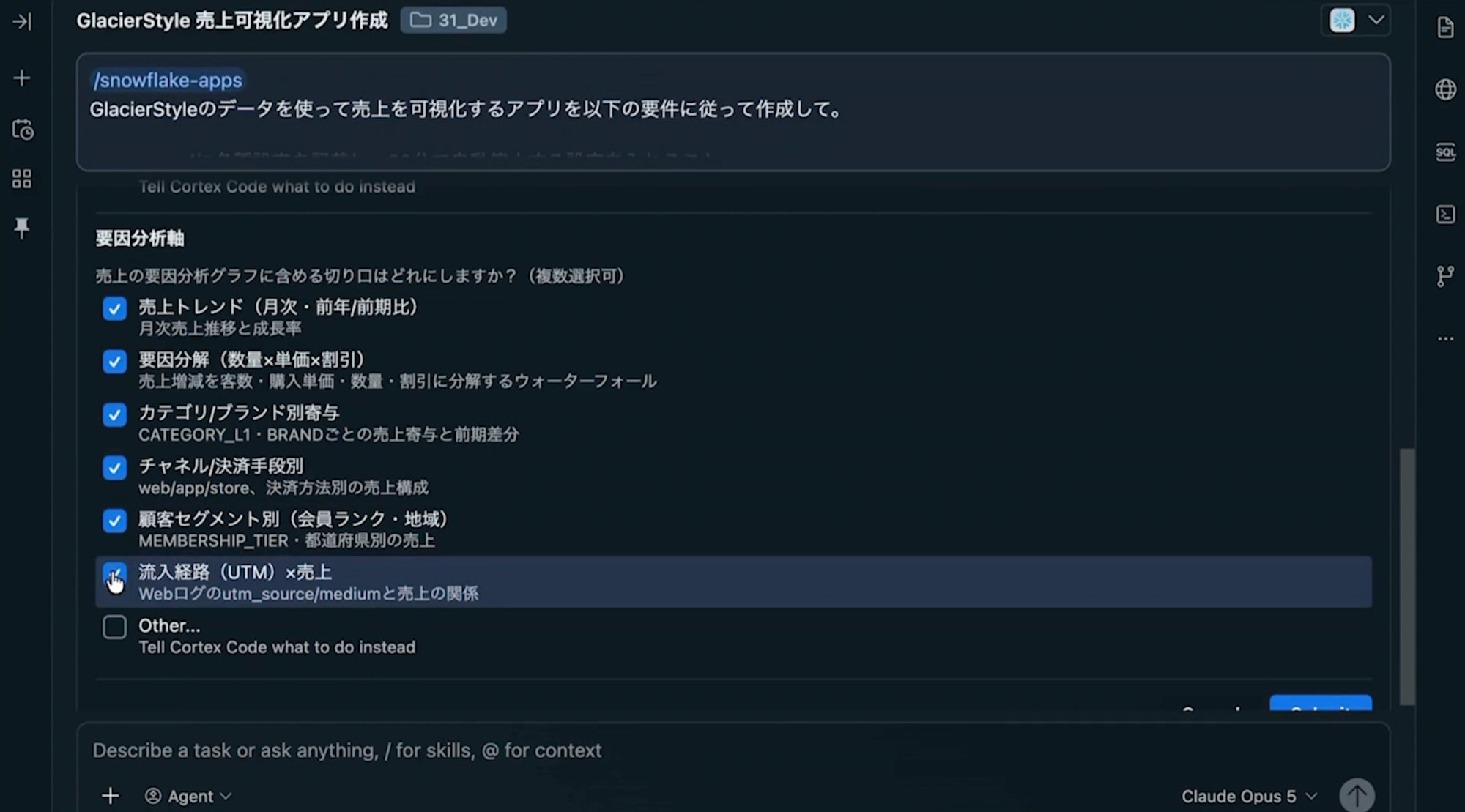
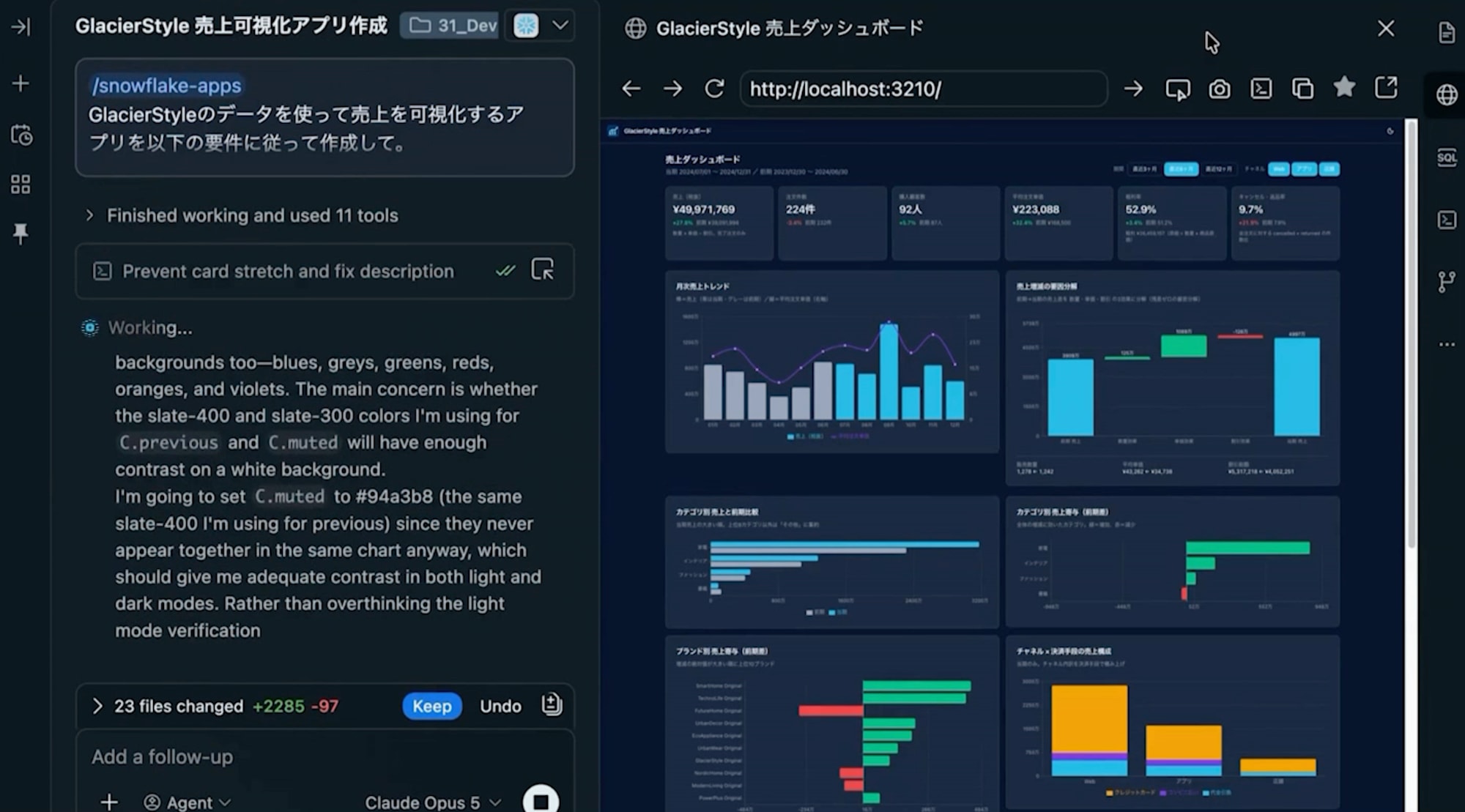
It validated the data, considered the app design, implemented it, and even ran unit tests. It was mentioned that a sub-agent calls a separate agent that critically reviews the output.
The app was created in no time, and we could even see it being verified locally before deployment.
If there were no issues, you could request deployment to Snowflake, and it seemed you could also ask CoCo to polish things up a bit further.
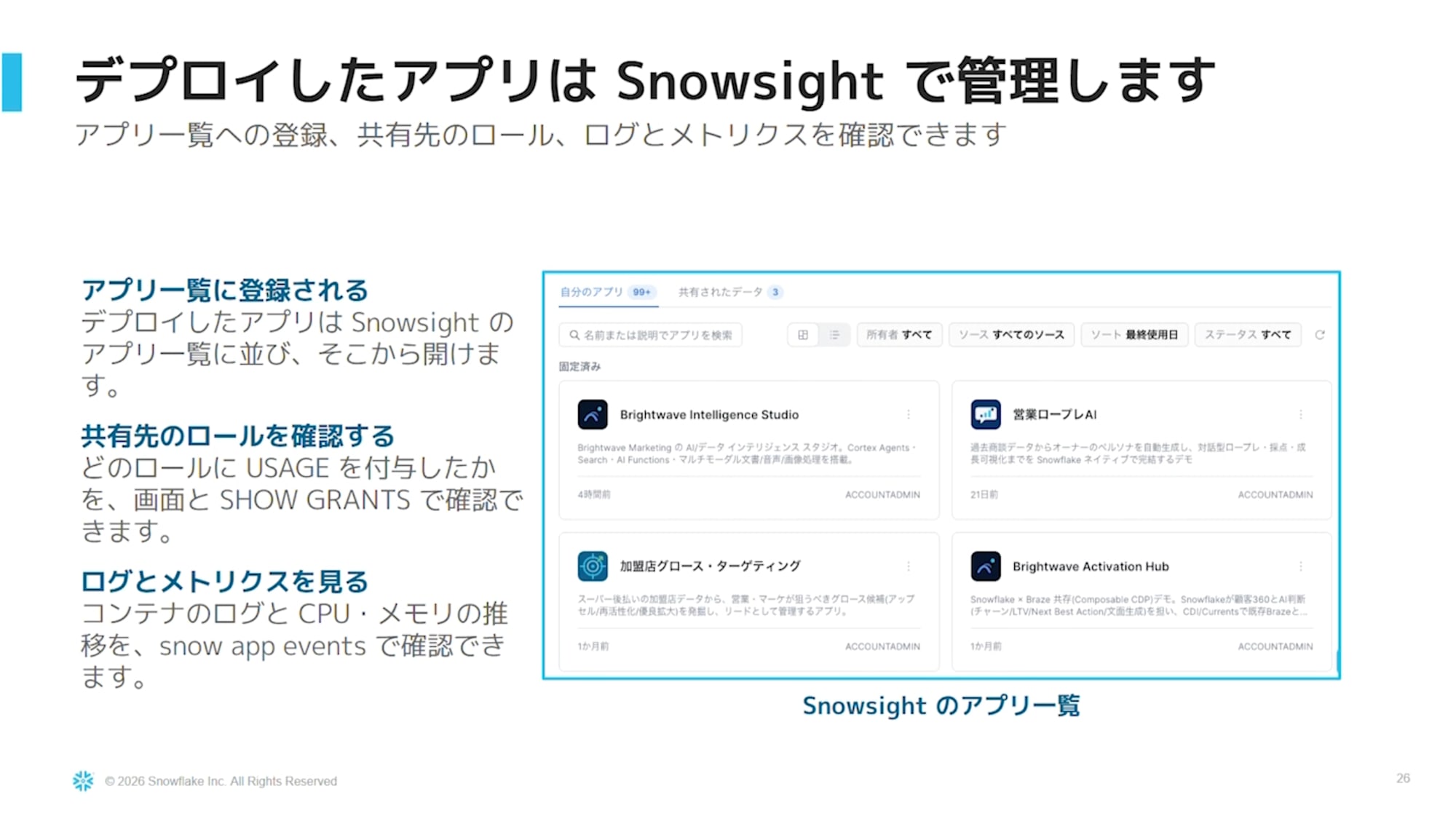
Once deployed, it can be viewed from Snowsight, and since you can access it via a public URL using Snowflake authentication, even those unfamiliar with app hosting can easily share it with internal members who have access to Snowflake.
3. What Is Required for Deployment with App Runtime
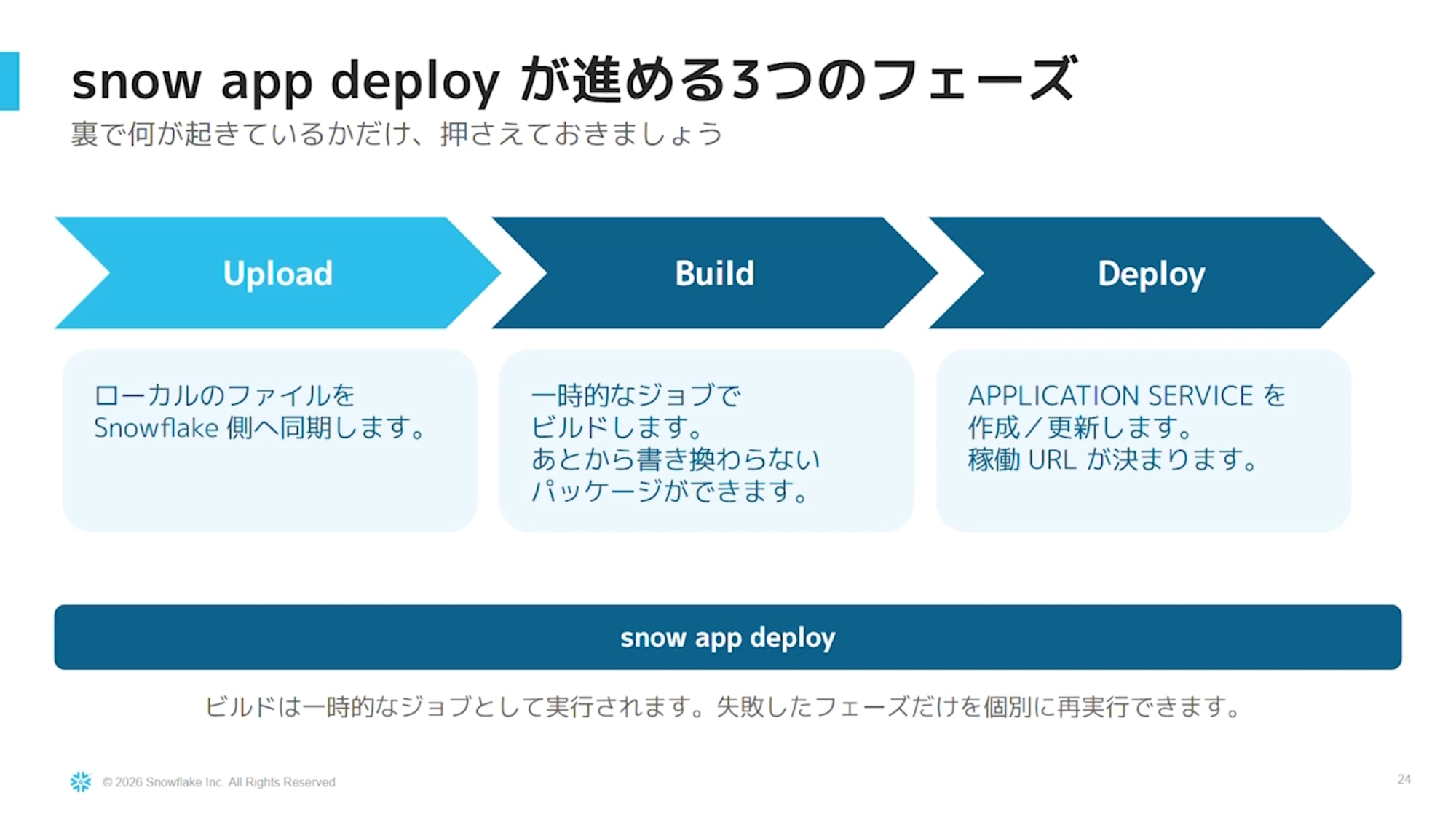
While the app can be deployed with just the snow app deploy command, internally it performs upload, build, and deploy steps — all handled by a single command.
Since those building Snowflake environments are primarily data engineers, analysts, and business users, I think simplifying web app construction to this extent makes it extremely easy to use.
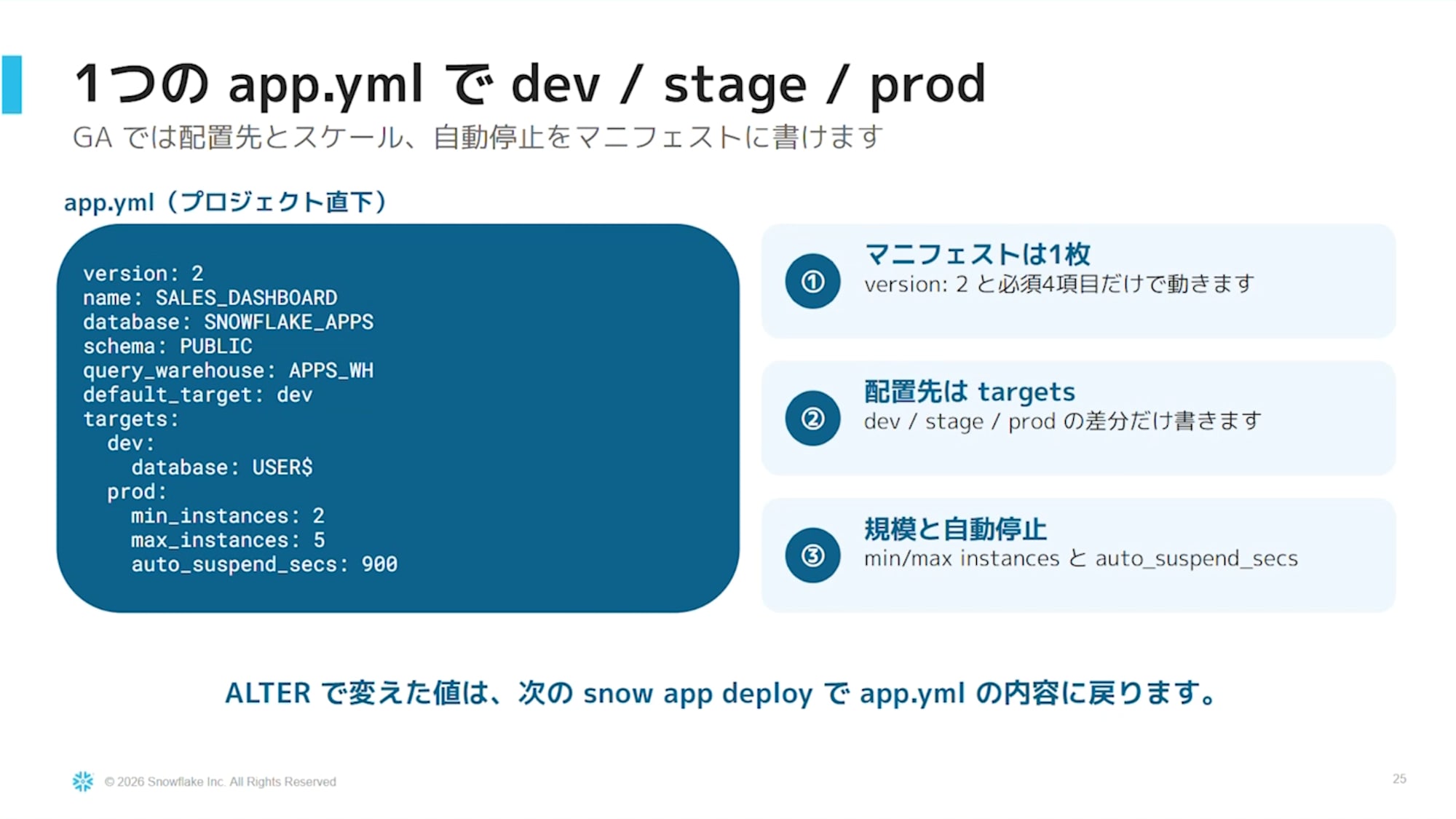
App settings can be configured in app.yml. In particular, the ability to switch deployment targets, and to set max/min_instances and auto_suspend_secs, means that infrastructure scaling and automatic suspension can be configured, making it easy to manage.
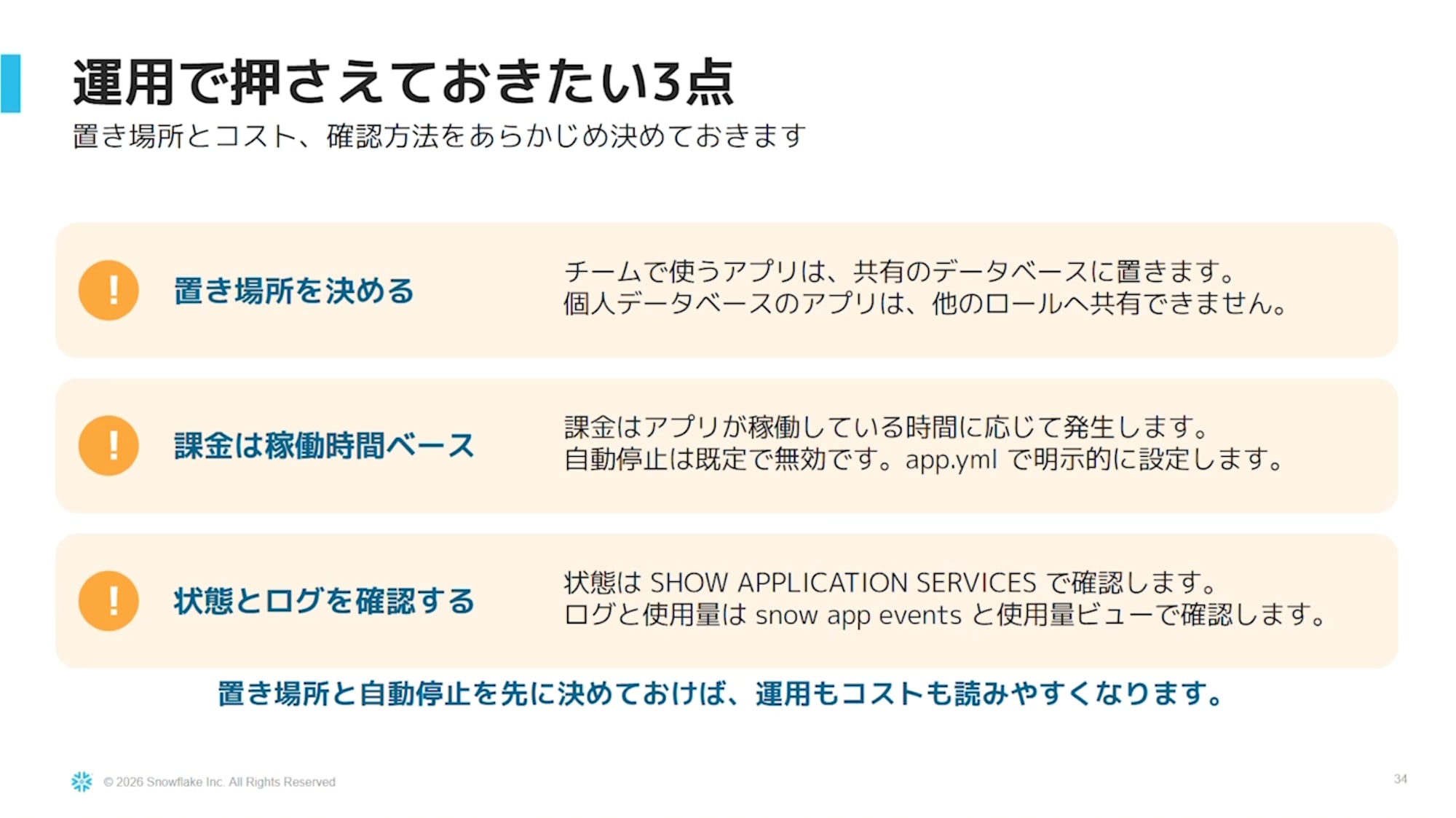
There was also a very helpful introduction to operational points worth keeping in mind. Since this feature will likely be used by many members regardless of their role, establishing rules about where apps are stored is important, and it is also crucial to understand the specifications around costs and logs.
4. About the Cortex SDK
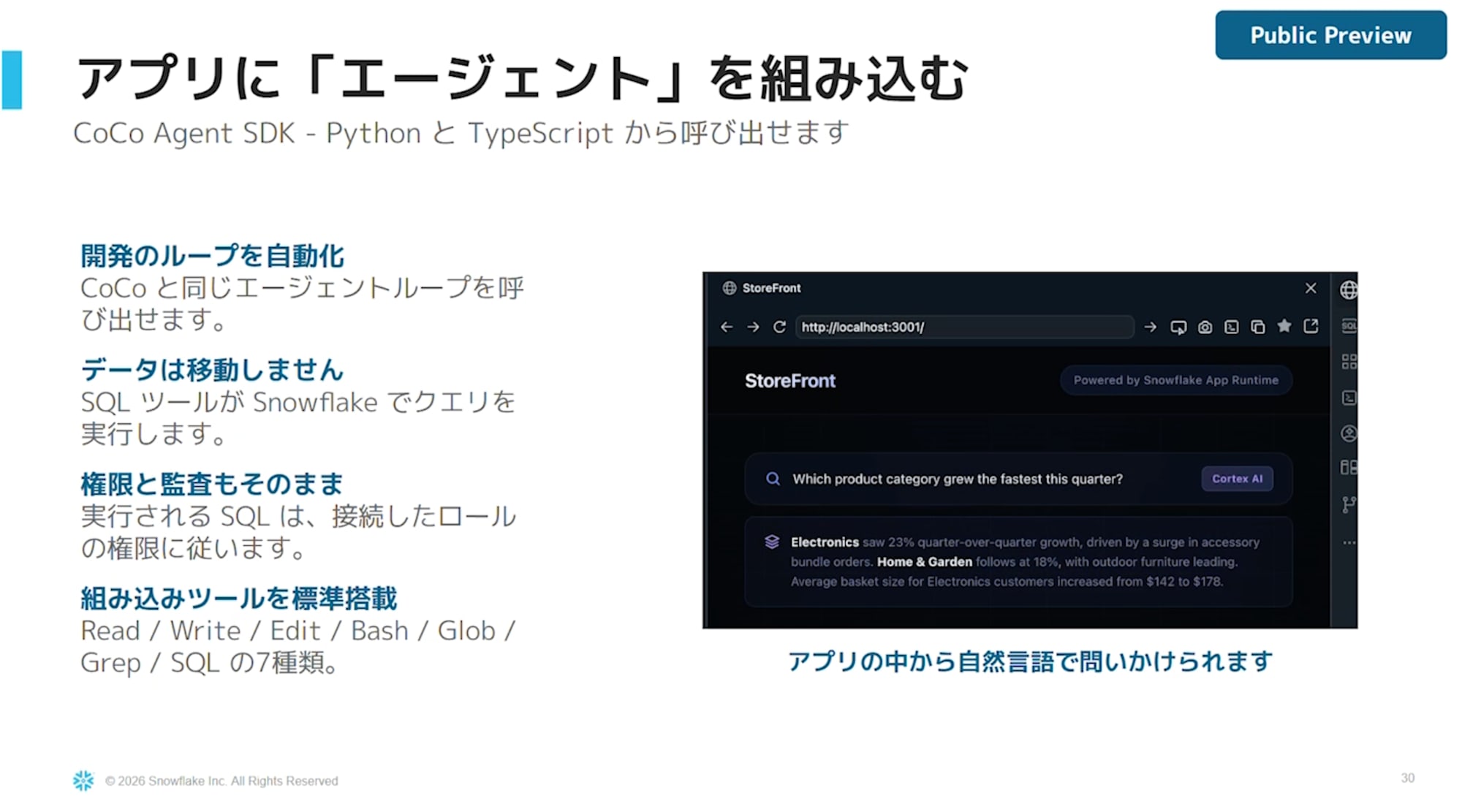
The Cortex SDK, currently available in preview, was also introduced. Using the CoCo Agent SDK, it is possible to incorporate Cortex Code-based agent functionality into apps. By leveraging Snowflake's capabilities through tools, the potential for further extending the functionality of apps hosted on App Runtime is very exciting.
Impressions After Attending the Session
Regarding App Runtime, I had previously tried a simple example during the preview period myself, but this session allowed me to learn in a more practical way about how to use it, how it works, and the key points to keep in mind — it was very informative.
I don't build many web apps myself, but since authentication and access control governance follows the Snowflake environment, it seems safe and reliable to use, so I decided to take this opportunity to get up to speed with App Runtime.
I also have high expectations for the possibility of using the CoCo Agent SDK to build UIs that provide AI functionality beyond CoWork.
By learning about these features, I hope to make increasing use of Snowflake's app capabilities going forward.