![[Session Report] In-house Service Development in the Age of Generative AI: The Past and Future of Kyocera Robotic Service Development #ClassmethodForum](https://devio2024-media.developers.io/image/upload/f_auto,q_auto,w_3840/v1779750368/user-gen-eyecatch/bwmhh5papm8easye2apc.png)
[Session Report] In-house Service Development in the Age of Generative AI: The Past and Future of Kyocera Robotic Service Development #ClassmethodForum

This page has been translated by machine translation. View original
Introduction
I'm Fujii (Da) from the Manufacturing Business Technology Division.
At Classmethod Forum held on Wednesday, May 20, 2026, Mr. Tatsumi from the Robotics Division of Kyocera Corporation gave a presentation titled "In-House Service Development in the Age of Generative AI: The Past and Future of Kyocera Robotic Service Development."
Since we have had a long-standing relationship supporting Kyocera, and we received special permission from them, we are publishing a session report on the Classmethod Forum presentation.
Kyocera Robotic Service, which we have been particularly supporting, has cooperated with us many times in the past through case study publications, Classmethod Showcase presentations, and AWS Summit partner session presentations.
These are published below, including a visit report to the Kyocera booth at Monodukuri World Kyushu 2024 by our members.
Please take a look, as it will also give you a clearer picture of the content of this presentation.
Session Overview and Summary
The session introduced the past development of the cloud infrastructure supporting "Kyocera Robotic Service," an intelligence service for collaborative robots provided by Kyocera Corporation, as well as the future development structure that fully incorporates generative AI (coding agents).
In the past, the company collaborated with Classmethod to build a secure multi-tenant infrastructure that allows safe connections from production sites, utilizing AWS Organizations and Amazon EKS.
Currently, to improve development speed and handle complex requirements, the coding agent "Claude Code" has been introduced to all cloud development members, including those at Classmethod, and they have successfully launched complex new features spanning multiple domains in a short period of time.
As specific initiatives, they introduced efforts to sandbox the usage environment for safe AI utilization and to establish guidelines. They also stated that existing software development practices remain important even in the AI era, and that the most important mindset is for "engineers to explain AI output in their own words and take responsibility for it."
Session Report
"In-House Service Development in the Age of Generative AI: The Past and Future of Kyocera Robotic Service Development"
Venue C, Manufacturing & Implementation Session, 14:30 - 15:00
Speaker Introduction
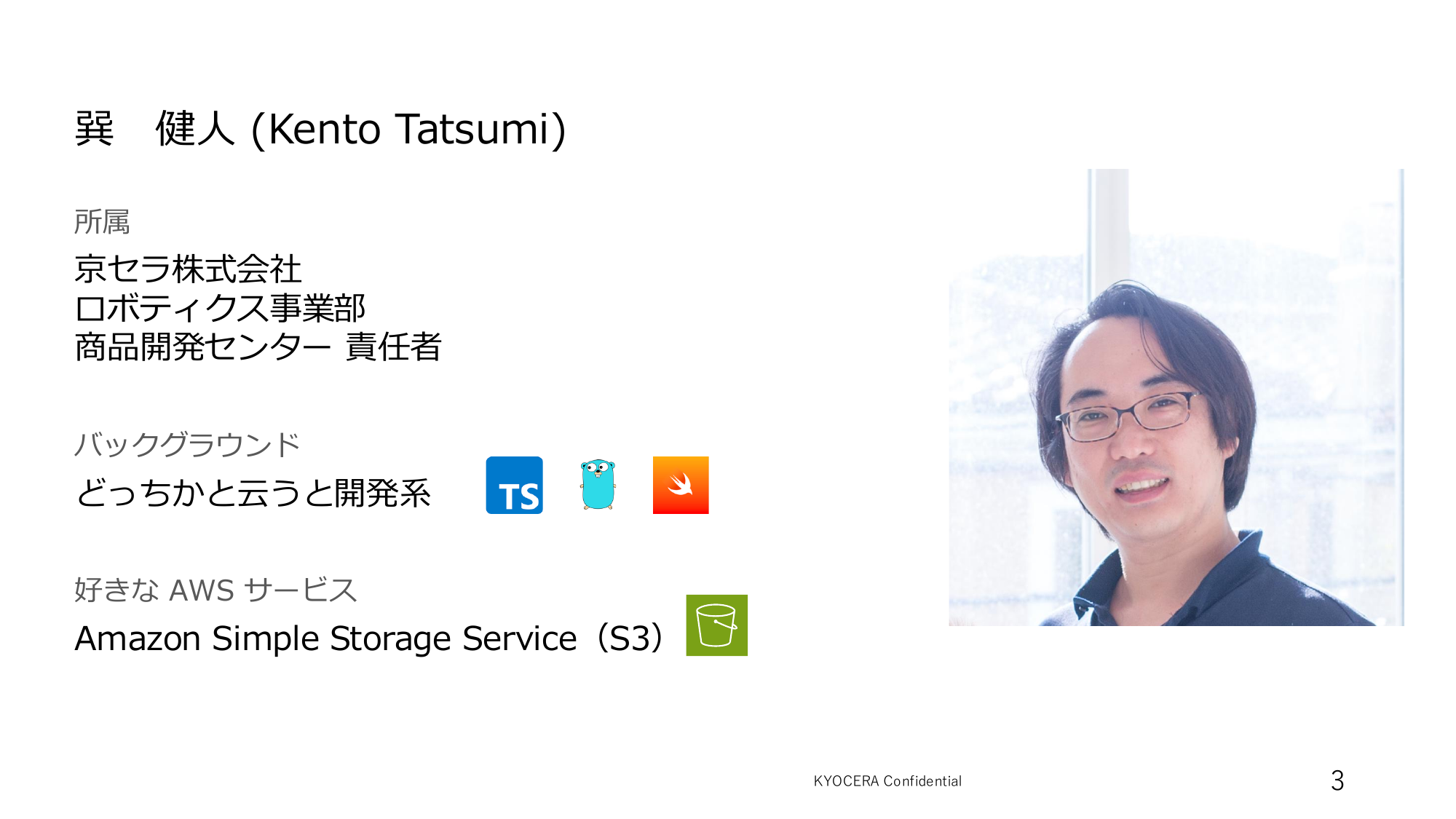
Kyocera Corporation, Robotics Division, Product Development Center, Manager, Kento Tatsumi
Company Introduction
Kyocera Corporation was founded in 1959 and is celebrating its 67th year this year. Starting from ceramic firing, it has since expanded into a diversified business, developing various operations including electronic components and solutions.
Furthermore, the company is actively working on new businesses leveraging the diverse technologies within Kyocera and its group companies. Mr. Tatsumi mentioned that the Robotics Division, to which he belongs, is also working on launching new businesses by utilizing machine control and image processing from multifunction printers, as well as AI and cloud technologies.
About Kyocera Robotic Service
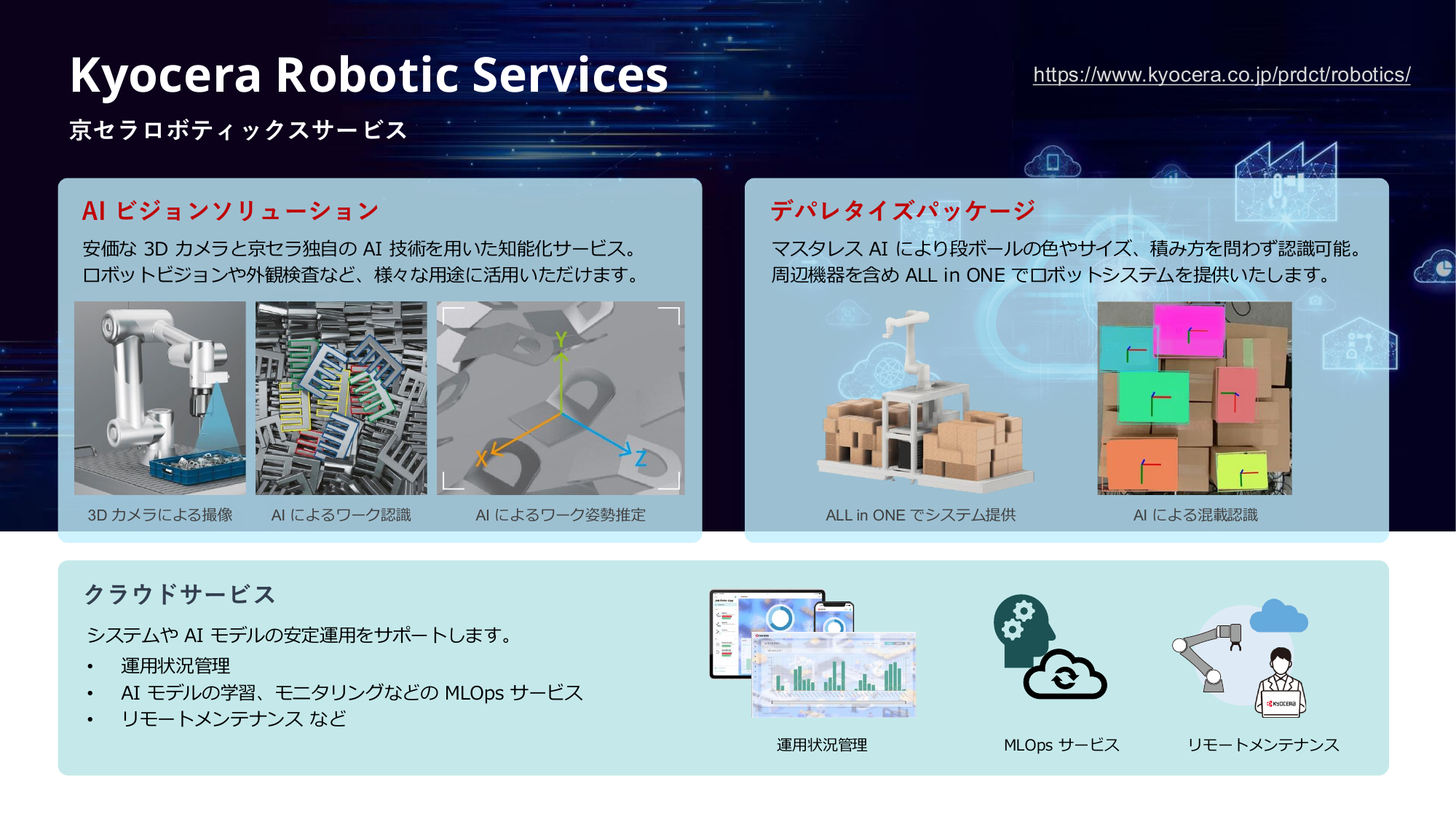
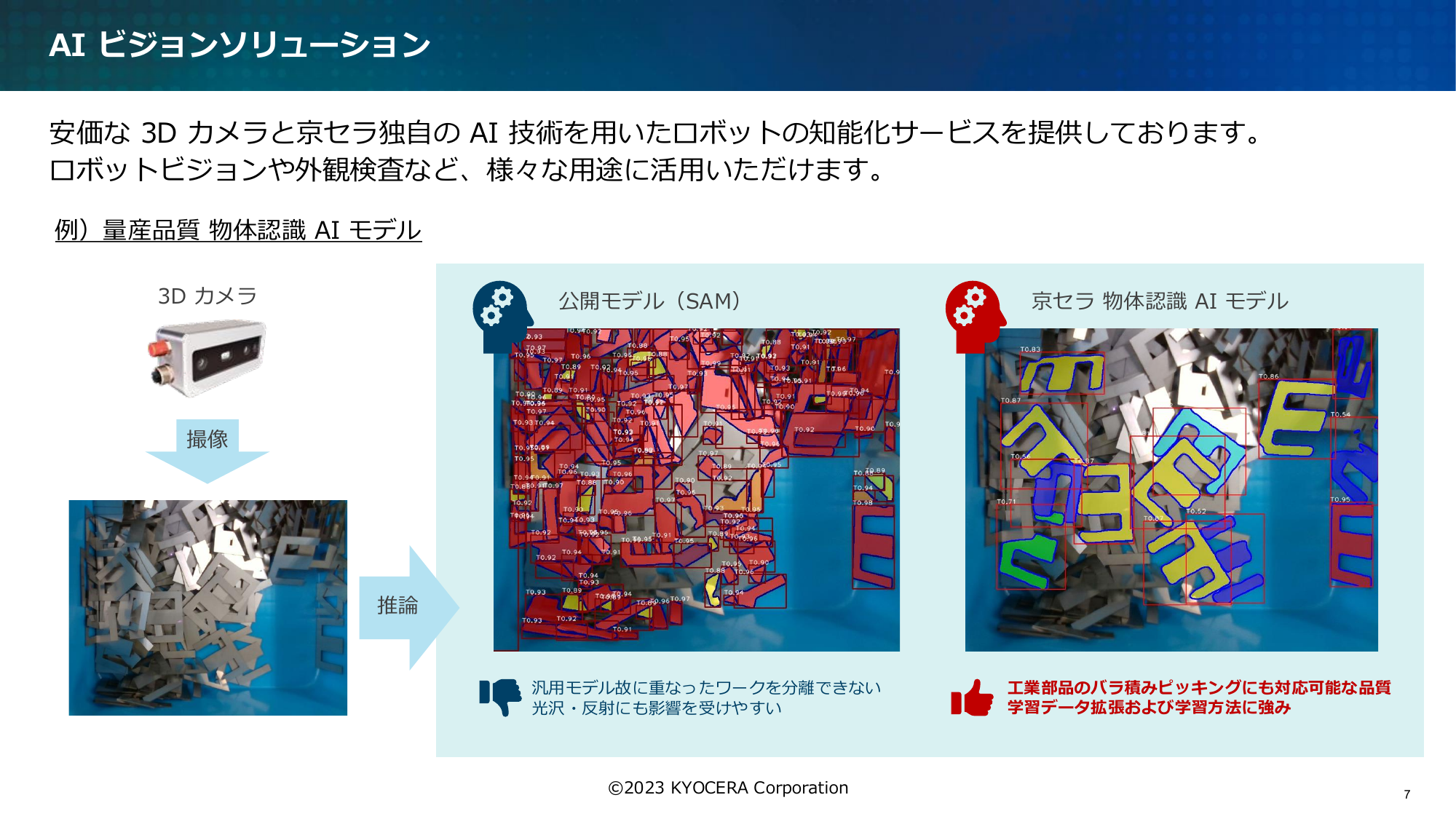
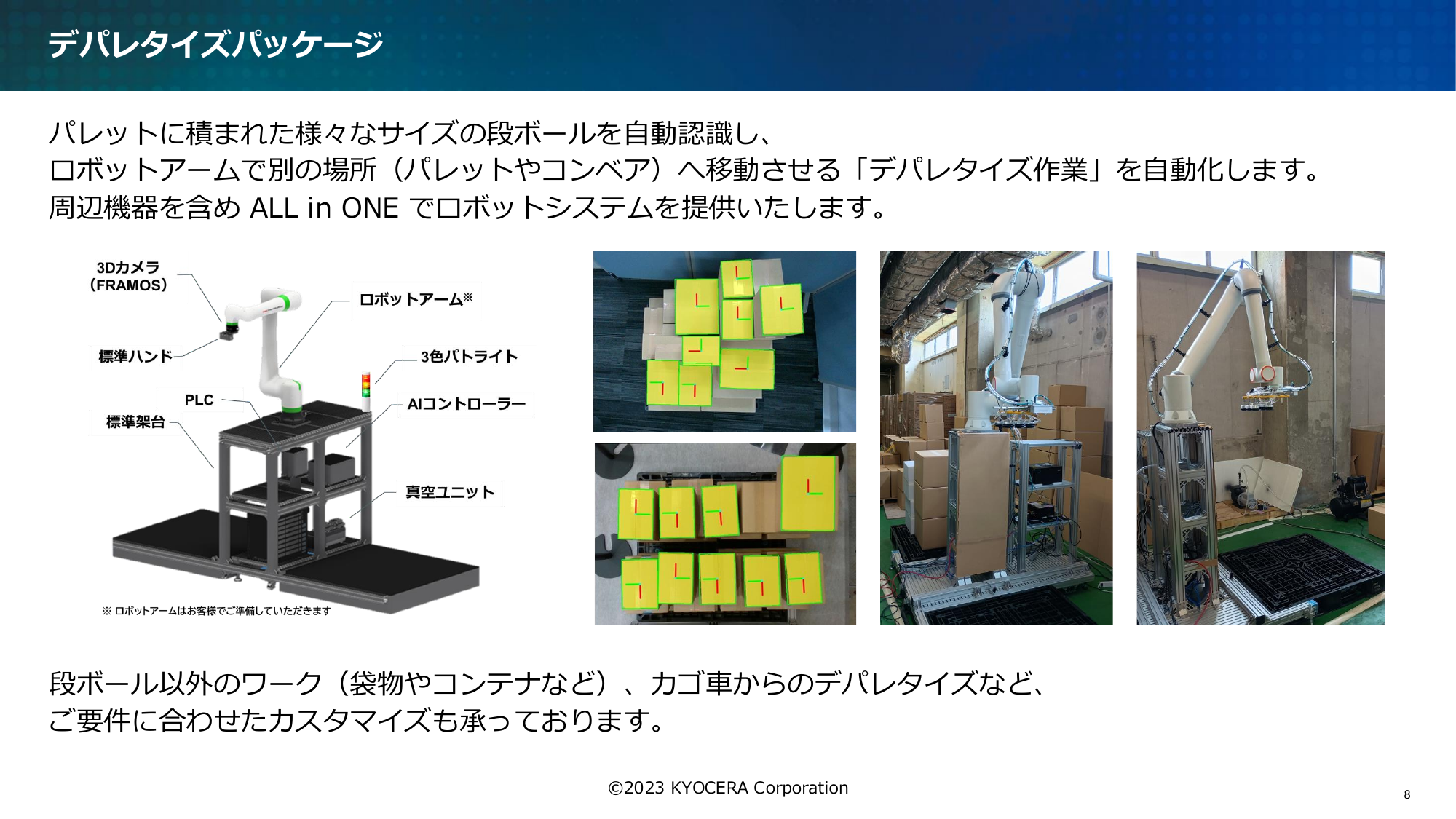
It was introduced that they offer two products using an "robot intelligence" approach: "AI Vision Solutions" that can flexibly respond to various environments, and a "Depalletizing Package" that automates unloading operations in logistics, along with a cloud service as the mechanism supporting their operation.
In this presentation, they spoke about the in-house development of the cloud service.
The Past of Kyocera Robotic Service Development
Business development began in 2019, cloud service development started in 2020, and until spring 2025, development proceeded in a product-out manner, including R&D.
Security and data protection are extremely important considerations in providing operational support for edge systems, and it was stated that being a service that can be safely connected to and used from production sites is an essential requirement.
It was mentioned that in order to realize such a secure service, Classmethod has been collaborating from the early stages of development to the present, spanning five years.
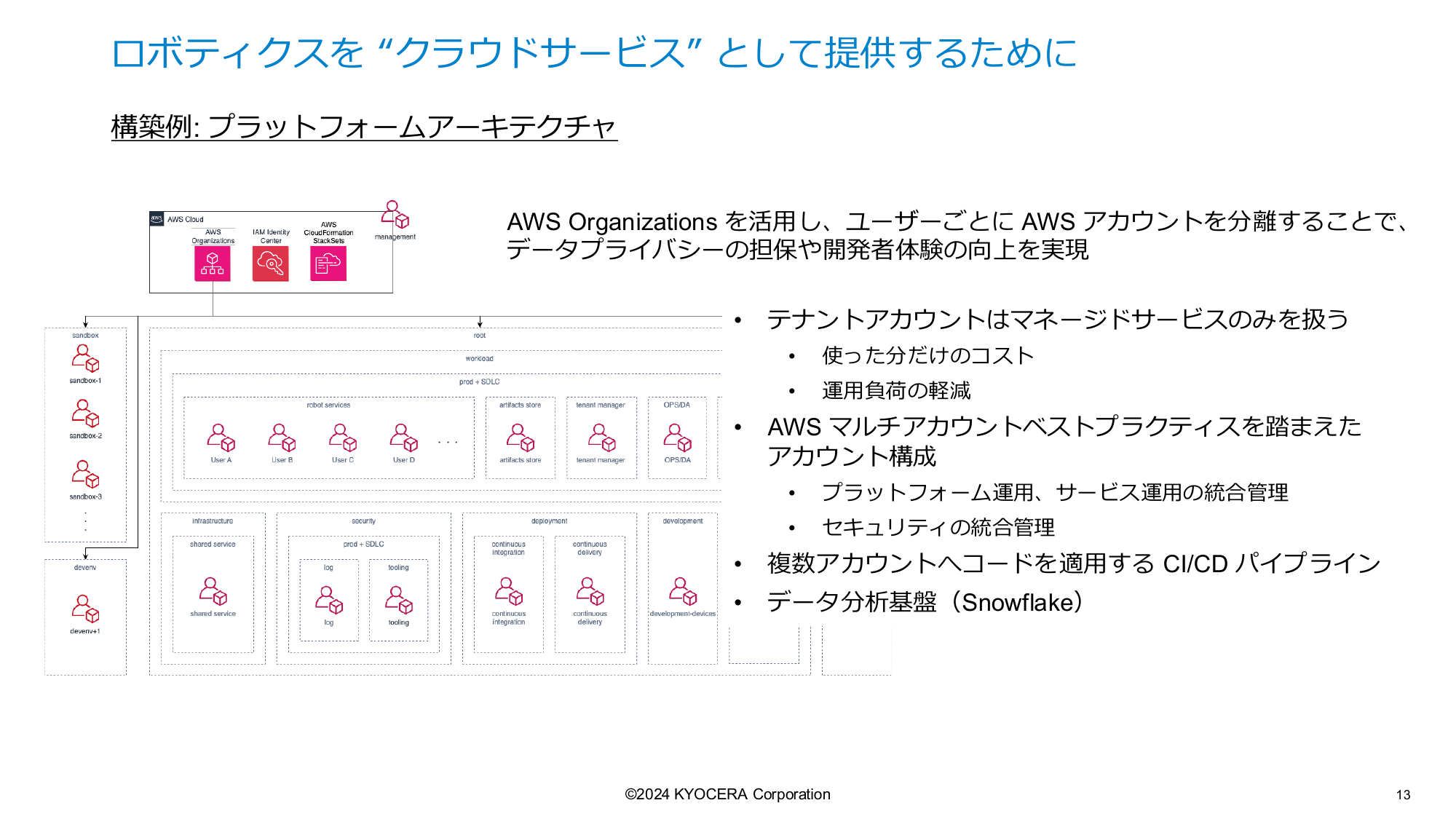
Two specific development cases from the collaboration were introduced.
The first is the construction of a multi-account operation framework utilizing AWS Organizations to achieve integrated operations across multiple accounts for system auditing, security, CI/CD, data analysis, and more.
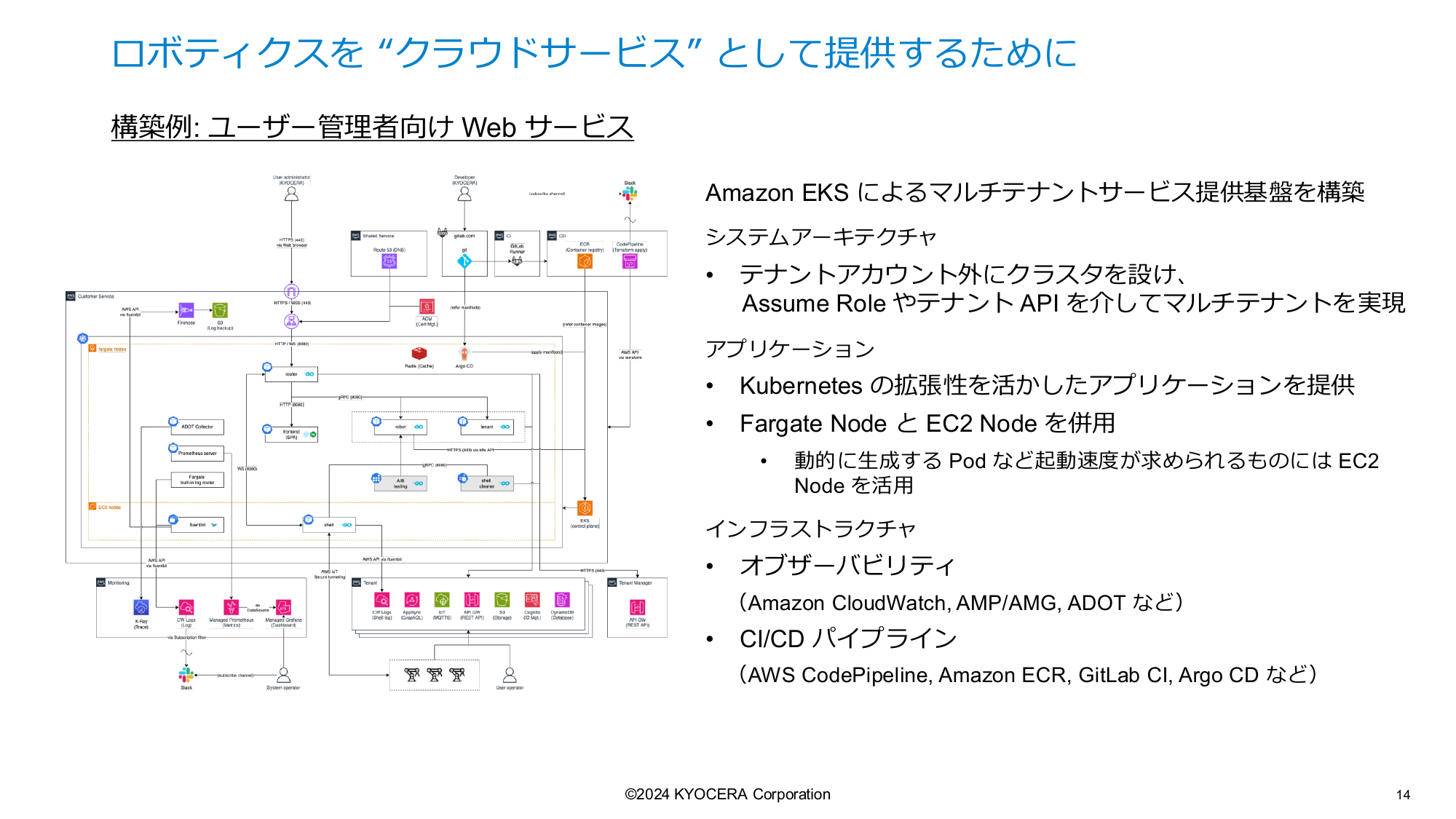
The second is the development of a web service for user administrators. Amazon EKS was adopted as the foundation, and it is equipped with features such as remote connection from a browser to an edge computer, leveraging its scalability.
The Future of Kyocera Robotic Service Development
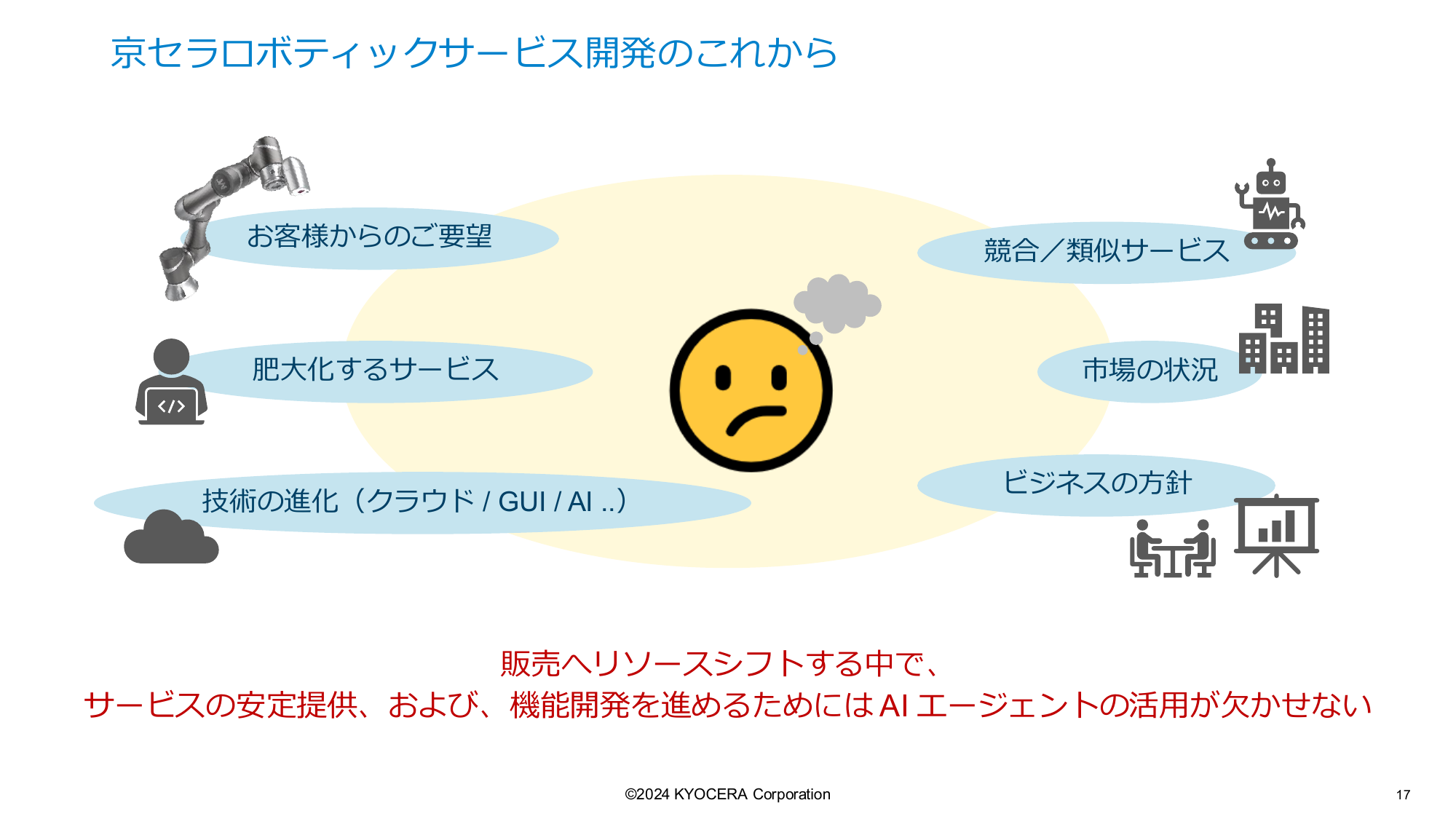
Starting from spring 2025, the phase shifts from 1 to 10, with a major shift toward sales and deployment. To meet specific customer requests, there is a need for speed-first feature development, strengthening strengths, catching up on missing features, and the maintenance costs that come with these are also increasing.
Since Kyocera Robotic Service involves not only cloud but also edge environment systems, it is necessary to consider version fragmentation and connection compatibility with systems built for various requirements. Even in a situation where resources are decreasing while development becomes more difficult, there was an urgent need to build a track record and launch the business.
As a means of resolving this dilemma, the promotion of coding agent utilization was highlighted.
Starting with Cursor usage by some members, from October 2025, all cloud development members, including those on the Classmethod side, have been using Claude Code.
It was mentioned that most code is now generated by Claude Code, which is also used for investigating existing code, and has greatly contributed to improving engineer productivity.
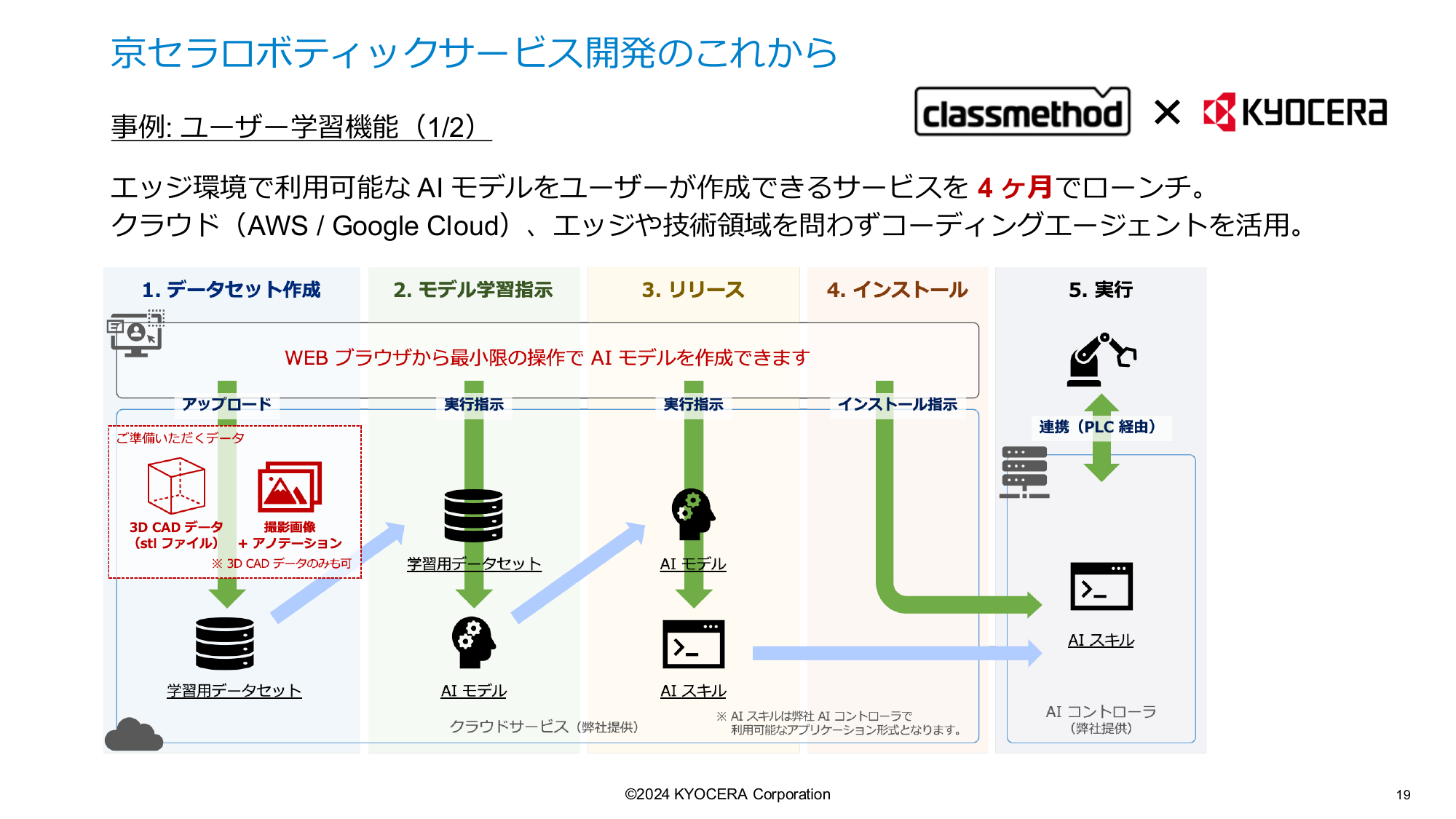
A case study was introduced of new feature development using Claude Code, which began in December 2025.
With Kyocera Robotic Service, Kyocera trains AI models and provides them to users, but there was a need for "wanting to handle new work additions themselves." To realize this, a feature allowing users to train and create AI models is necessary.
With this user training feature, users can create models of equivalent quality to those created by Kyocera by uploading 3D CAD data, a small number of captured images, and annotation information. By utilizing Claude Code for the construction of the user training feature, they were able to launch it in an effective development period of four months.
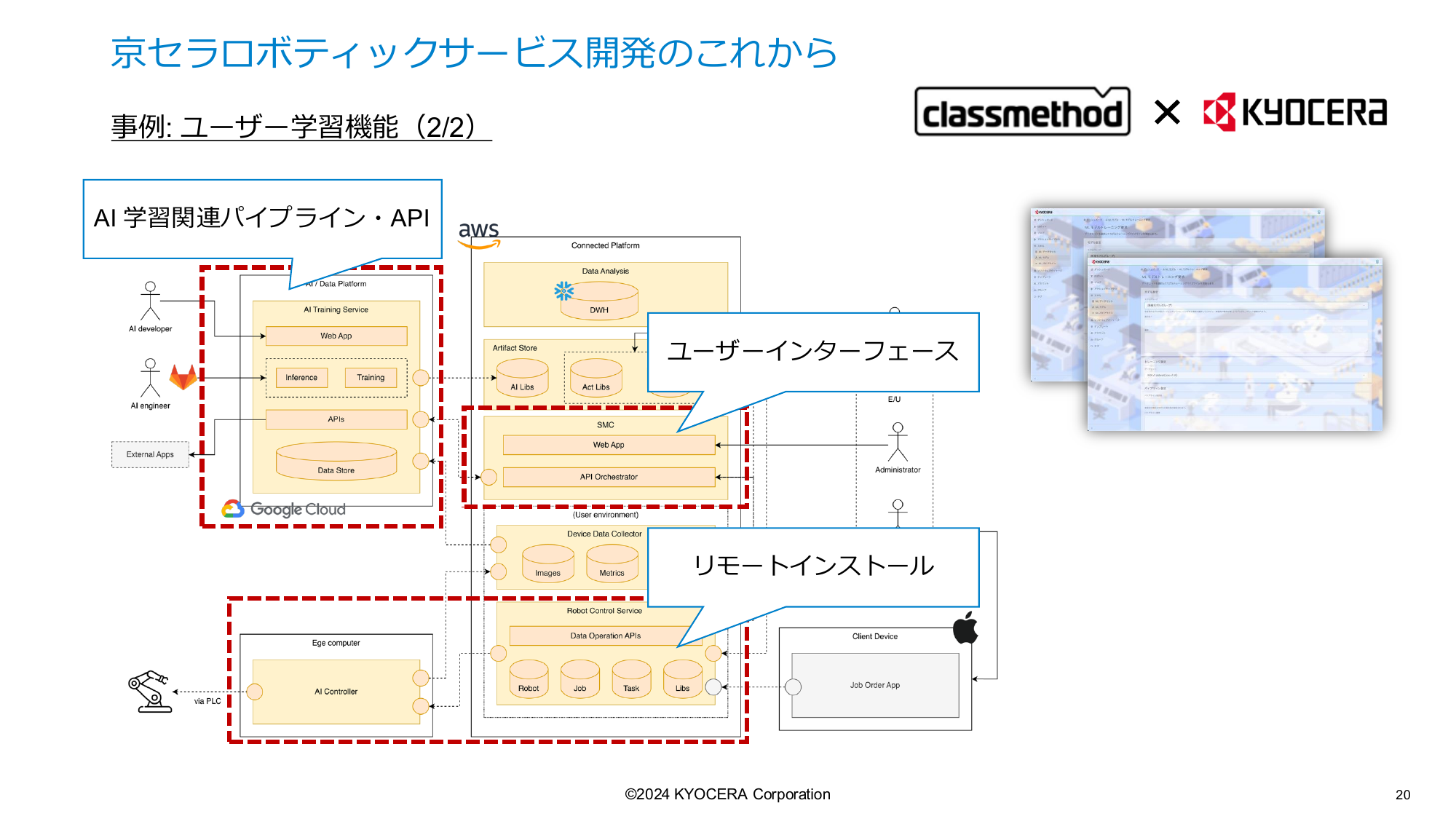
The specific implementations of the user training feature were also introduced.
It is a multi-cloud configuration in which AWS handles connection with edge systems and their operational management, while Google Cloud is responsible for AI model training and the data management needed for that, i.e., what is known as the MLOps framework.
The Google Cloud MLOps functionality was developed for use by engineers within Kyocera, so it is highly complex and requires specialized knowledge, making it unsuitable for user utilization. Therefore, a pipeline optimized for user training and the addition of APIs for operating related data were implemented.
A user interface and integration functionality for using Google Cloud features were added to the Amazon EKS cluster, and a mechanism for remotely installing created models from the cloud to edge systems was also constructed.
It was mentioned that Claude Code was utilized for most of this development, which spanned AWS, Google Cloud, and many more domains including frontend, backend, and infrastructure, with varied areas and languages.
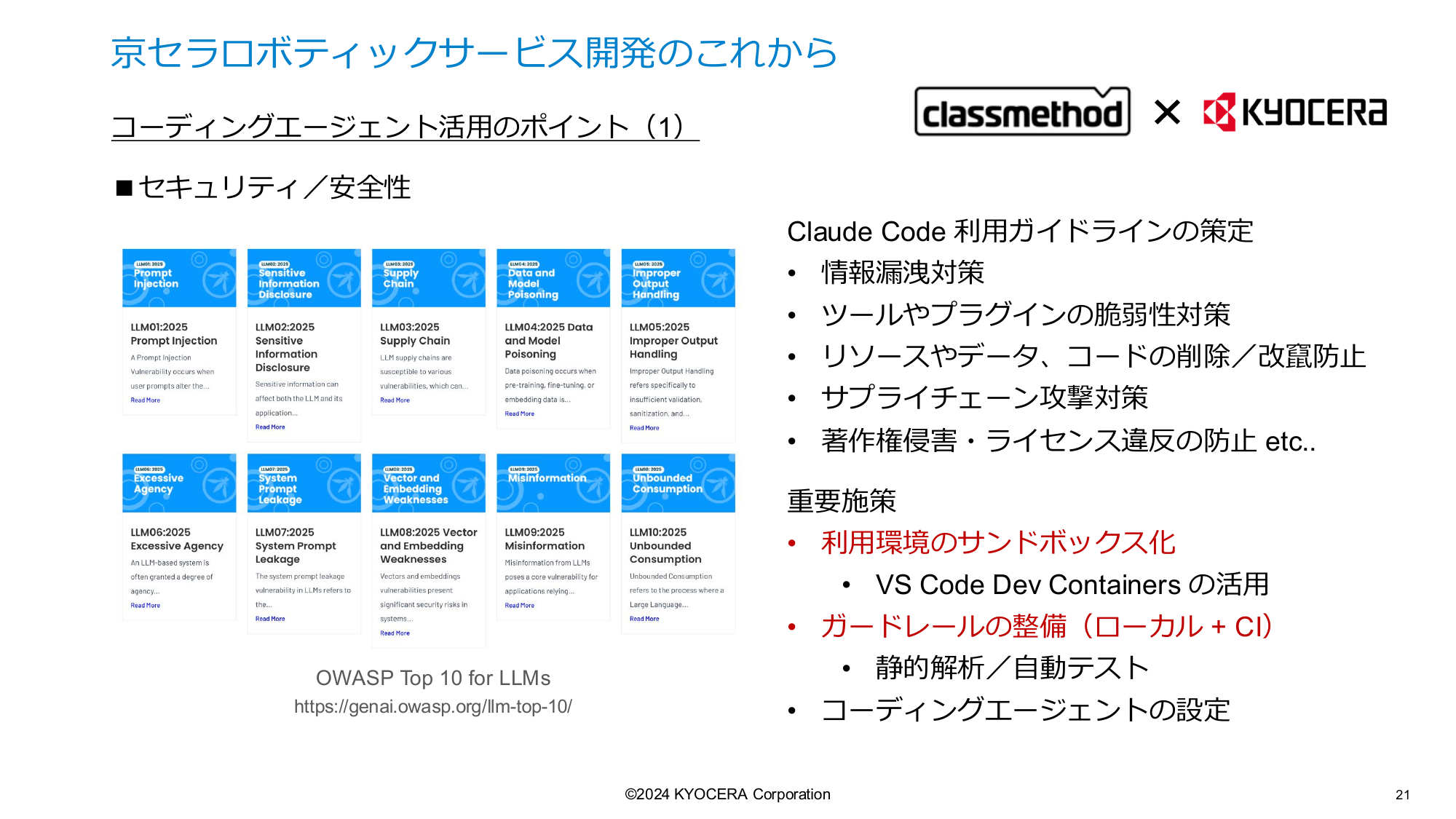
Key points for utilizing coding agents were also introduced.
Regarding security and safety for AI usage, it was introduced that unique Claude Code usage guidelines were established to address security risks such as those listed in OWASP Top 10 for LLMs.
Coding agents are used through development PCs in the development environment, but these PCs contain not only the code being developed but also various business data and confidential information such as authentication credentials.
Since there is also a risk of prompt injection and supply chain attacks, which have become an increasingly significant threat in recent years, the guidelines stipulate that Claude Code should be used in a container environment utilizing Dev Containers, thereby limiting the scope of impact.
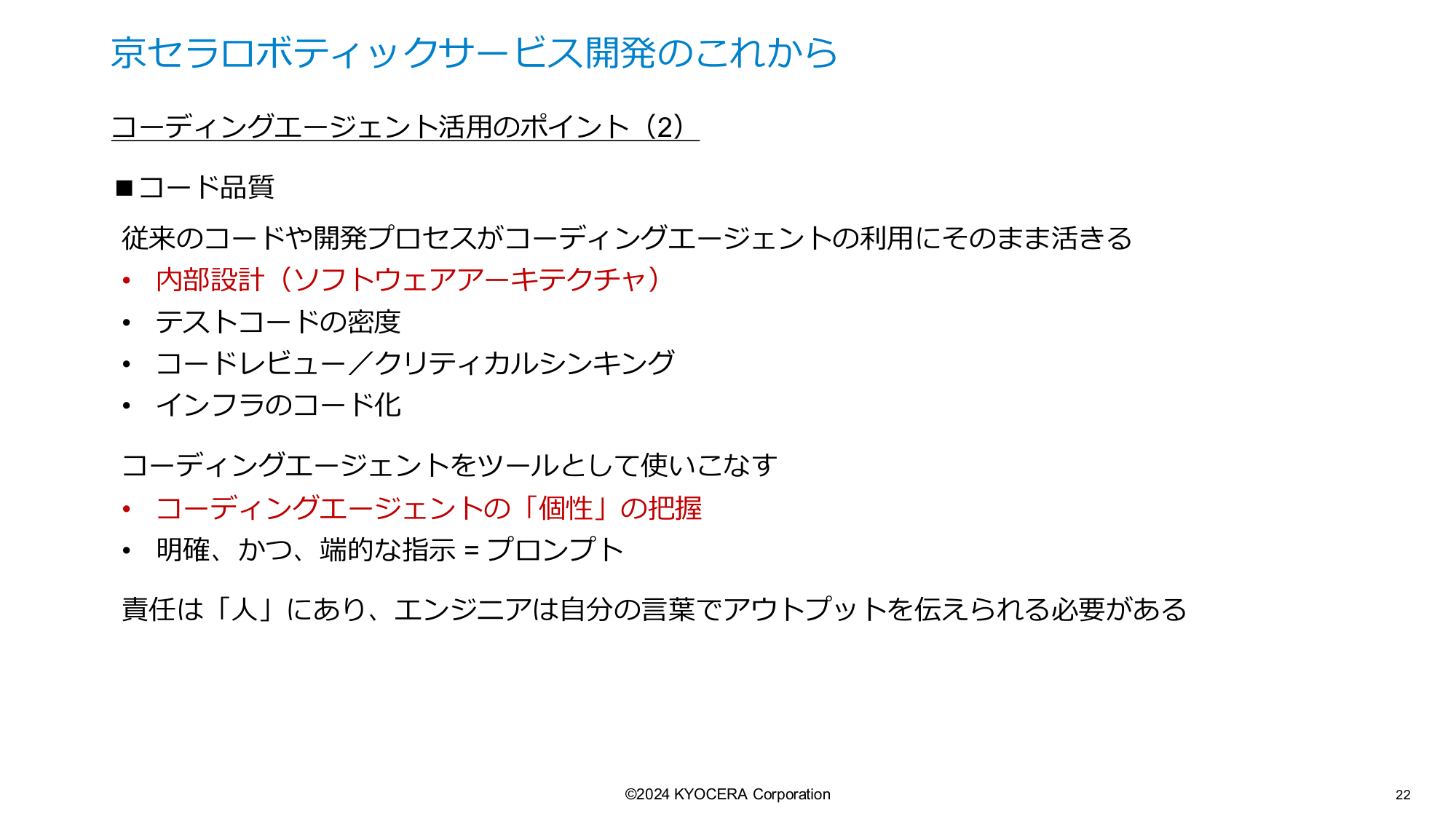
Software architecture, documentation, and instructions are all extensions of conventional software development, and other practices such as test automation and review processes—the existing software development practices—could be applied as-is in development using coding agents as well. It was stated that the importance of these practices is increasing in agent-based development.
On the other hand, since coding agents are ultimately just tools, the engineers who use them bear responsibility for the output. Rather than saying AI generated it, the goal is to be able to explain the output in your own words. It was stated that instilling this mindset is the most important point when utilizing coding agents as a team.
Future developments were also discussed.
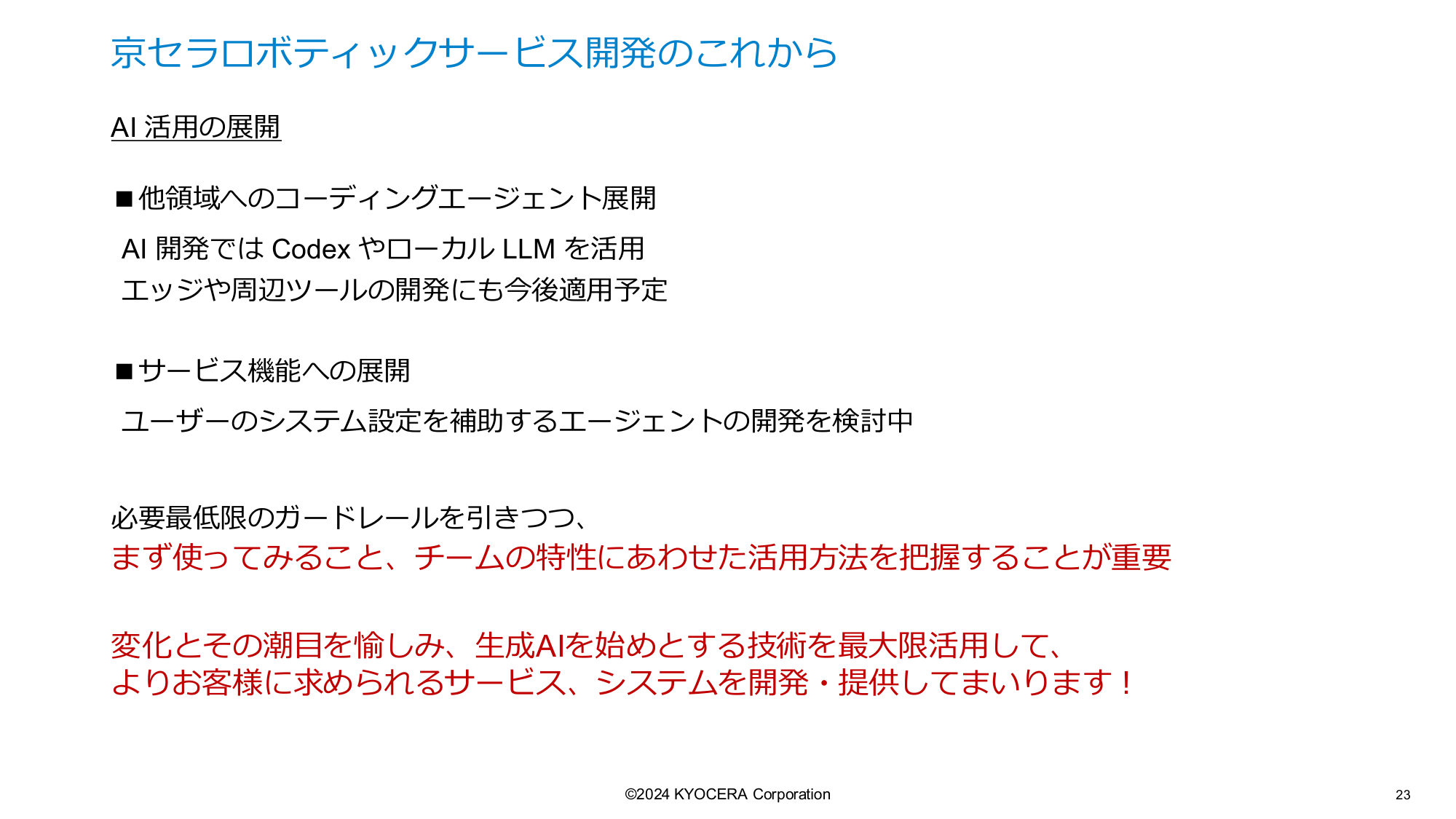
It was mentioned that generative AI is evolving rapidly, and there is a possibility that a paradigm shift may occur in the future, drastically changing development methods.
It was emphasized that while putting in place minimal guardrails, actually trying things out first, and having each team and each engineer continue using AI at a practical level while continuously thinking about "what it is" and "what is needed to utilize it for our own team" is what matters most.
Classmethod's Involvement
The above covers Mr. Tatsumi's presentation. Finally, I would like to add some supplementary information from our company (Classmethod) perspective regarding the development touched upon in this session.
Classmethod has been accompanying this cloud infrastructure development from its early stages, and in building the secure multi-tenant infrastructure, we have exchanged opinions from both the infrastructure and application domains, working to achieve an optimal configuration.
We are also contributing to the establishment of the unique Claude Code usage guidelines in building the future development structure. From October 2025, our members have also been participating in development using Claude Code as part of Kyocera's cloud development team.
In Closing
We heard about how the provided service has been developed so far, Classmethod's involvement, and future development.
In particular, I believe many people found it helpful to see the approach of not simply prohibiting AI usage to protect user data while considering security and safety, but instead resolving issues by creating sandbox environments and guardrails.
It was impressive to see participants forming a line after the presentation to ask questions.
As a systems engineer myself, I resonated with the words "Rather than saying AI generated it, be able to explain the output in your own words."
Rather than simply following AI instructions, I want to cherish the mindset of using AI with yourself as the driving force.
Thank you once again for presenting at Classmethod Forum.
References