
[Report] dbt World Tour Tokyo 2026 Opening Keynote "LEVEL UP" #dbtWTTokyo

This page has been translated by machine translation. View original
This is Kawabata.
On October 20, 2026, "dbt World Tour Tokyo 2026" was held at Andaz Tokyo. This is dbt Labs' Tokyo event, following last year's Coalesce on the Road Tokyo.
This article is a report blog covering the opening keynote "LEVEL UP."
The live demo by Elias DeFaria following the keynote is also included in this article, as it followed the same flow.
※ The presentation was conducted in English. This article is a summary based on the author's notes.
※ Availability statuses are based on the content at the time of the presentation and the official dbt Summit 2026 blog published on September 16, 2026. Please check the official documentation for the latest information.
Speakers
- Alexis Jones
- dbt Labs
- VP, Product Marketing

-
Nina Anderson
- dbt Labs
- Senior Manager, Partner Solutions Architecture

-
Elias DeFaria
- dbt Labs
- Director of Product Management
AI Is Changing the World of Data
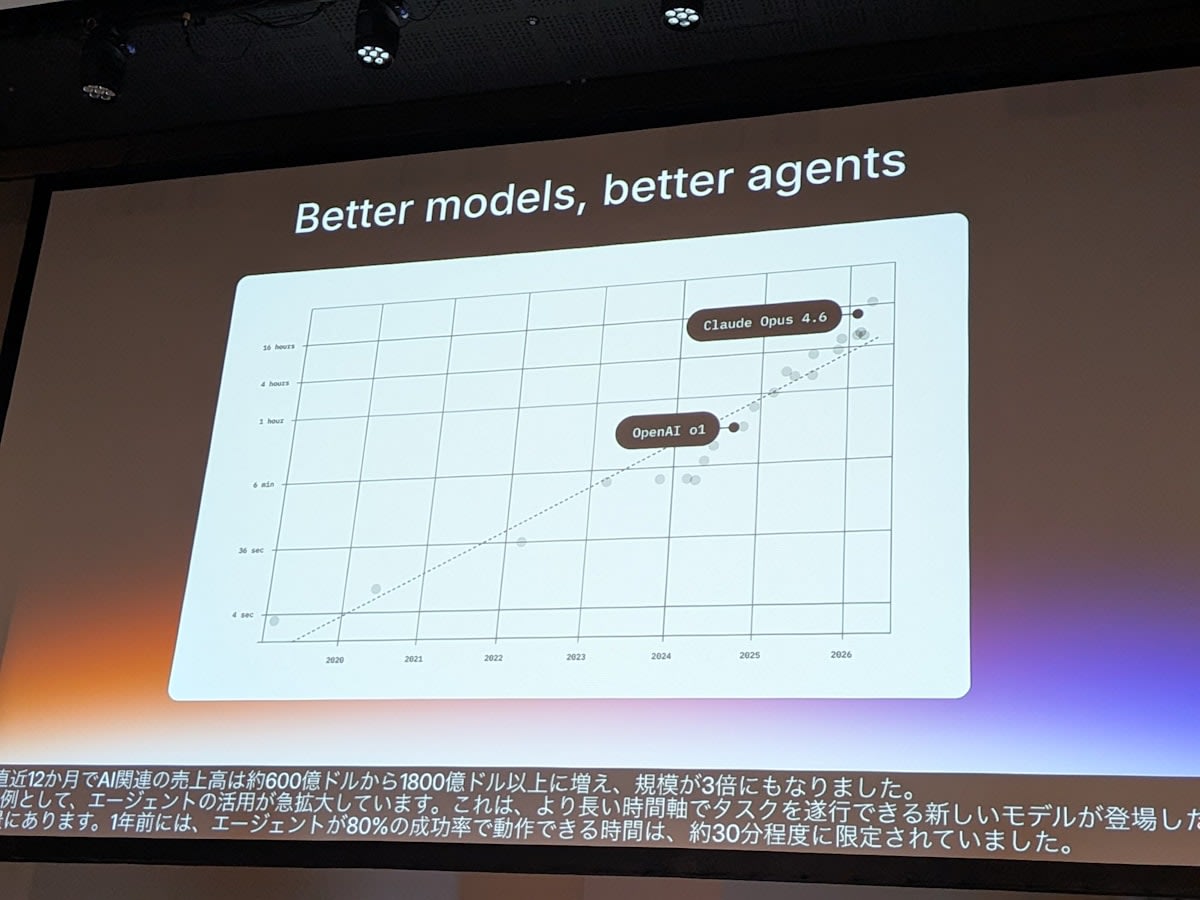
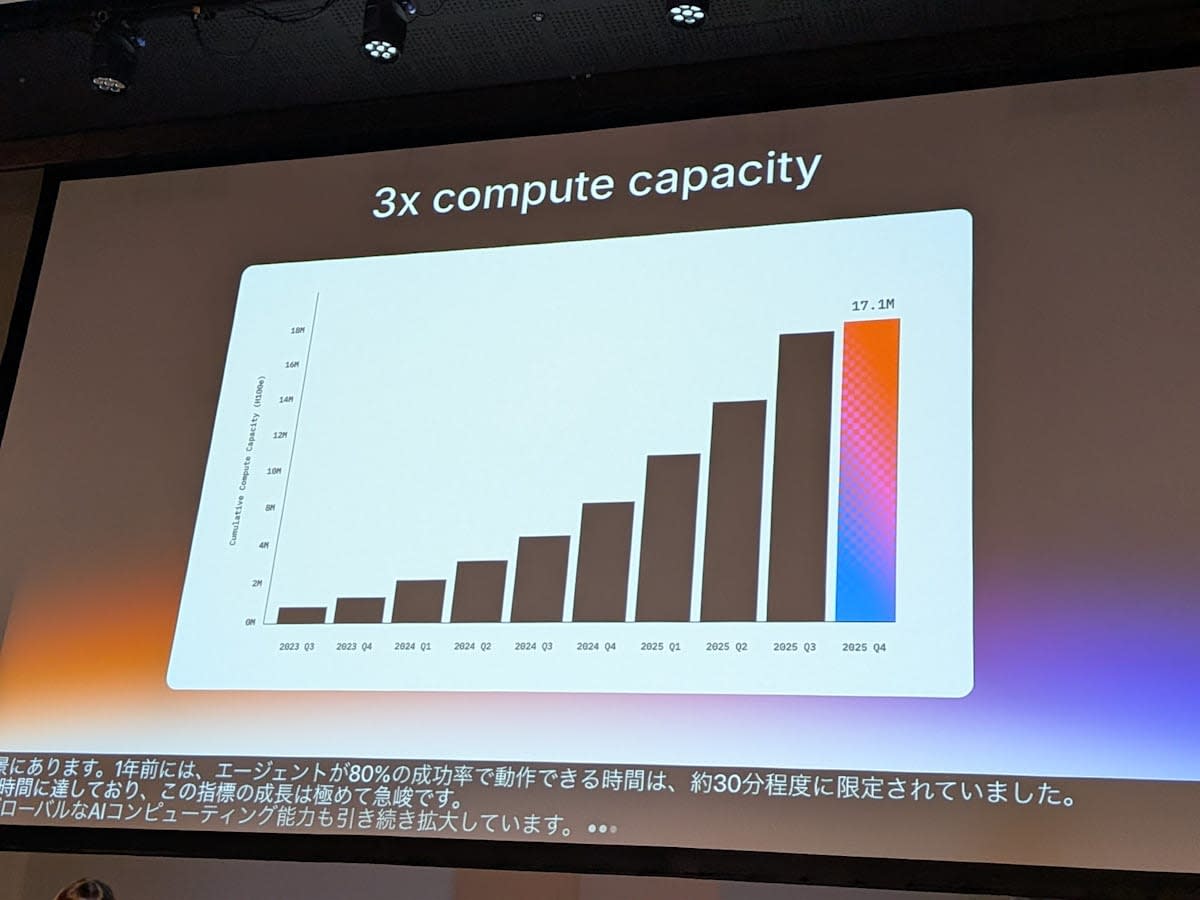
- In the past 12 months, there have been major transformations in the industry and in data work. Three numbers were presented as evidence:
- AI-related revenue grew approximately 3x, from around $60 billion to over $180 billion
- The length of tasks that agents can accomplish with an 80% success rate grew from about 30 minutes a year ago to 3 hours
- Global AI computing capacity expanded 3x year-over-year, reaching the equivalent of 17.1 million H100 units
- This will be the biggest wave of technology that everyone in the audience will experience
- Compared to the era of emailing Excel files around and scattering SQL locally, using dbt today is proof of that evolution
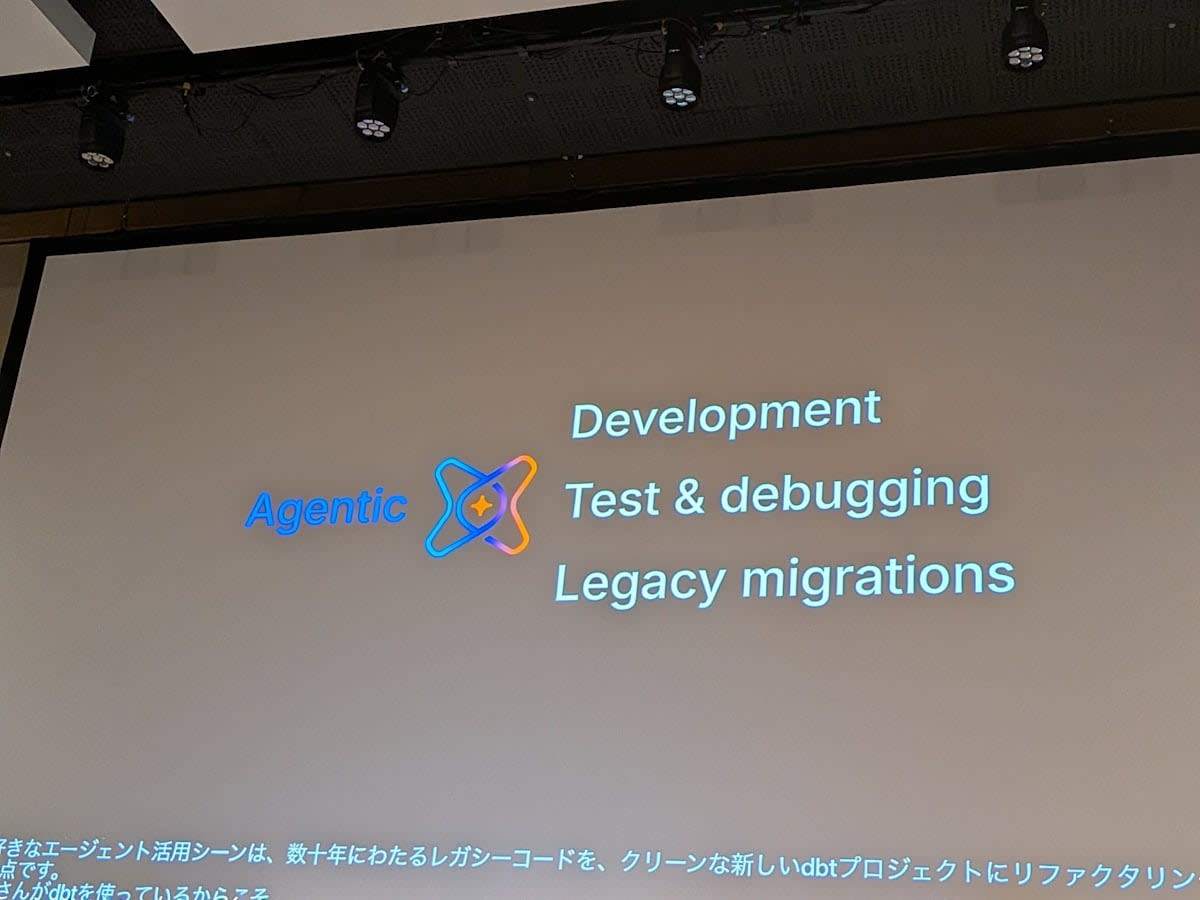
- Now agents write code, investigate pipeline failures, and debug them
- Alexis's favorite use case is refactoring decades of legacy code into clean dbt projects
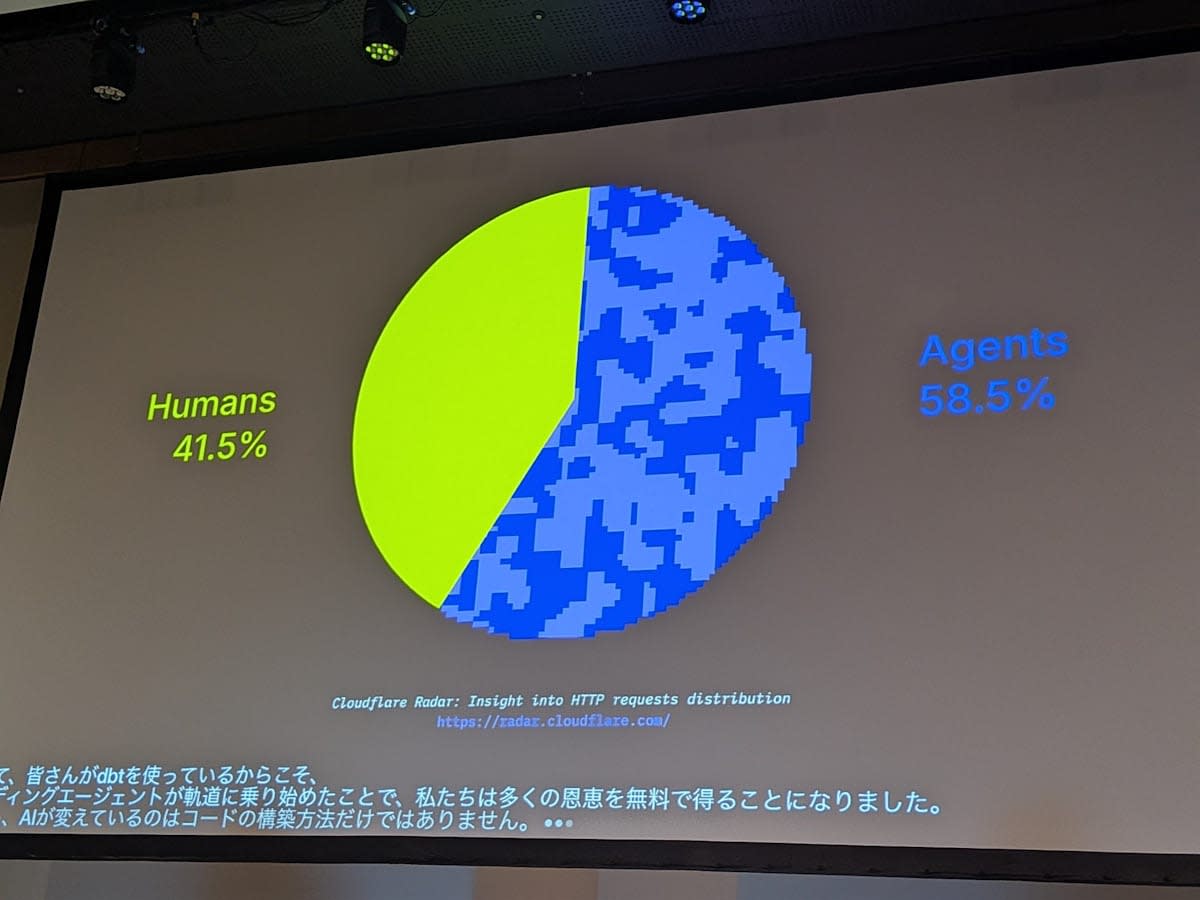
- AI is changing not just how pipelines are built, but also how data is used
- Cloudflare announced that the majority of internet traffic is now non-human
- The same inflection point is coming to data, and agents will become the primary consumers of metrics, tables, and metadata
- Organizations have always generated more information than they could use. Everyone has experienced building a model that was never used
- We are moving from a stage where humans ask questions and agents investigate, to an era where agents themselves formulate questions and take action
- This technology will elevate the value of the data that everyone in the audience handles daily to unprecedented heights
- This year's theme is "LEVEL UP." dbt is also leveling up to face the rapid changes in the industry, leaders, and the technology ecosystem
- dbt delivers trusted data to both humans and agents across three dimensions: platform, product, and partnerships
The Engine
dbt v2 (dbt Core 2.0)
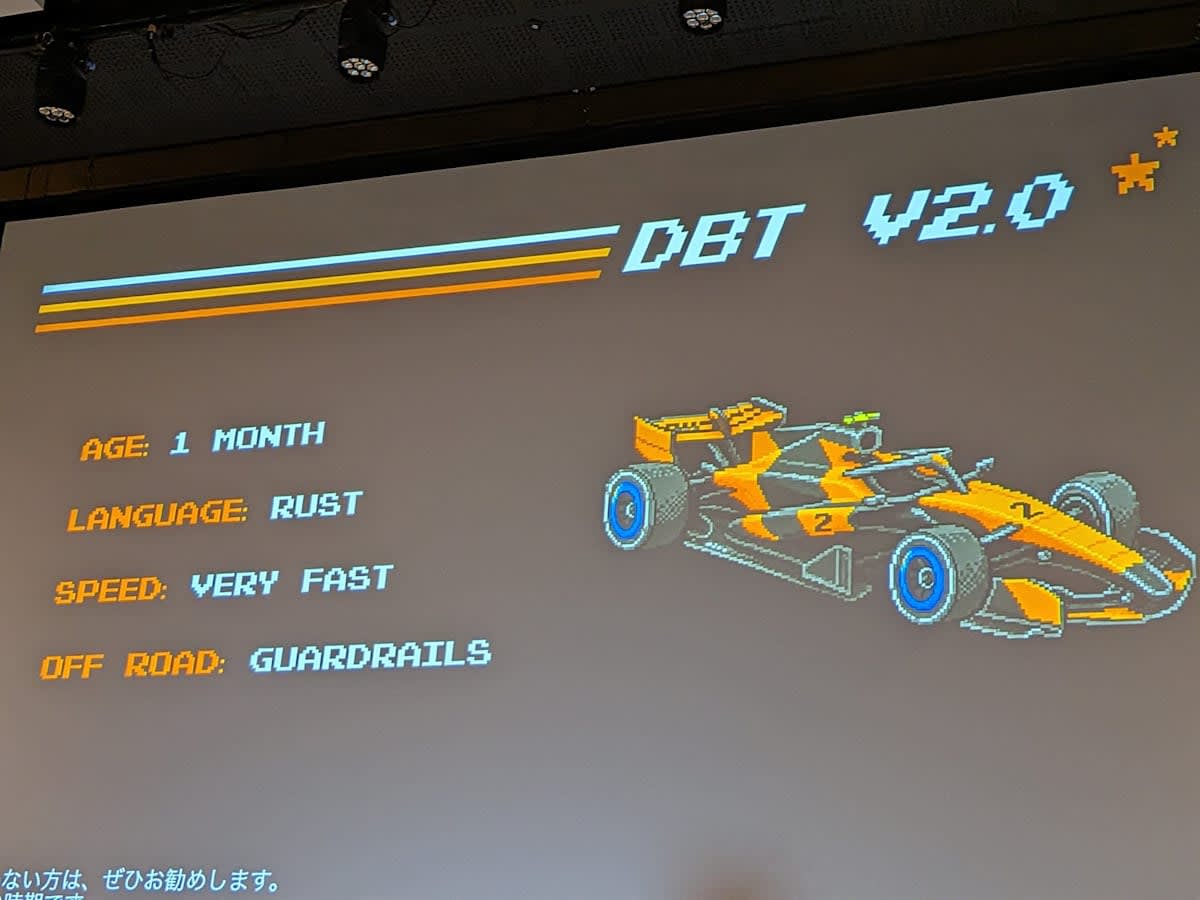
- dbt Core 2.0 has been officially released. The biggest update to dbt since its initial release in 2016
- Completely rewritten in Rust, achieving significant speed improvements for large-scale projects and enabling AI readiness
- Background on the integration:
- Over the past 2 years, the Fusion engine was built with goals of real-time feedback, AI-ready metadata, and fast parsing and execution
- Fusion was a separate codebase from dbt Core, and maintaining two codebases was a burden for both the engineering team and users
- In v2, the Fusion codebase is integrated into the dbt standard, ending the era of two coexisting engines
- Going forward, there will be one engine and one language specification
-
The brand is also unified as "dbt," and the brand names "Fusion" and "dbt Core" are being retired
-
The core will continue to be provided under the Apache 2.0 license
-
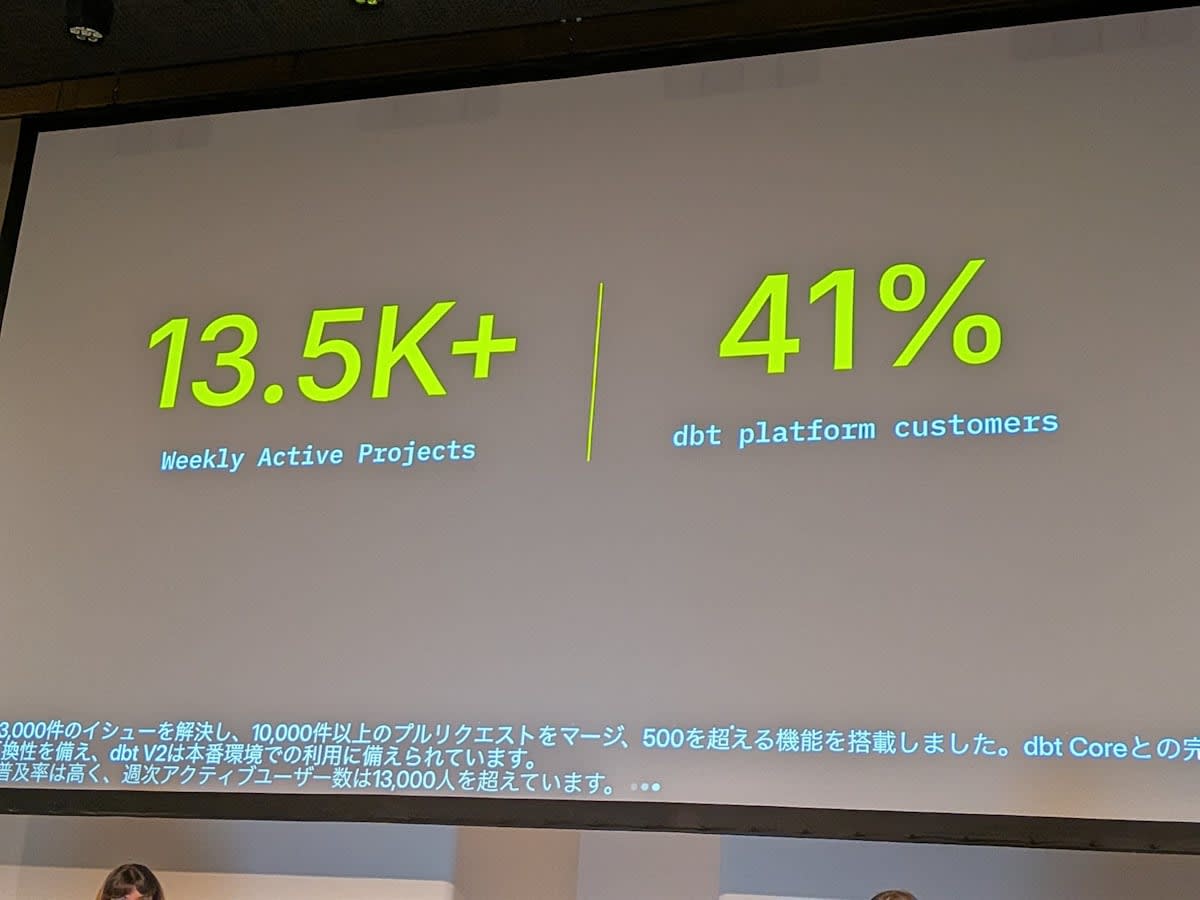
Over approximately 2 years, roughly 3,000 issues were resolved, more than 10,000 pull requests were merged, and over 500 features were included
-
It has full feature compatibility with dbt Core (v1) and is available for production use
-
Adoption status:
- More than 13,000 projects per week are running v2 either locally or on the dbt platform
- More than 40% of dbt platform customers are running their dbt workloads on v2
-
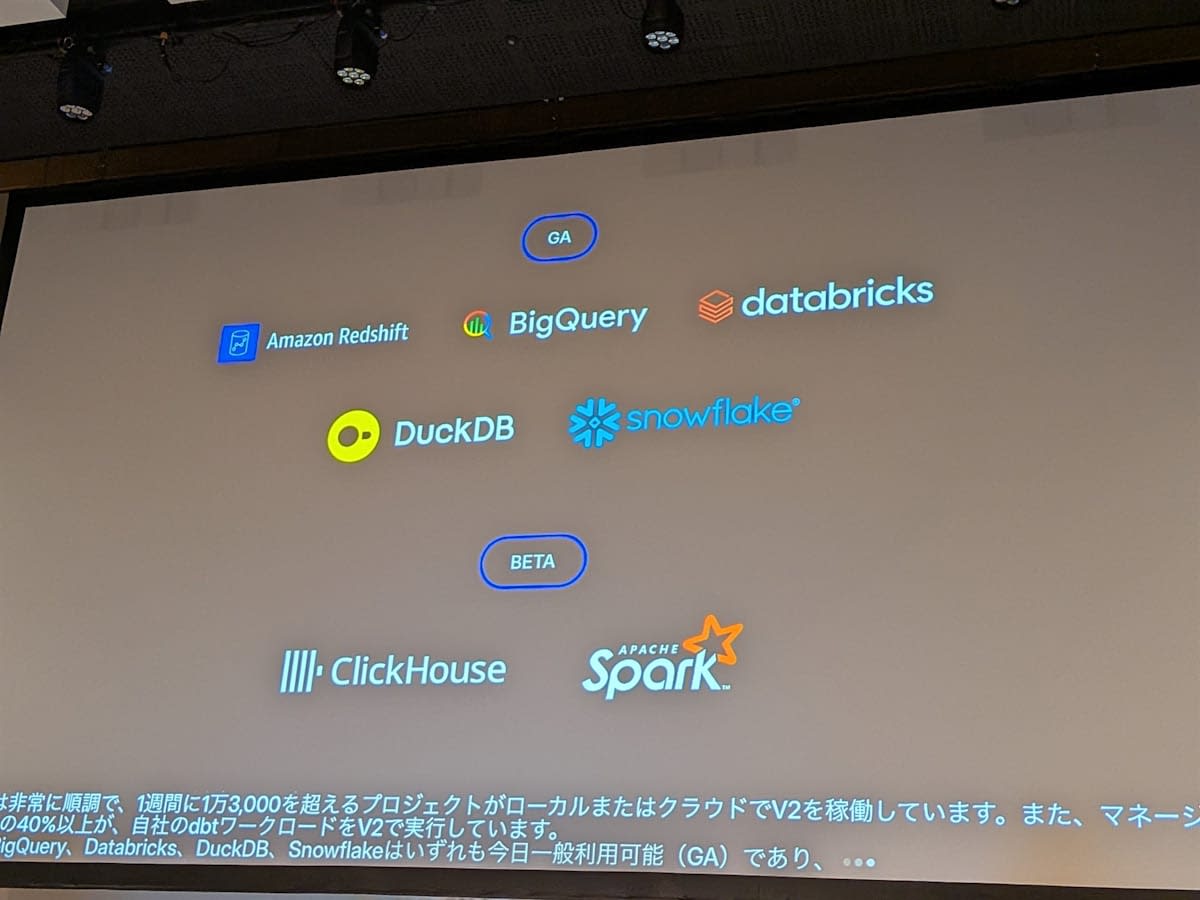
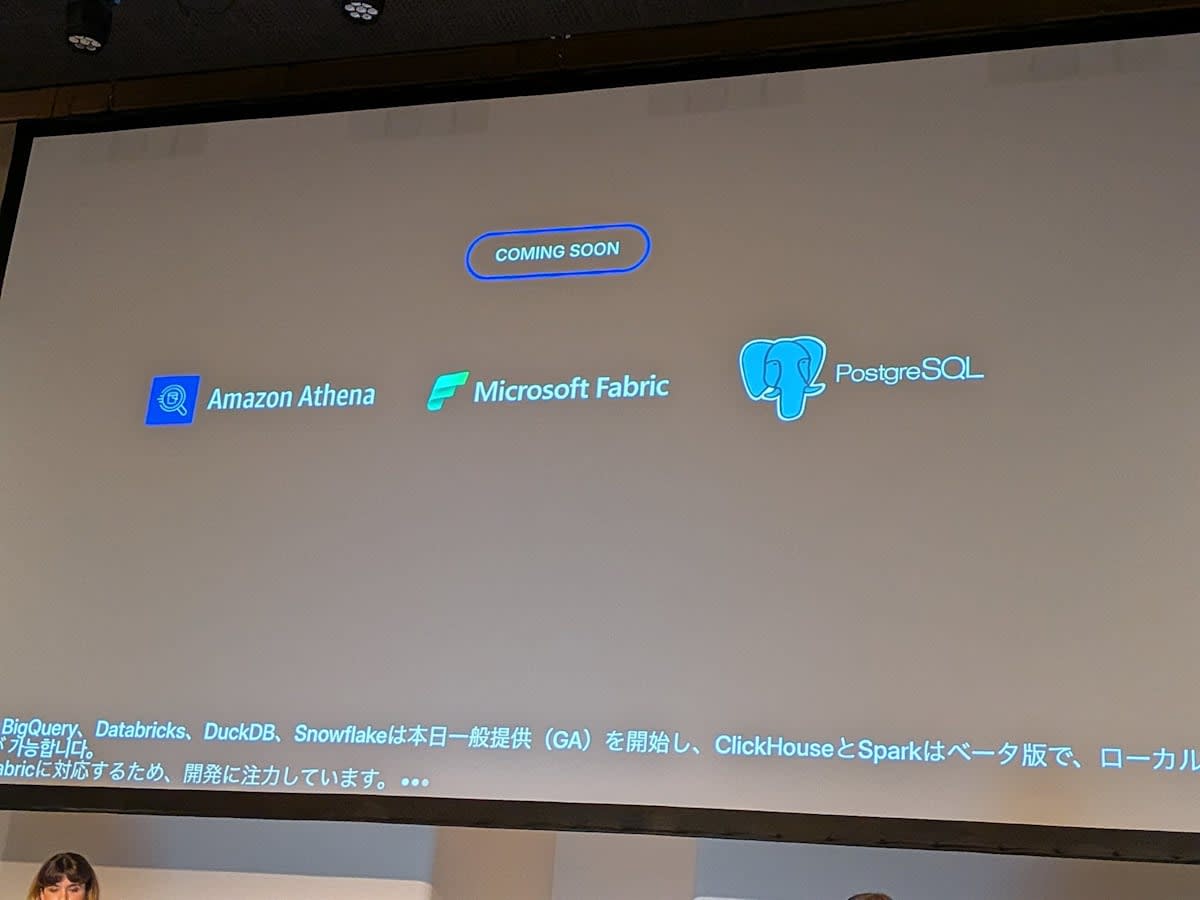
Adapter support status:
| Status | Adapters |
|---|---|
| GA | Redshift, BigQuery, Databricks, DuckDB, Snowflake |
| Beta | ClickHouse, Spark |
| In Development | Athena, Fabric, Postgres |
dbt State
- A new paradigm for job orchestration in dbt
- Skips model execution when there are no changes in upstream code or data
- Can reduce compute costs by 15–30%, and also improves development efficiency and performance
- Already GA and available regardless of how you run dbt:
- v1 / v2 on the dbt platform
- External orchestrators such as Airflow
- When running dbt projects via Snowflake's native integration
- Details covered in the afternoon session "Optimize Your Runs with dbt State"
Our verification article
Leveling Up for AI
The Role of Analytics Engineers
- Definitions, contracts, tests, semantic layers — the work of ensuring data reliability isn't going away. What's changing is the stakes
- As agents become the primary consumers of data products, the value of this work will increase further
- The role is leveling up from building models to engineering the context that the entire organization and agents depend on
Fivetran Context Layer (Private Beta)
- Agents need not only governed models, but also unstructured knowledge like wikis, support tickets, and Slack threads
- Agents that cannot find context tend to hallucinate answers
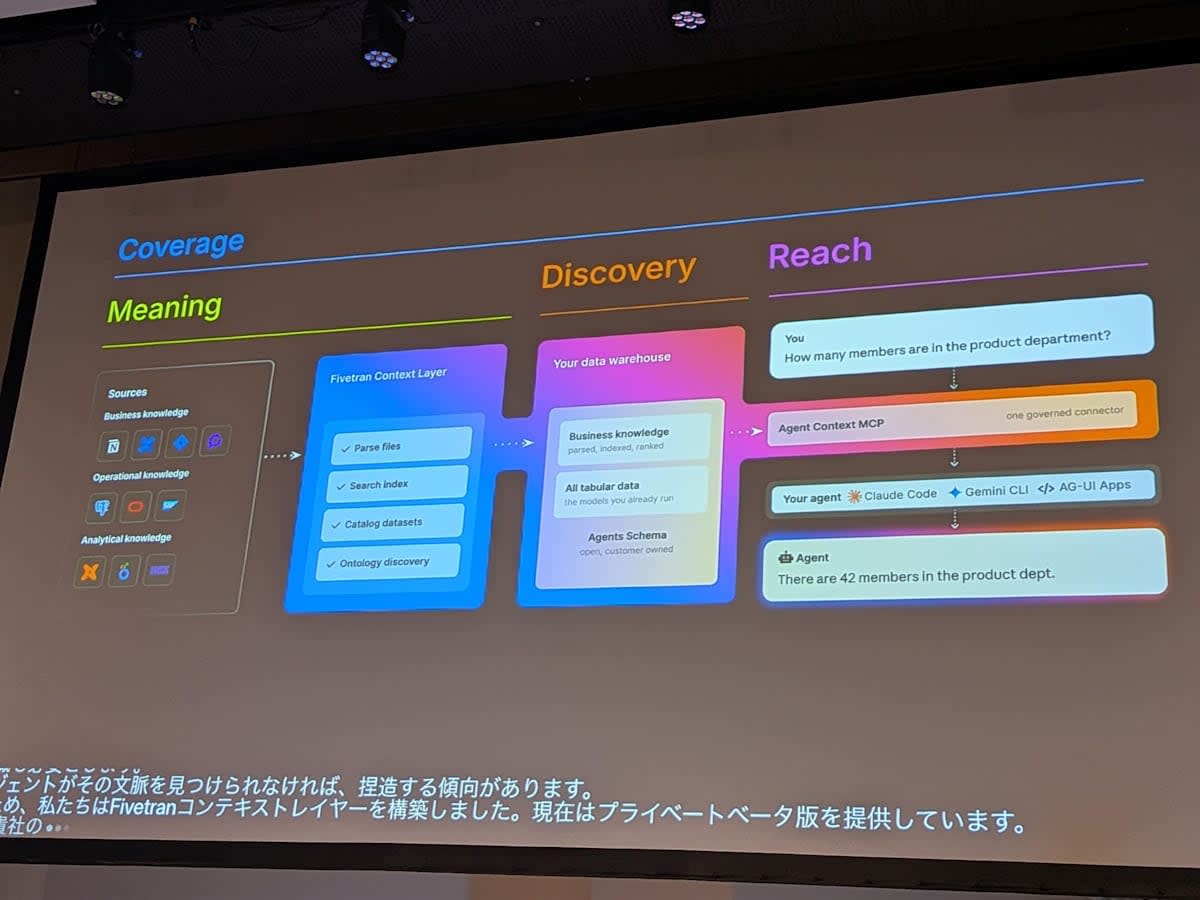
- Fivetran Context Layer is a managed service that retrieves metadata from dbt and structured sources
- Unstructured sources are converted into vectors that agents can search
- Everything is stored in the warehouse as open-standard tables. Any agent with SQL access and MCP can use it
- Context is defined once, centrally discoverable, and can be extended anywhere as needed
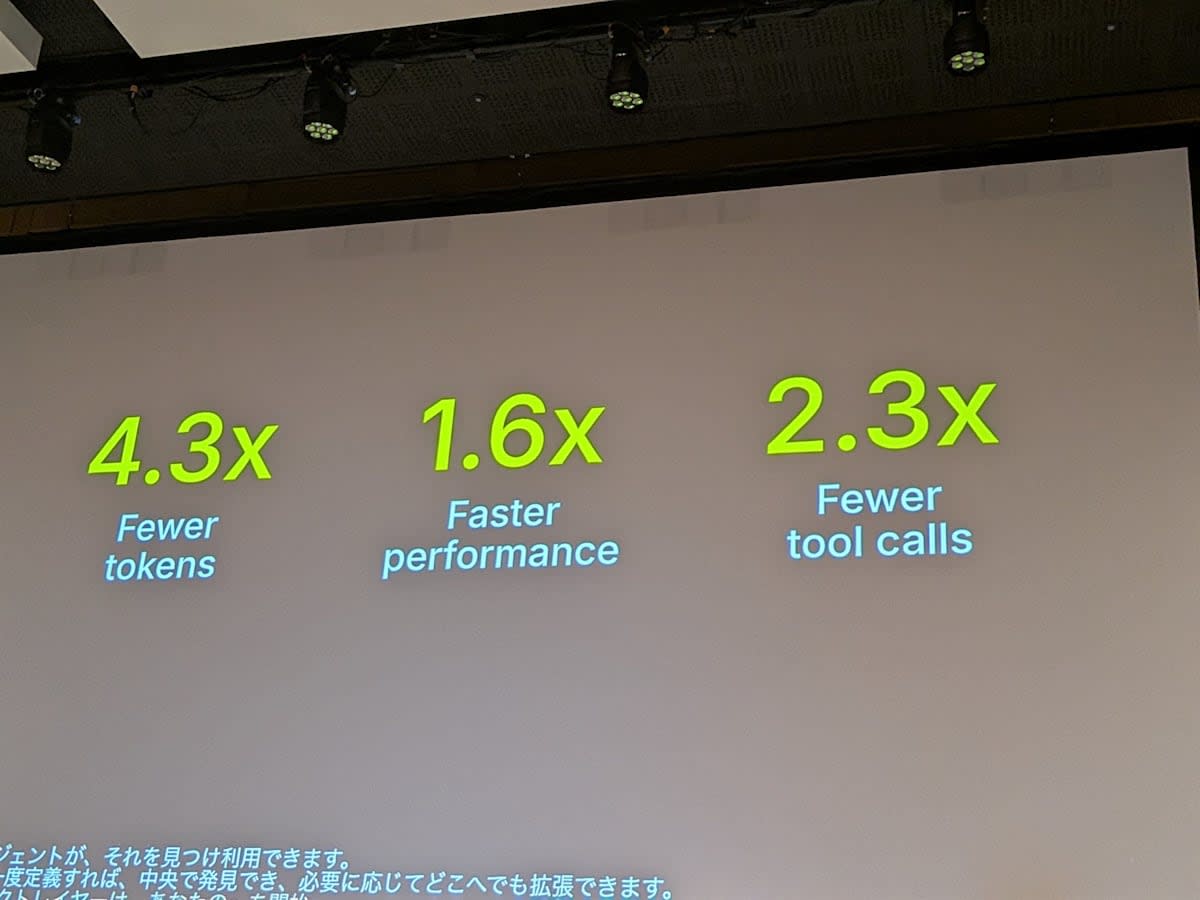
- Early measurements show fewer token consumption, faster responses, and fewer calls compared to standard MCP
- Currently being co-developed with design partners
dbt Charts (Public Beta)
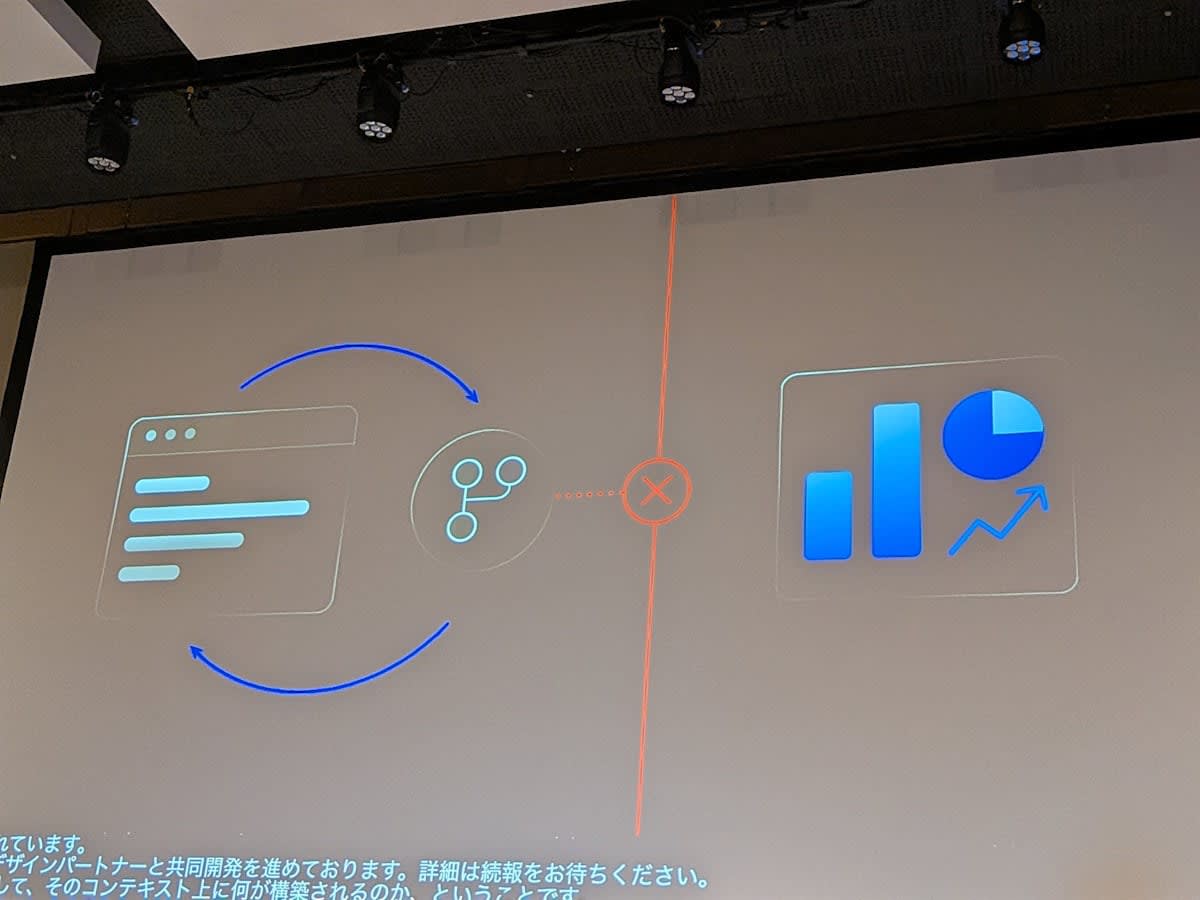
- Solves the problem of dashboards that people use for decision-making being disconnected from the code that generated them
- An open specification for defining charts and dashboards in YAML, which can be placed right next to the models they depend on
- SQL consistency can be maintained in the same repository, the same pull request, and the same CI
Our verification article
dbt Wizard (Public Preview)
- An agent specialized for analytics engineering
- Handles everything from investigation to validation across models, lineage, contracts, tests, and the semantic layer
- dbt Wizard on the dbt platform is now in Public Preview for all teams. No additional charge beyond existing dbt plans
- Explore Mode: Business users can ask questions in natural language and get answers grounded in the actual dbt project
- In Explore Mode, there is no need to sync a separate copy of the logic
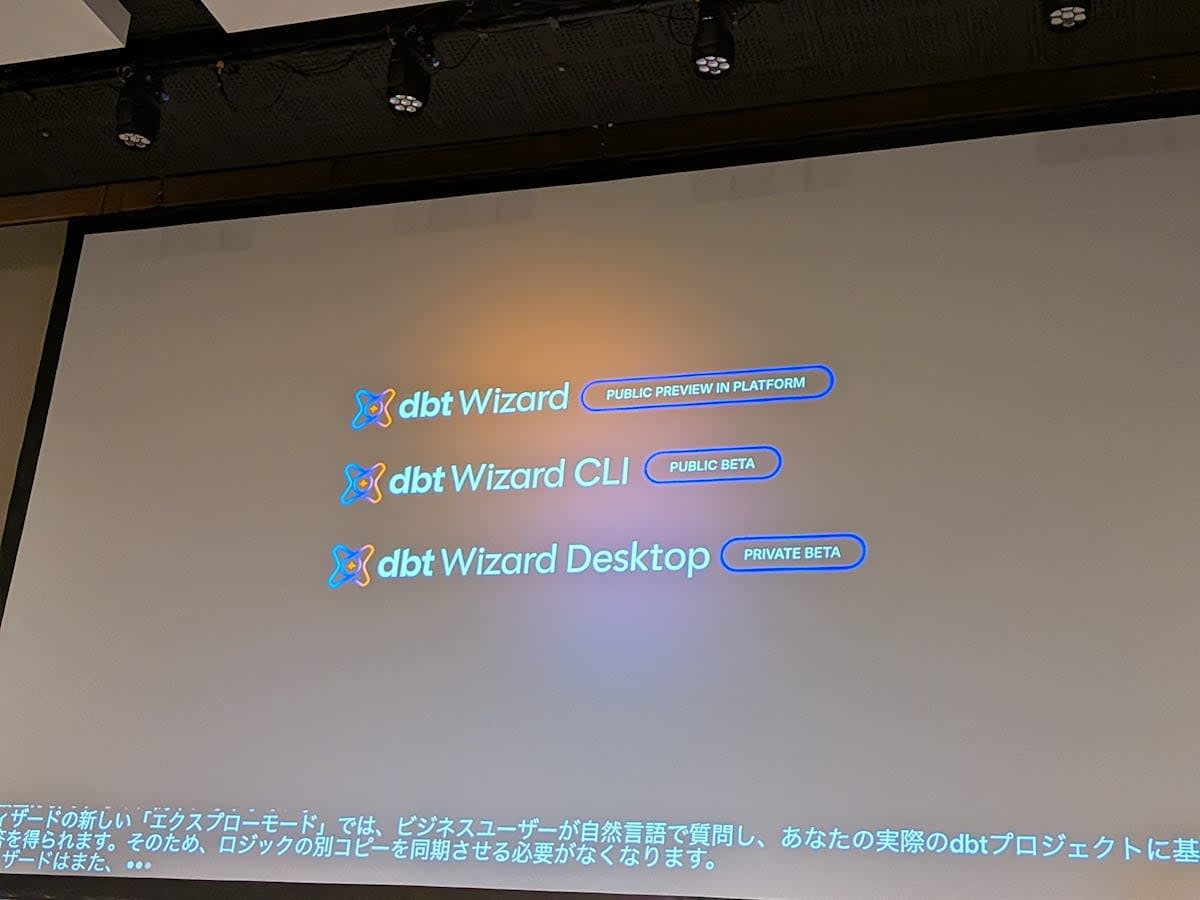
- Also supports local development via the CLI. The desktop app is in Private Beta
Our verification article
An Open Data Stack
- The foundation supporting AI should be fast engines, rich metadata, and governed context, while also being open, standards-compliant, and future-proof
-
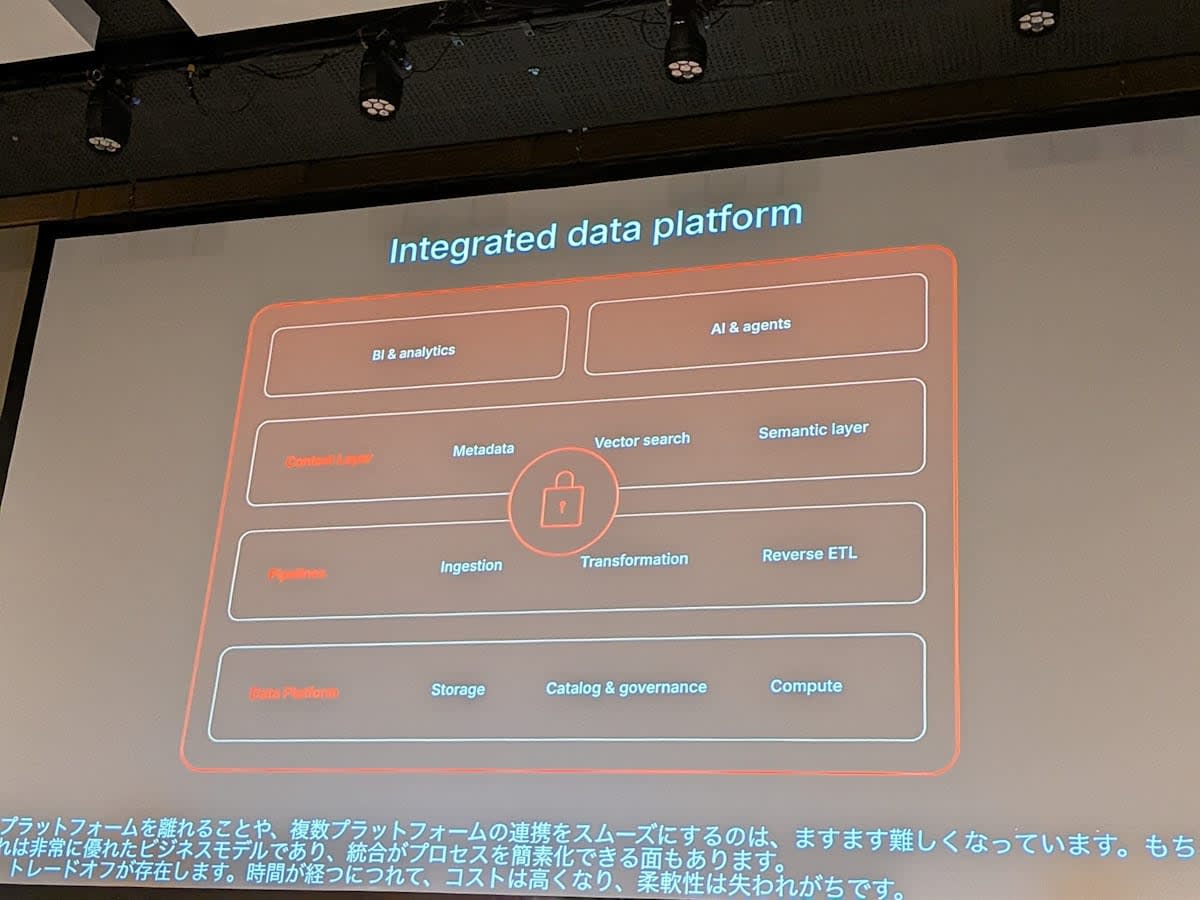
The faster change happens, the more important flexibility and user control become. The impact of poor technology choices and vendor lock-in has never been greater
-
The more successful data platforms tend to increase vertical integration, aiming to handle everything end-to-end from storage and compute to metadata and agents
- This is an excellent business model, and integration does simplify processes in some ways
- On the other hand, costs tend to rise over time and flexibility is often lost. Centralized architectures are also slower to adapt to change
-
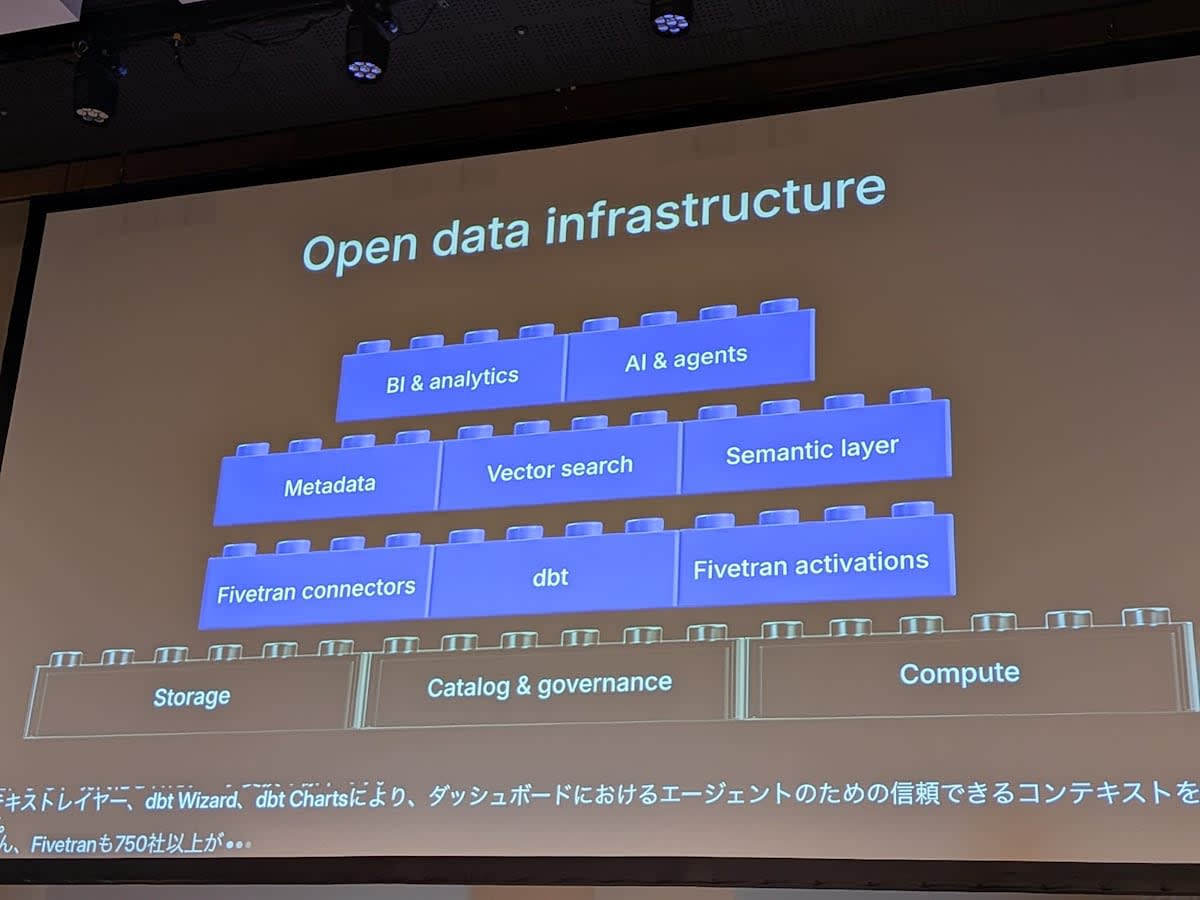
dbt and Fivetran view data technology like LEGO blocks — easy to connect, easy to separate
-
Providing a consistent experience across all data platforms, sources, and model providers is one of the hardest problems both companies solve every day
-
Customers should be free to choose either ready-to-use integrated solutions or building their own with truly open interfaces and OSS
-
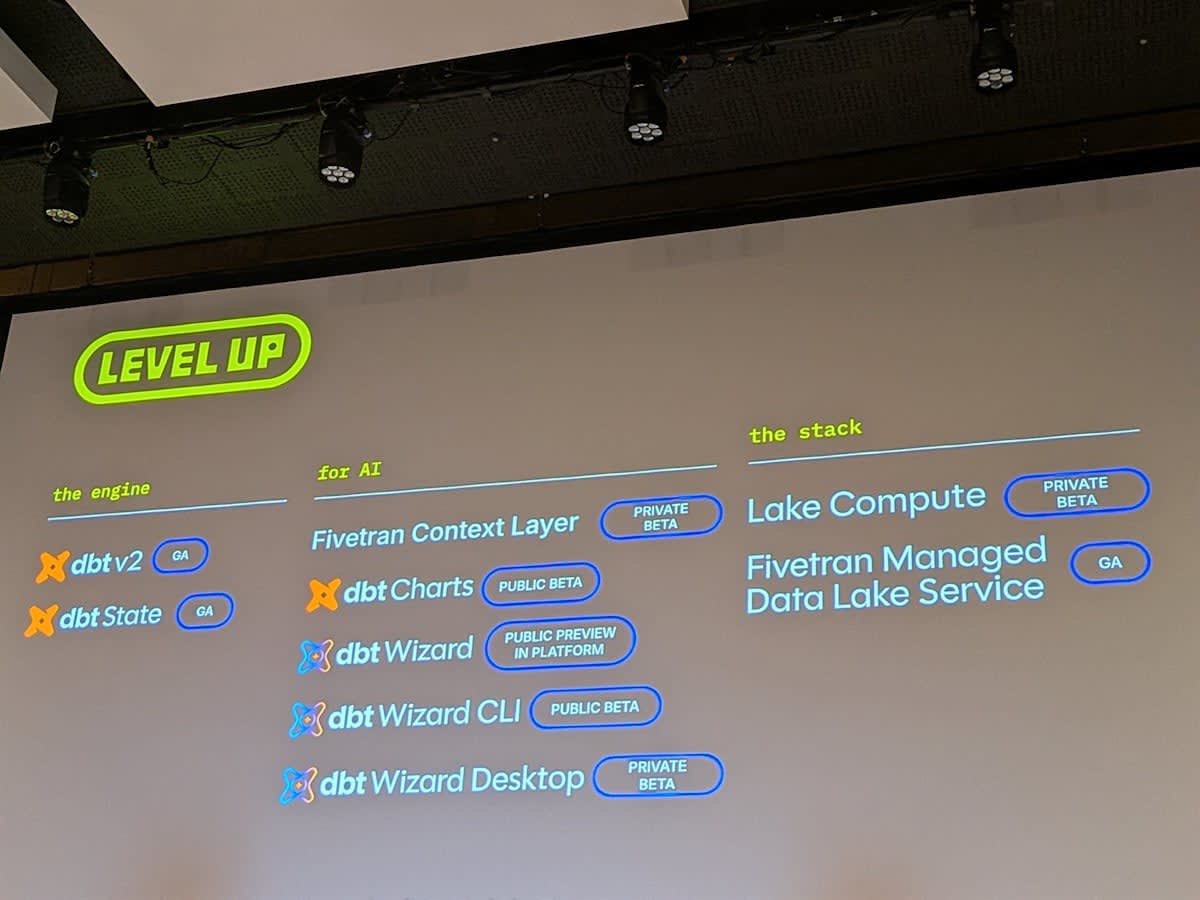
Today's announcements become building blocks for a pluggable, interoperable data stack:
- dbt v2: The modernized standard for data transformation
- Fivetran Context Layer, dbt Wizard, dbt Charts: Trusted context for agents and dashboards
- 750+ Fivetran connectors: Reliably moving data from wherever it lives to wherever it's needed
-
Open storage: Iceberg has become a practical alternative to all-in-one vendors
-
Fivetran Managed Data Lake makes it easy to load data in open Iceberg format
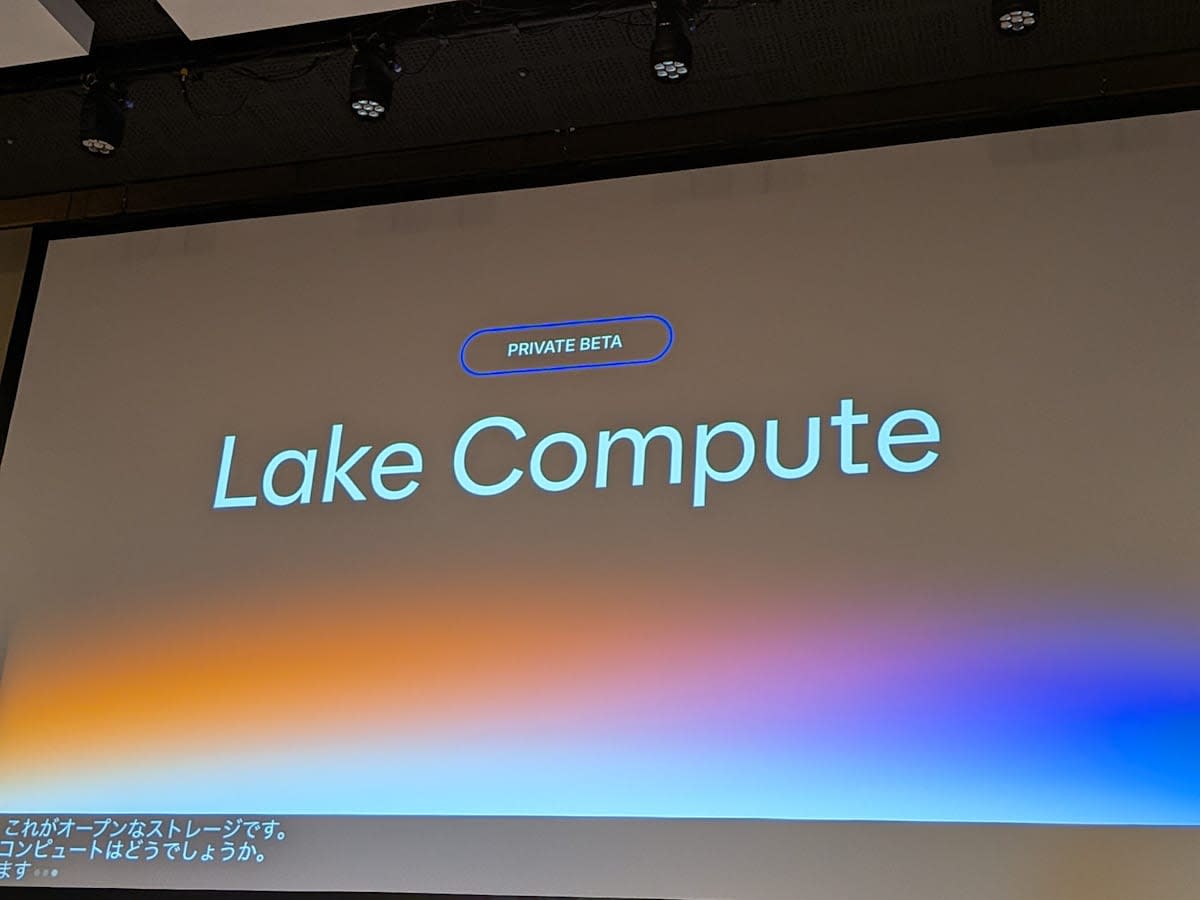
- Open compute: Announcing new service Lake Compute (Private Beta)
- A lightweight, portable engine based on DuckDB
- Can be deployed alongside any data platform that supports Iceberg
- Allows choosing the optimal compute for a task at the individual dbt model level
- The goal is to build a fully self-managed, environment-tunable complete data platform from the highest-quality LEGO blocks
- This is both a complement to and an alternative to the vertically integrated platforms that have been beloved for the past decade
Live Demo by Elias
Positioning of dbt v1 and v2
-
The choice of openness as a differentiator is because dbt Labs' history has been defined by an open approach. dbt is the open-source standard for data transformation
-
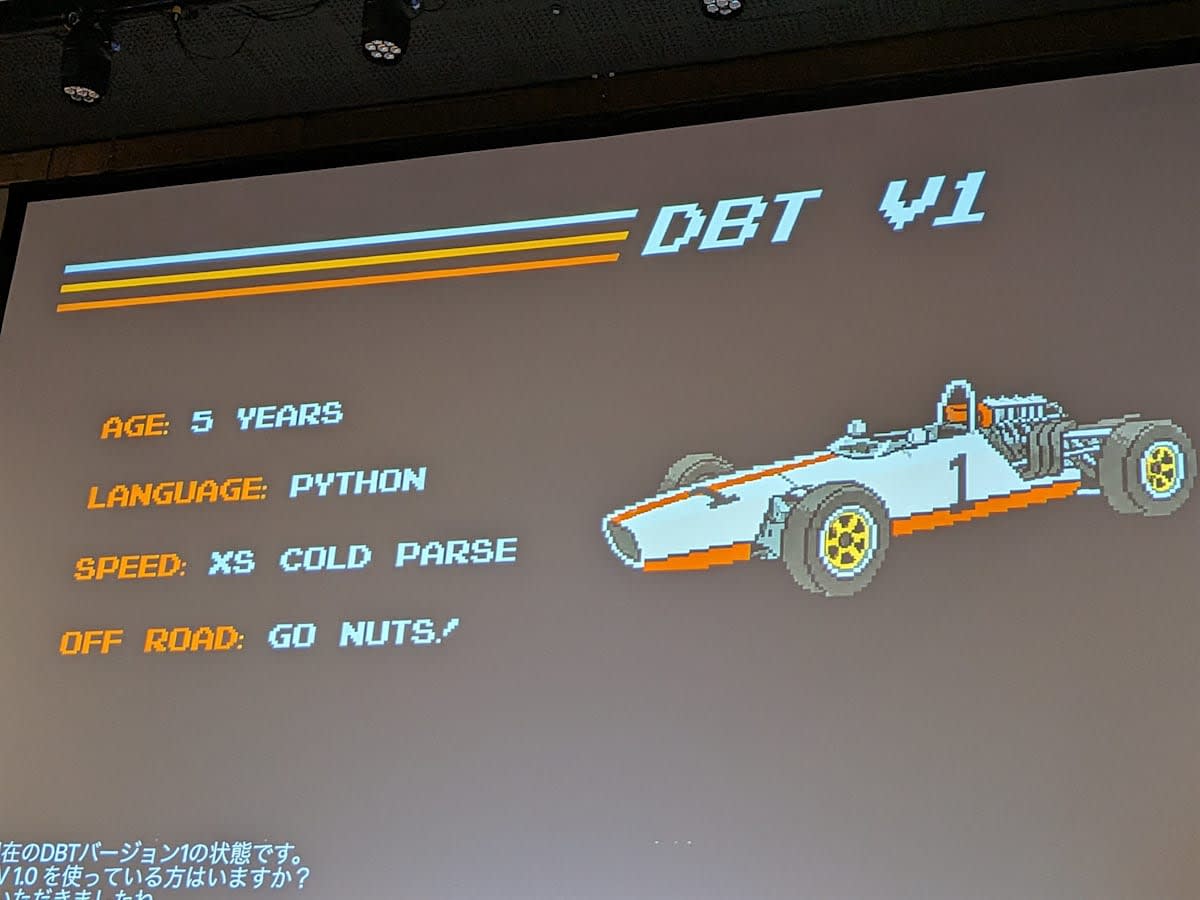
v1: Python-based. Slower than v2 but very stable — the version that defined dbt
- No new features will be implemented in v1 going forward. Innovation and investment will be focused on v2
- Bug fixes and security patches will be provided for 3–5 years until migration is complete
-
v2: The new engine. All teams are recommended to start with v2 by default
-
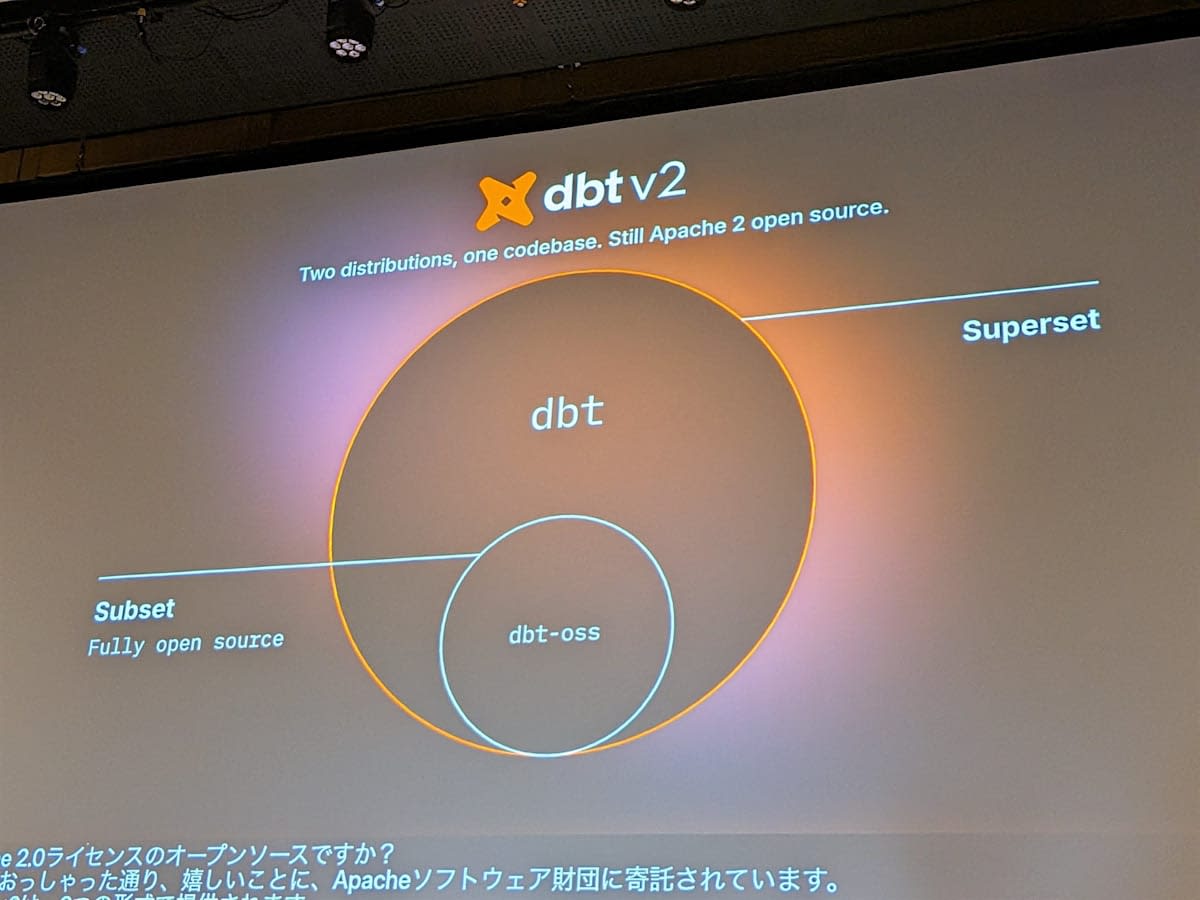
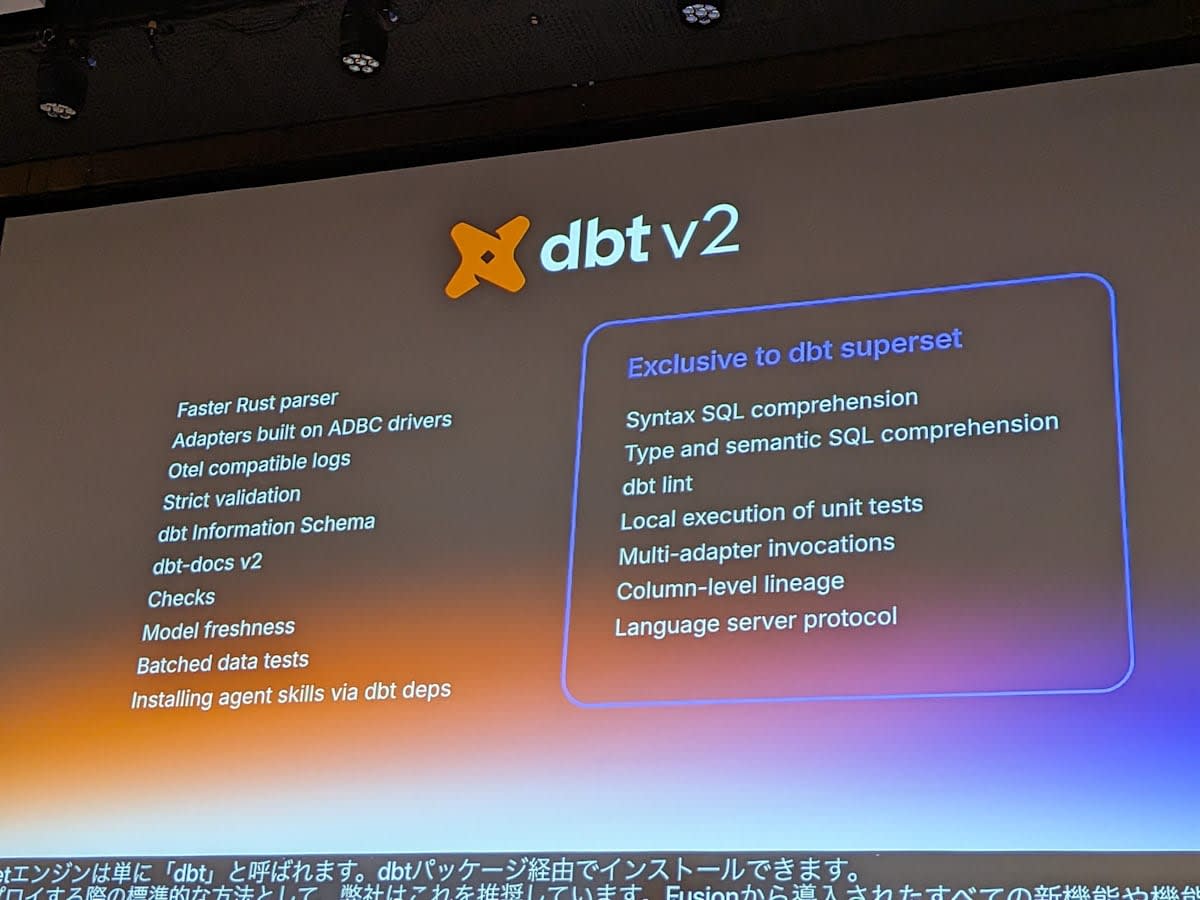
v2 is available in two distributions
| Distribution | Content |
|---|---|
| dbt OSS | Open-source code only under Apache 2.0 license. Full feature compatibility with v1, faster due to Rust |
| dbt | A superset including OSS. Contains all new features from Fusion, recommended as the standard deployment for teams |
Demo Environment
- Using VS Code with the dbt project of a fictional game studio "Jaffle Games"
- dbt v2 (displayed as 2.0.8) installed locally. Connected to Snowflake
- The biggest speed benefit from v2 is in parse. It's dramatically faster, reducing the execution time of all dbt operations
dbt lint
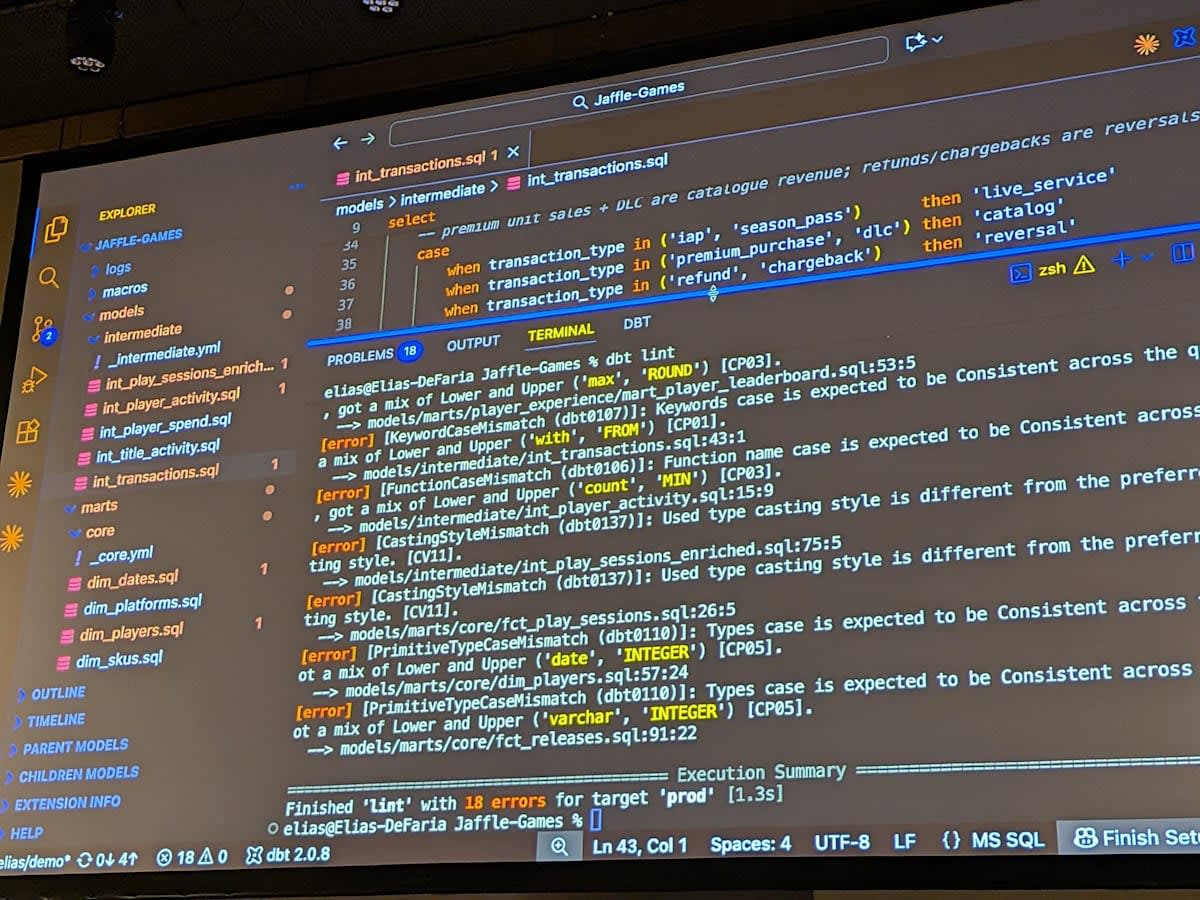
- A fast SQL linter natively built into v2.
dbt lintinstantly returns suggestions for code improvement - The VS Code extension shows issues line by line. Also natively integrated with dbt Wizard
- Agents make code generation cheap, but they don't guarantee code quality. Deterministic guardrails that can be run on every change are needed
dbt lint --fixcan automatically fix issues while maintaining best practices- Existing SQLFluff configuration files and rule sets can be used as-is
- The difference is 5 dbt-specific rules. Two examples introduced:
join_condition_or: Detects OR in JOIN conditions. This prevents hash joins from being used and can make execution 10x slower- Hardcoded references: Detects places where
ref()orsource()were forgotten
dbt check
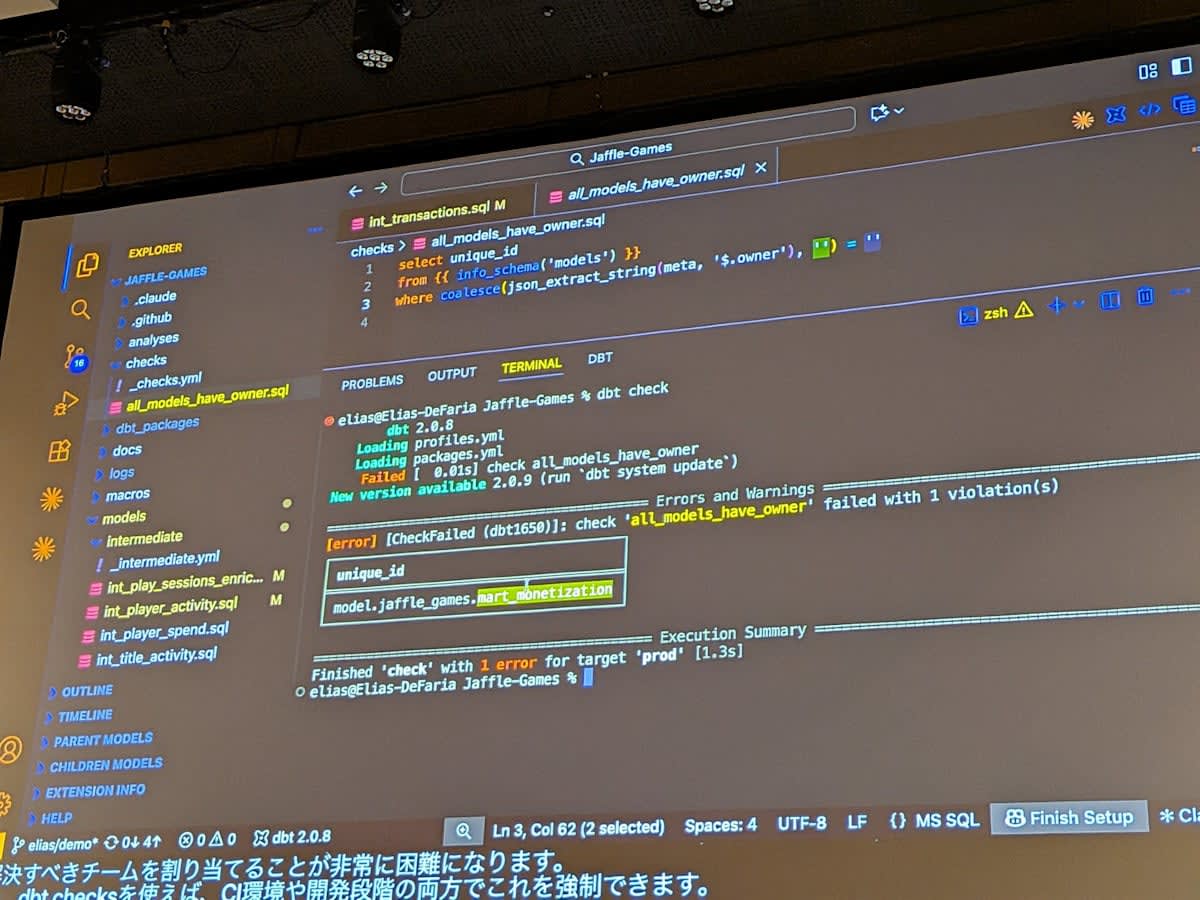
- A new feature for writing SQL assertions against dbt project metadata. Can be enforced both during development and in CI
- Example: a check that "all models have an owner set"
- Owner is the team responsible for debugging when issues occur. Without it set, it becomes difficult to identify the responsible team
- Running
dbt checkfailed onmart_monetization, which had no owner set - The mechanism is SQL that looks for models with empty owners in the models table of dbt's information schema
- Adding an owner in finance.yml and re-running succeeded
dbt information schema and Docs v2
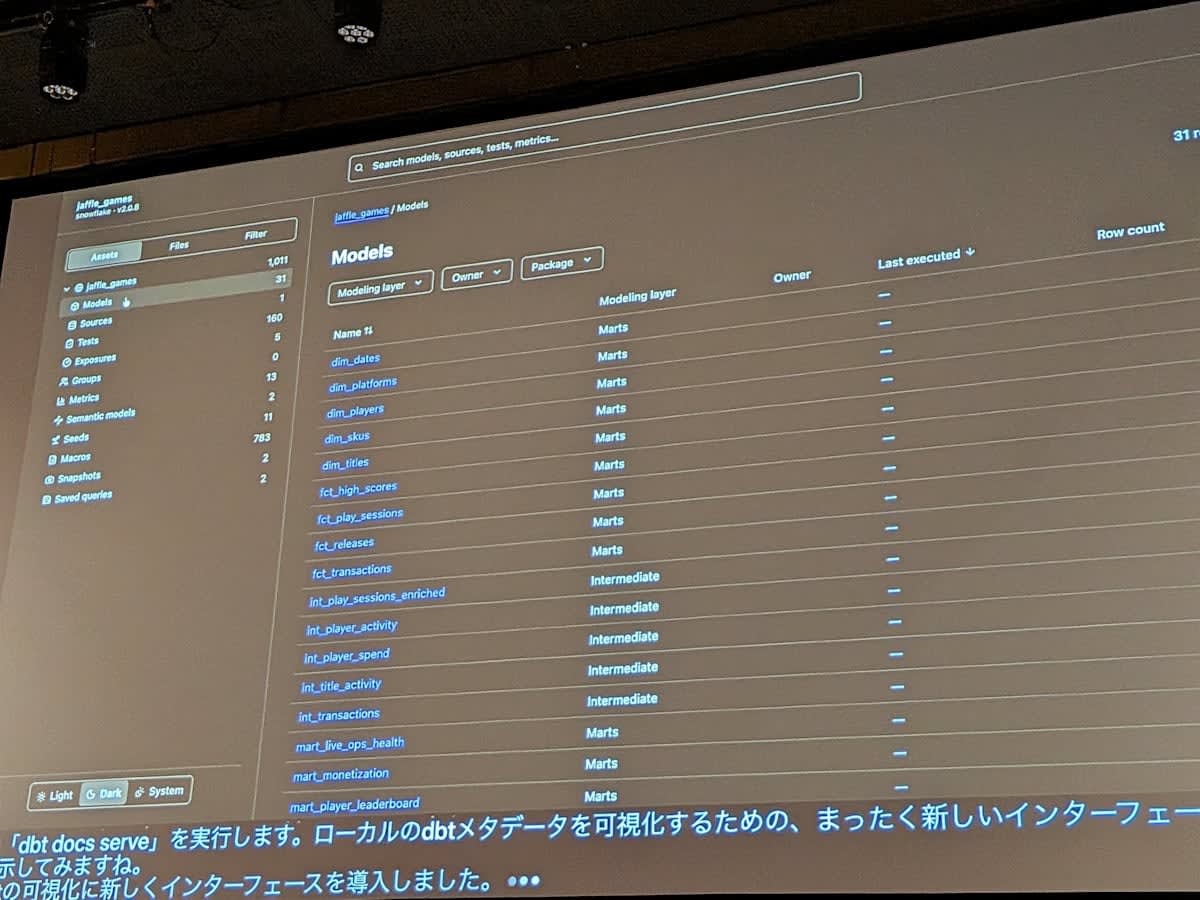
- Running
dbt compile --generate-info-schemagenerates aninfo_schemafolder under the target directory - In addition to manifest.json and run_results.json, project metadata is stored in Parquet format
- The Parquet metadata can be queried locally with DuckDB
- Contains richer metadata than before, including column-level lineage
- Docs v2, launched with
dbt docs serve, is a new UI that displays local metadata- Lists models, tests, exposures, and semantic models
- Lineage can be drilled down to the column level
batched tests
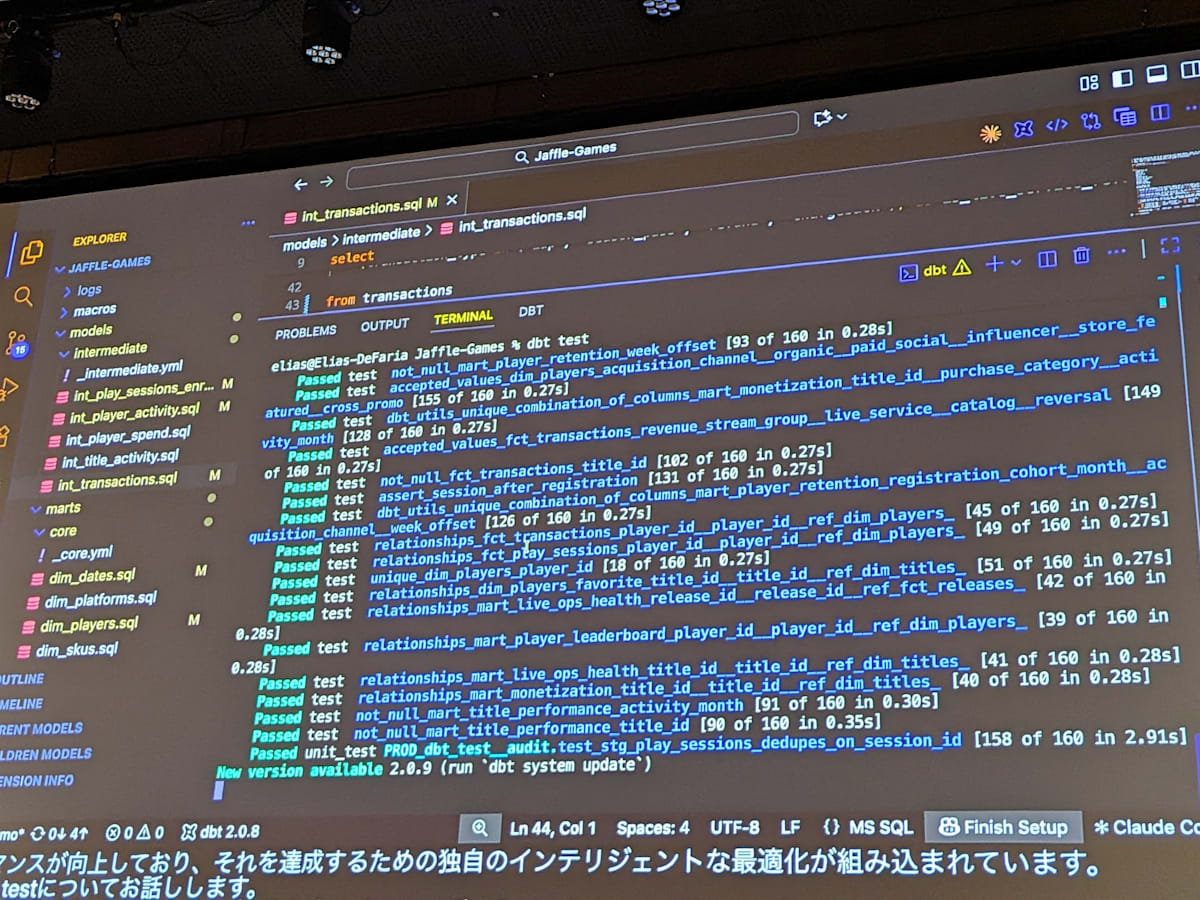
- Traditional
dbt testsends one query to the warehouse per data test. In the demo project, that's 156 queries - With the batched tests flag, multiple tests against the same model are consolidated into a single query, reducing scans to just one
- For example, if one model has 5 not null tests, they are combined into 1 query
- In the demo, 65 target tests were consolidated into 21 queries, reducing execution time by more than 30%
Local Execution of Unit Tests
- In the logs, one unit test completed in 1.22 seconds, and another in 0.08 seconds
- The faster unit test has
compute: localin its configuration - Converts Snowflake SQL to DuckDB SQL and executes it on the local machine. No queries are sent to the warehouse
- This can significantly improve costs and performance in the development inner loop
dbt State
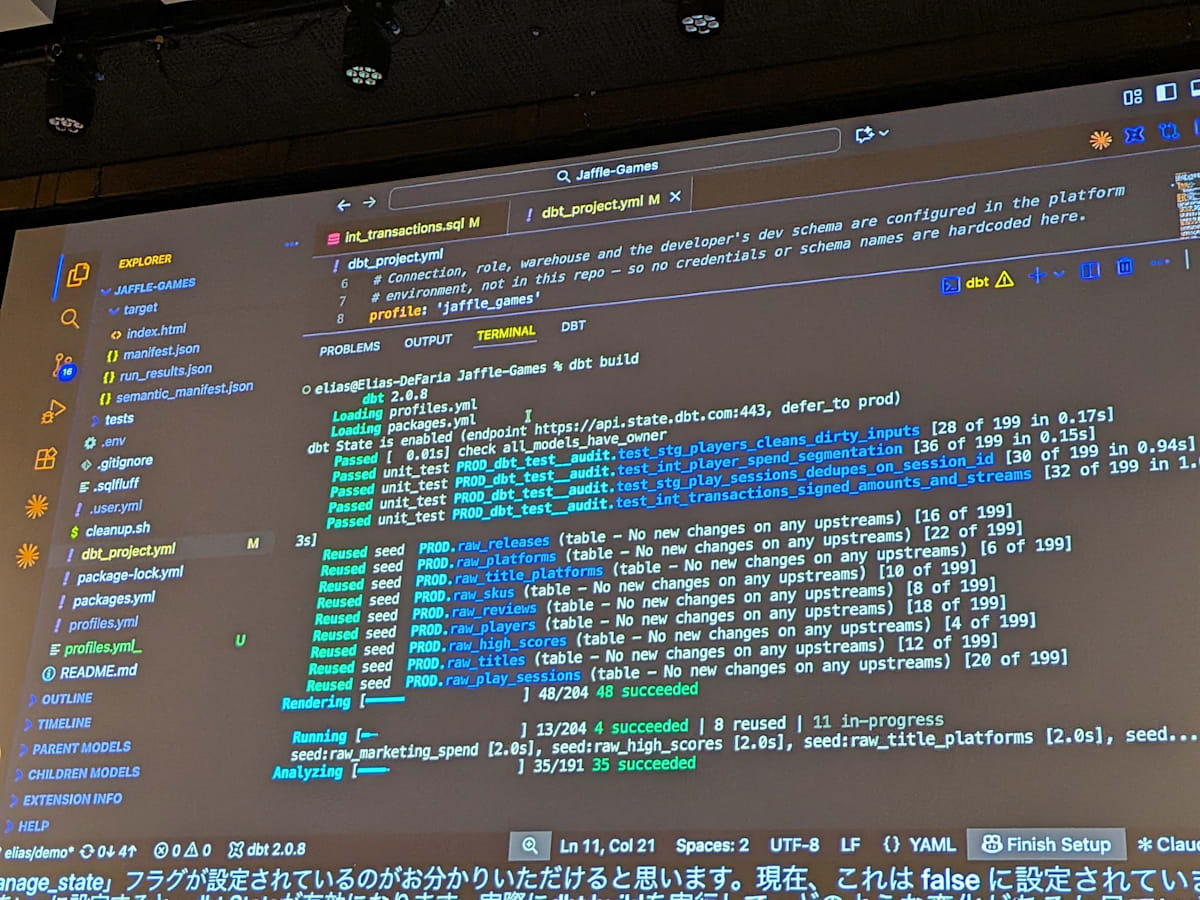
- Enabled by setting the
manage_stateflag to true in dbt_project.yml - Running
dbt buildshowed a status of "reused" rather than "succeeded"- It determined that upstream source data and code had not changed since the previous build, and skipped all models and tests
- Even for local runs, it connects to the state service on the dbt platform to determine whether to skip
- Effects on the development experience:
- When
dim_platformswas modified in a new development schema and built, the upstream reference tostg_platformsresolved to prod - Traditional defer required fetching and passing the production manifest.json. With dbt State, defer happens automatically through configuration alone
- Even when running with
+dim_platformsto include upstream models,stg_platformsshowed "reused" - This is because if the latest state of a model exists in another environment, it is automatically cloned into the development schema without rebuilding
- When
Lake Compute
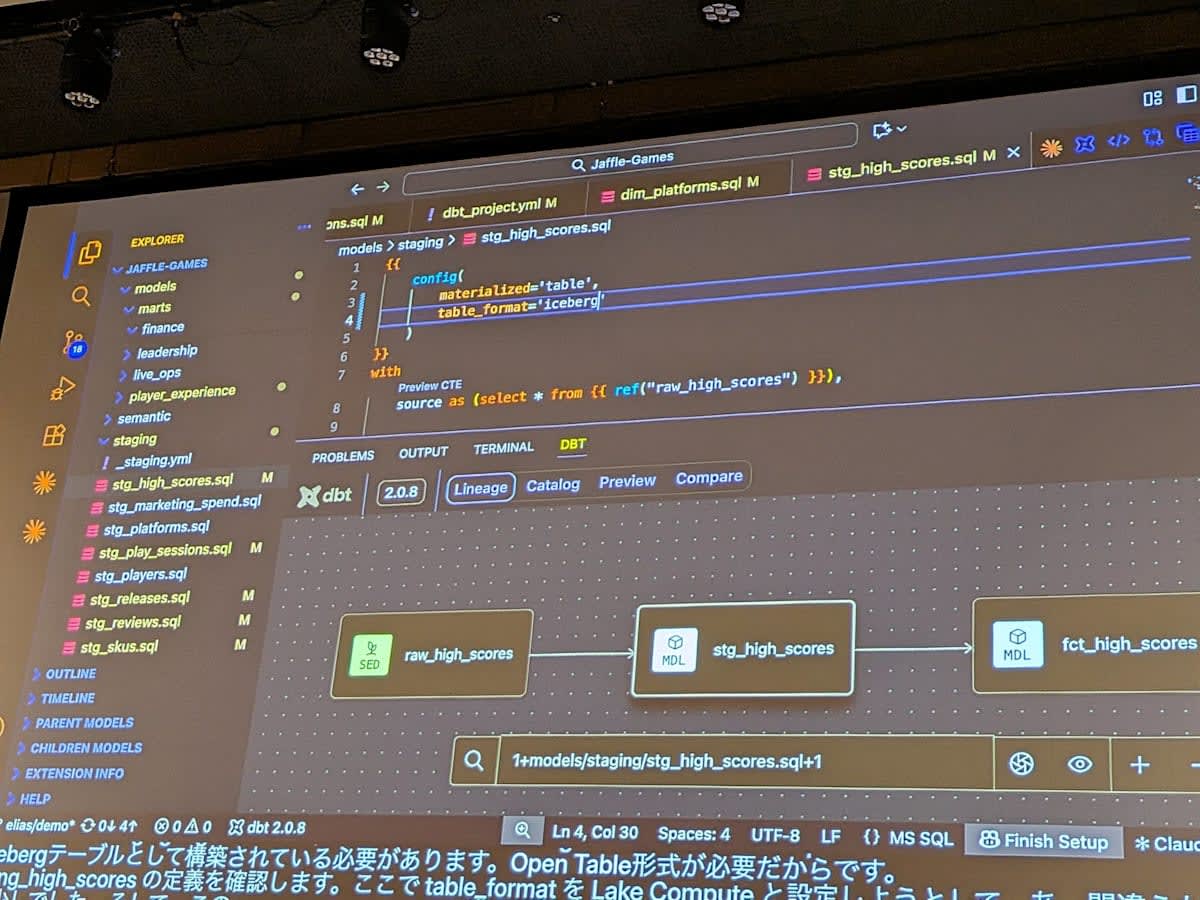
- The subject is
fct_high_scores, a high-cost fact table that processes large amounts of data every day - Options for cost reduction include migrating the warehouse or refactoring the model, but both require significant effort with no guarantee of success
- With Lake Compute, only this model can be run on DuckDB while the rest of the project remains on Snowflake
- Set
table_format: icebergon the upstreamstg_high_scoresto build it as an Iceberg table - Results of running
dbt run -s +fct_high_scores+:stg_high_scoreswas rebuilt as an Iceberg table on Snowflakefct_high_scoreswas sent to an auto-scaling DuckDB instance in the cloud, which read upstream data via Iceberg and performed the transformation- The results were written back to Snowflake's Iceberg catalog
- The downstream
mart_player_leaderboardthen ran on Snowflake based on those results
- This realized dbt's multi-adapter execution, where the adapter can be switched per model within a single DAG
Related Links
Thoughts
I attended the opening keynote of dbt World Tour Tokyo 2026.
The content covered a recap of the announcements from dbt Summit 2026, which was held last month, while providing a comprehensive overview of the updates.
Personally, Lake Compute and Fivetran Context Layer left a strong impression on me. I got the sense that dbt is entering a phase where it is making a significant shift away from its position as purely a transformation tool.
There are so many features I want to use that it's hard to choose!
I hope this article is helpful in some way!