
"NVIDIA" articles
Search results for "NVIDIA": about 288 results (English)
 越井 琢巳 (Koshii Takumi)
Measuring Nemotron-Labs-Diffusion Tri-Mode Generation on DGX Spark 森茂洋 / Hiroshi Morishige2026.05.21
- • Measured NVIDIA's Nemotron-Labs-Diffusion diffusion language model on DGX Spark
- • Compared three decoding modes: AR, Diffusion, and Linear Self-Speculation
- • Linear Self-Speculation achieved 1.75-1.98x speedup over autoregressive baseline
森茂洋 / Hiroshi Morishige2026.05.21
Exploring AWS AI Factory Announced at re:Invent 2025 たかくに2025.12.30
- • AWS AI Factory deploys AWS servers in customer data centers for sensitive data processing
- • Eliminates need for independent GPU procurement and multi-provider licensing negotiations
- • Combines NVIDIA GPUs, Trainium chips, and AWS AI services to accelerate AI development
たかくに2025.12.30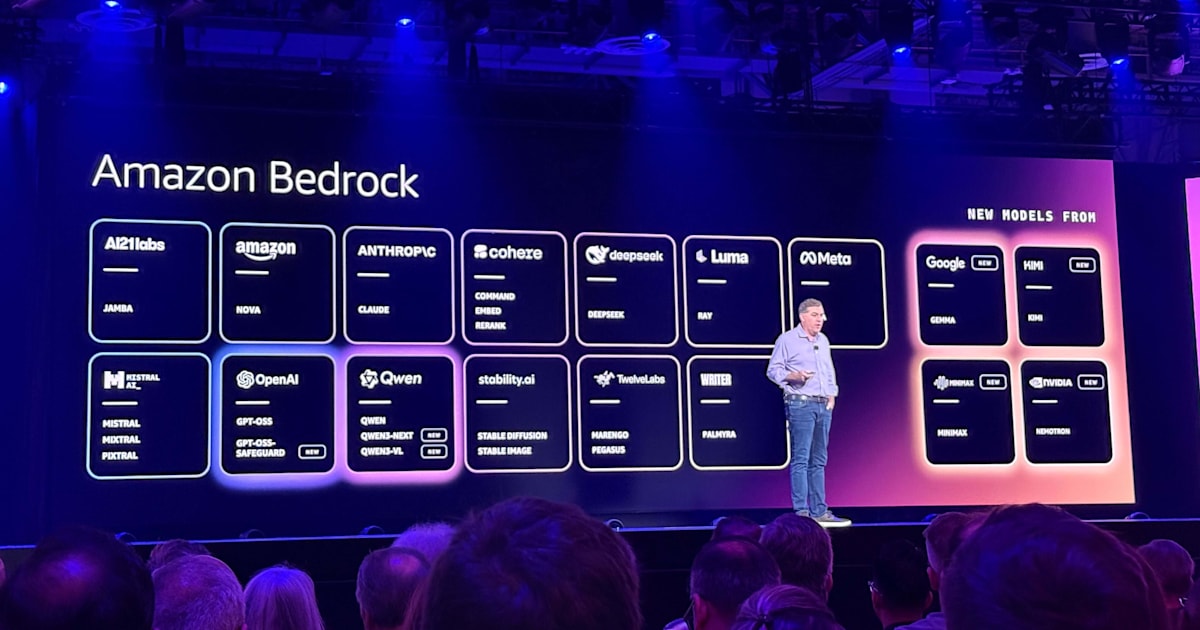
 Takaaki Kakei

How Far Can Local LLMs Run on Gaming PCs? Testing with Ollama あかいけ2026.07.04
- * Tested local LLM execution on gaming PC GPU (AMD Radeon RX 7800 XT 16GB) using Ollama framework
- * 9b quantized models achieved full GPU utilization with smooth performance on 256K context
- * VRAM capacity is the critical factor for token generation speed; quantization essential for optimization
あかいけ2026.07.04Exploring Non-Generative AI Alternatives After Reading OpenJev森茂洋 / Hiroshi Morishige2026.09.18
- • Jev is a non-generative decision model offering choice selection, scoring, and probability returns
- • OpenJev comprises multiple independent implementations: some modify readout methods, others retrain models
- • Avoiding generation improves speed and stability, though decision quality varies by use case
森茂洋 / Hiroshi Morishige2026.09.18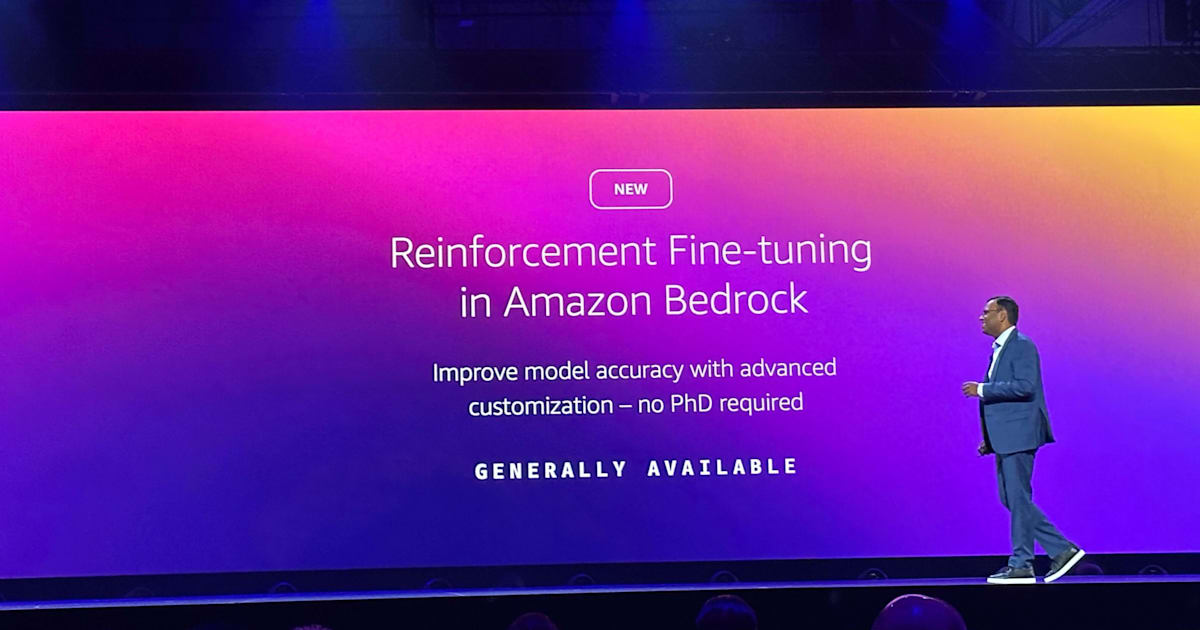
Amazon Bedrock Announces Reinforcement Fine-tuning at re:Invent 2025 森田力2025.12.04
- • Reinforcement Fine-tuning announced for Amazon Bedrock at re:Invent 2025
- • Uses reinforcement learning to achieve higher accuracy with less training data
- • Available for Amazon Nova 2 Lite in us-east-1 region via AWS console
森田力2025.12.04
Building an Image Generation AI Model with GAN 児玉慶一(ケーイチ) | 生成AIコンサルタント@Classmethod2026.10.02
- * Implemented an image generation model using GAN to create non-existent clothing images
- * Explained how generator and discriminator networks compete to improve results
- * Trained on Fashion-MNIST dataset, achieving practical image generation in 20 epochs
児玉慶一(ケーイチ) | 生成AIコンサルタント@Classmethod2026.10.02GTC Berlin 2026 Jensen Huang Keynote Summary森茂洋 / Hiroshi Morishige2026.10.21
- • Agents restructured into five elements (model, harness, sandbox, knowledge, tools) with unified framework from AI factories to local PCs
- • New platforms announced: DSX POD, OpenShell Reference Architecture, Agent Knowledge Foundation
- • Demonstrated robot learning on RTX Spark with Microduck, advancing sovereign AI in Europe
森茂洋 / Hiroshi Morishige2026.10.21Nemotron 3.5 Lightning Judgment Router: Optimizing to Single-Token Output Without JSON Generation森茂洋 / Hiroshi Morishige2026.09.23
- • Optimized Nemotron 3.5 Lightning LoRA router by eliminating JSON output
- • Reduced inference latency to 0.25 seconds via single-token logprob reading
- • Maintained judgment accuracy through retraining on single-character labels
森茂洋 / Hiroshi Morishige2026.09.23Local LLM Landscape in 2026: Model Selection and Implementation Guide森茂洋 / Hiroshi Morishige2026.01.28
- • Comprehensive overview of local LLM options as of January 2026, comparing Qwen3, GLM-4.7-Flash, and DeepSeek-V3.2 models
- • Migration from API-based services to on-premises GPU environments driven by cost efficiency, data privacy, and improved open-source performance
- • Qwen3 recommended for Japanese environments; practical guidance on tool selection (Ollama, LM Studio, vLLM) and hardware requirements
森茂洋 / Hiroshi Morishige2026.01.28Running 118B Code-Specialized MoE "Laguna S 2.1" on DGX Spark森茂洋 / Hiroshi Morishige2026.07.23
- • Tested Poolside's 118B MoE model Laguna S 2.1 NVFP4 on single DGX Spark
- • Achieved 31.2 tok/s with DFlash speculative decoding (K=3) on vLLM v0.25.1
- • Demonstrated practical code-fixing capability with fewer turns than Qwen 35B
森茂洋 / Hiroshi Morishige2026.07.23
Extracting Exercise Records from Ring Fit Adventure Result Screens Using Foundation Models Multimodal Capabilities 和田 健司2026.06.18
- • Extracts exercise records from Ring Fit
- Adventure screenshots as structured data
- using Foundation Models multimodal API
- • Iterative @Generable design improvements:
- separating recognition from computation,
- replacing Optional with Bool+Double pairs
- • Significantly reduces implementation cost
- compared to Vision.framework OCR approach
和田 健司2026.06.18
 石川覚

Exploring Amazon Nova 2.5 Sonic: Speech-to-Speech AI Conversations よなみね2026.11.22
- * Amazon Nova 2.5 Sonic is a Speech-to-Speech model enabling natural voice-to-voice conversations
- * Significantly improved from previous version with human-like conversation smoothness
- * Ideal for extracting tacit knowledge from non-technical domain experts
よなみね2026.11.22
 suzuki.ryo
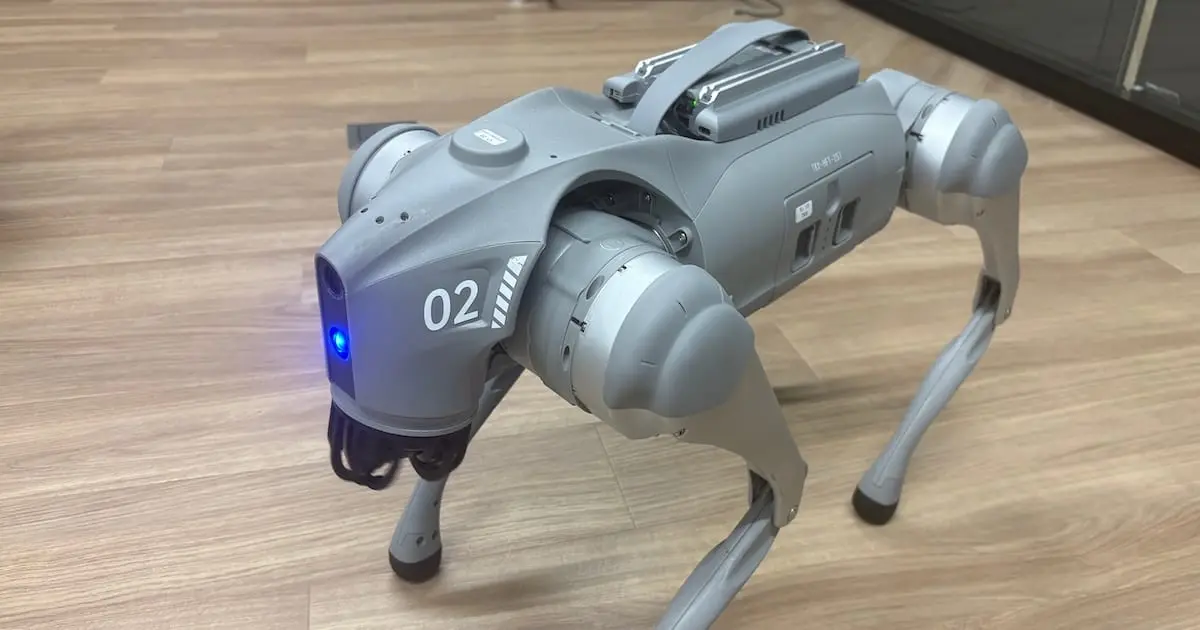
Robot Visual Inspection Agent using Unitree Go2 and G1: Starting MVP Development lee.tienning2026.07.09
- • Developing MVP for robot visual inspection agent using Unitree Go2/G1 cameras
- • Implemented end-to-end pipeline with Qwen2.5-VL for structured JSON output and report generation
- • Real image evaluation revealed challenges: schema inconsistency, JSON format issues, and unstable risk assessment
lee.tienning2026.07.09
OpenAI's Decisions API: Overview and Comparison with Jev and Clef けーま (川田 圭真)2026.10.07
- • OpenAI releases Decisions API that returns probabilities instead of text
- • Same decision model as Jev and Clef with different request/response formats
- • Incompatible request and response structures require code modifications
けーま (川田 圭真)2026.10.07
Testing Nemotron Deciffusion 8B, a Non-Generative Diffusion Model, on DGX Spark森茂洋 / Hiroshi Morishige2026.10.15
- * Nemotron Deciffusion 8B adapts diffusion language models for classification, returning only choice probabilities without text generation
- * Deployed on DGX Spark with single docker command, consuming 9 GiB in FP8 with 138 ms latency per judgment
- * Achieved parity with Jev on 528-item benchmark: zero misroutes on 87 production cases, AUC 0.858 on 237 unseen cases
森茂洋 / Hiroshi Morishige2026.10.15Comparing Nemotron 3 Nano Omni, Gemma 4, and Cosmos-Reason2 on Japanese Multimodal Benchmarks森茂洋 / Hiroshi Morishige2026.05.03
- • Compared Nemotron 3 Nano Omni, Gemma 4, and Cosmos-Reason2 on Japanese multimodal benchmarks
- • Gemma 4 leads in free-form tasks by 0.8-1.1 points; three models perform similarly on multiple-choice
- • Omni maintains unique 4-modality integration but trails Gemma 4 in Japanese language performance
森茂洋 / Hiroshi Morishige2026.05.03