# [Casual] My First Big AWS Event! AWS Cloud and AI Day @ KLCC~

HiHi~ this is AnonymousPenguin~
On 4 November 2026, I joined AWS Cloud and AI Day Kuala Lumpur @ KLCC. So here is my casual recap~
What is AWS Cloud and AI Day?
| Item | Detail |
|---|---|
| Date | 4 November 2026 |
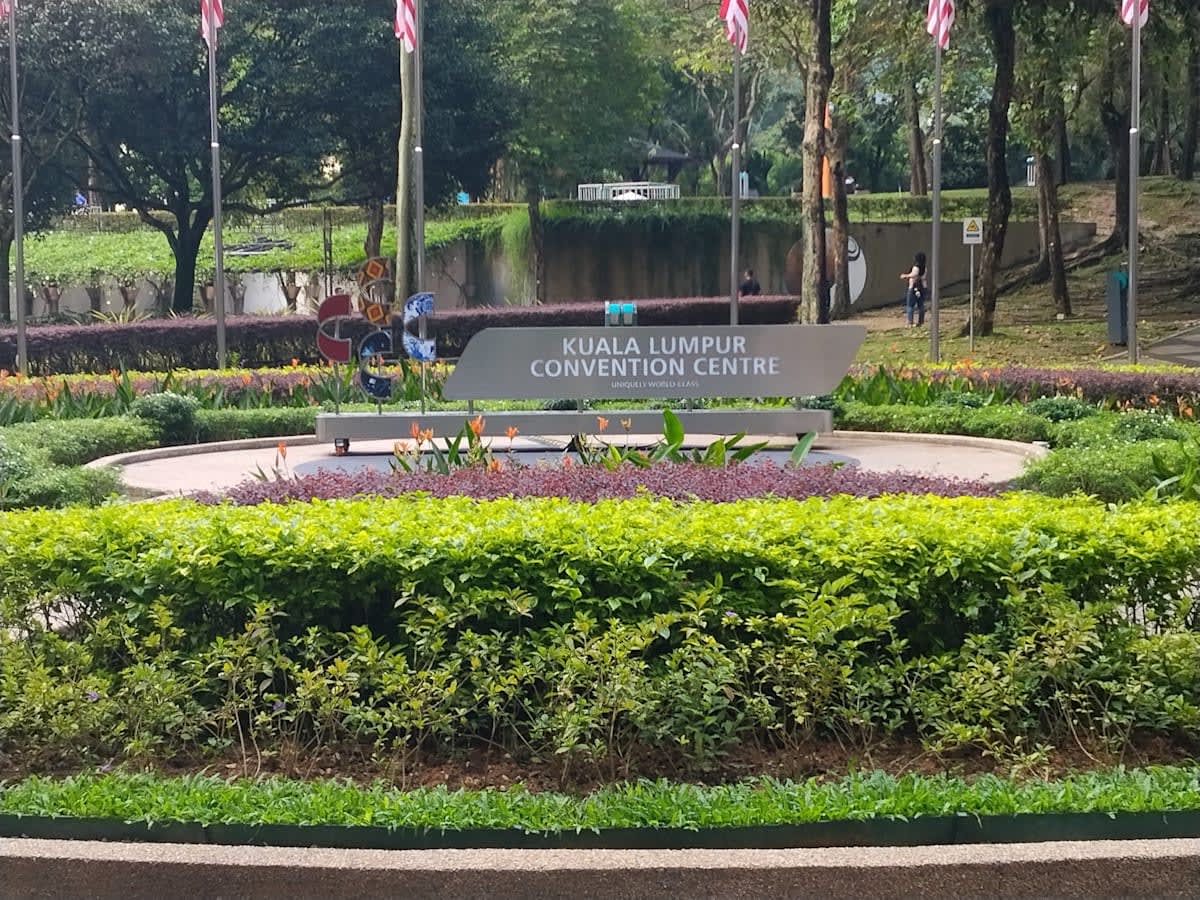
| Venue | Kuala Lumpur Convention Centre (KLCC) |
| Price | Free admission |
| Content | 30+ sessions, keynote, workshops, Solutions Expo, Startup Zone, Developer Community Zone |
It is a one-day AWS event for developers, IT leaders and business people. The topics cover agentic AI, data and analytics, cloud migration and modern applications.
The venue is located in the centre of Kuala Lumpur, so it is very convenient to get there by public transport, which is also how I went. Actually, I forgot to register for the event earlier, so I went as a walk-in. The event only accepted walk-ins from the afternoon, so I joined after lunch and missed the opening keynote~ Still, half a day was enough to fill my brain (and my stomach).
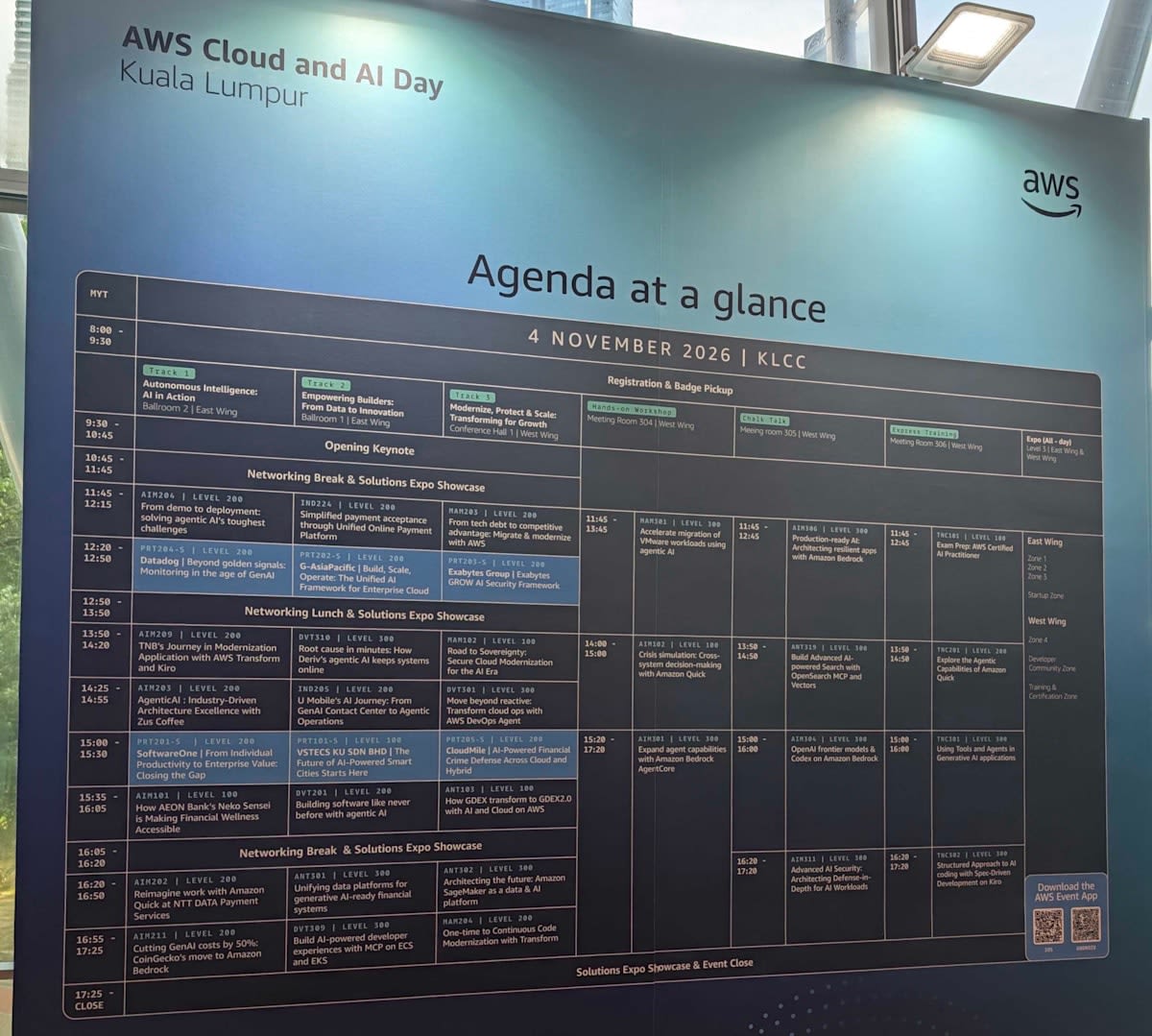
By the way, this is my first AWS event of this scale~
Booths~
I collected my badge, checked the venue map, and found out that Kiro has a booth~
As a person who works and digs a lot with Kiro, of course I went there first~
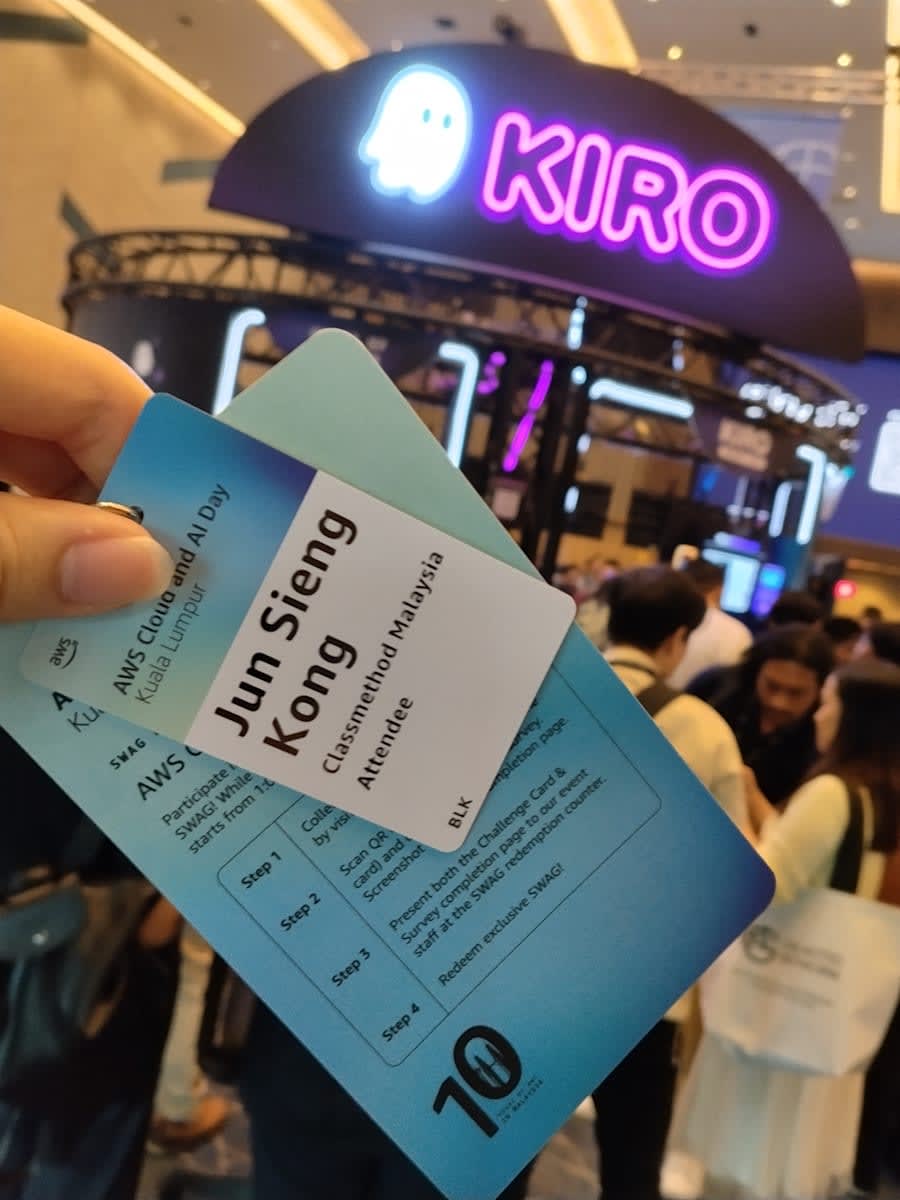
Kiro booth: 8-bit agent game
This is the only booth game I played, because I didn't have enough time for the others. It is a quiz game with 5 people in a group, and you answer general knowledge questions like "What is the capital of Malaysia?". I got 3rd place in my group and won some prizes~ (`・ω・´)ゞ
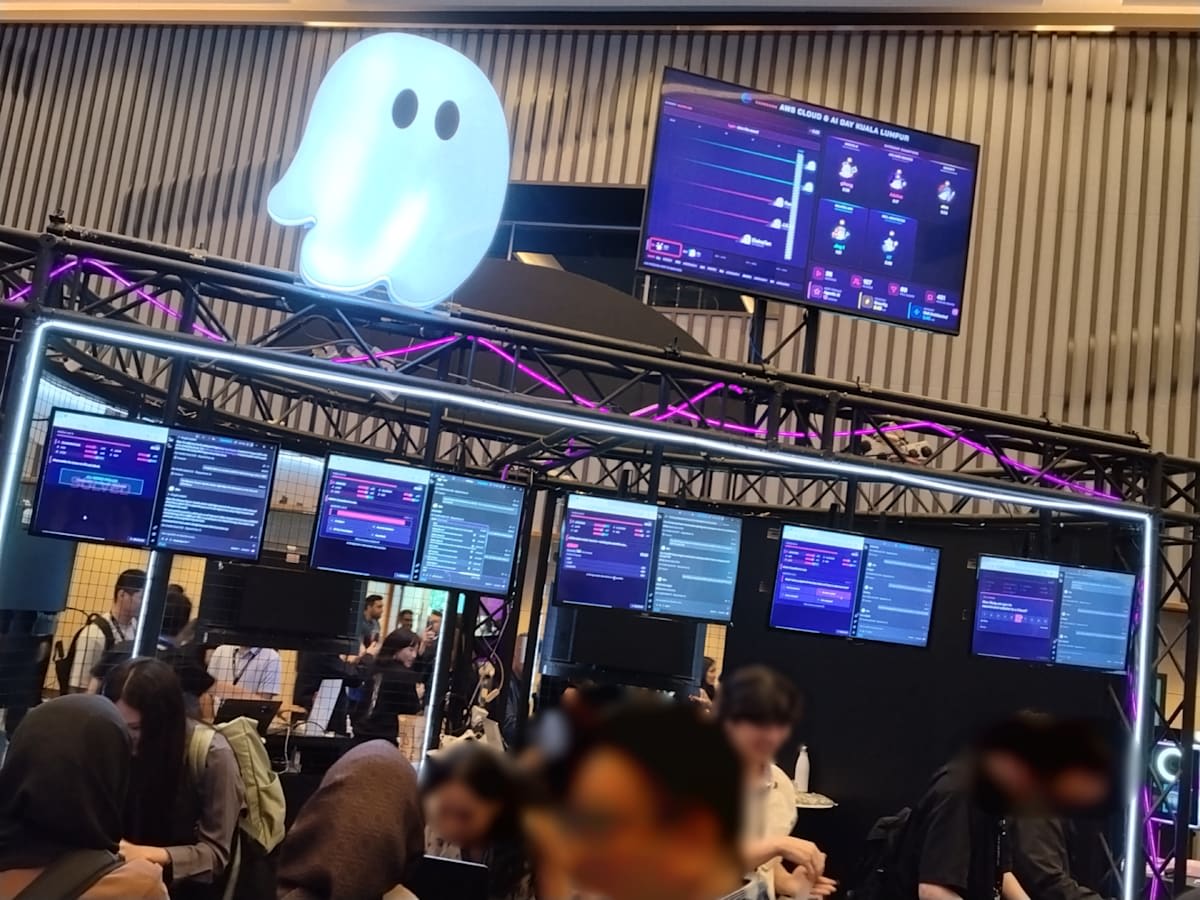
Other booths
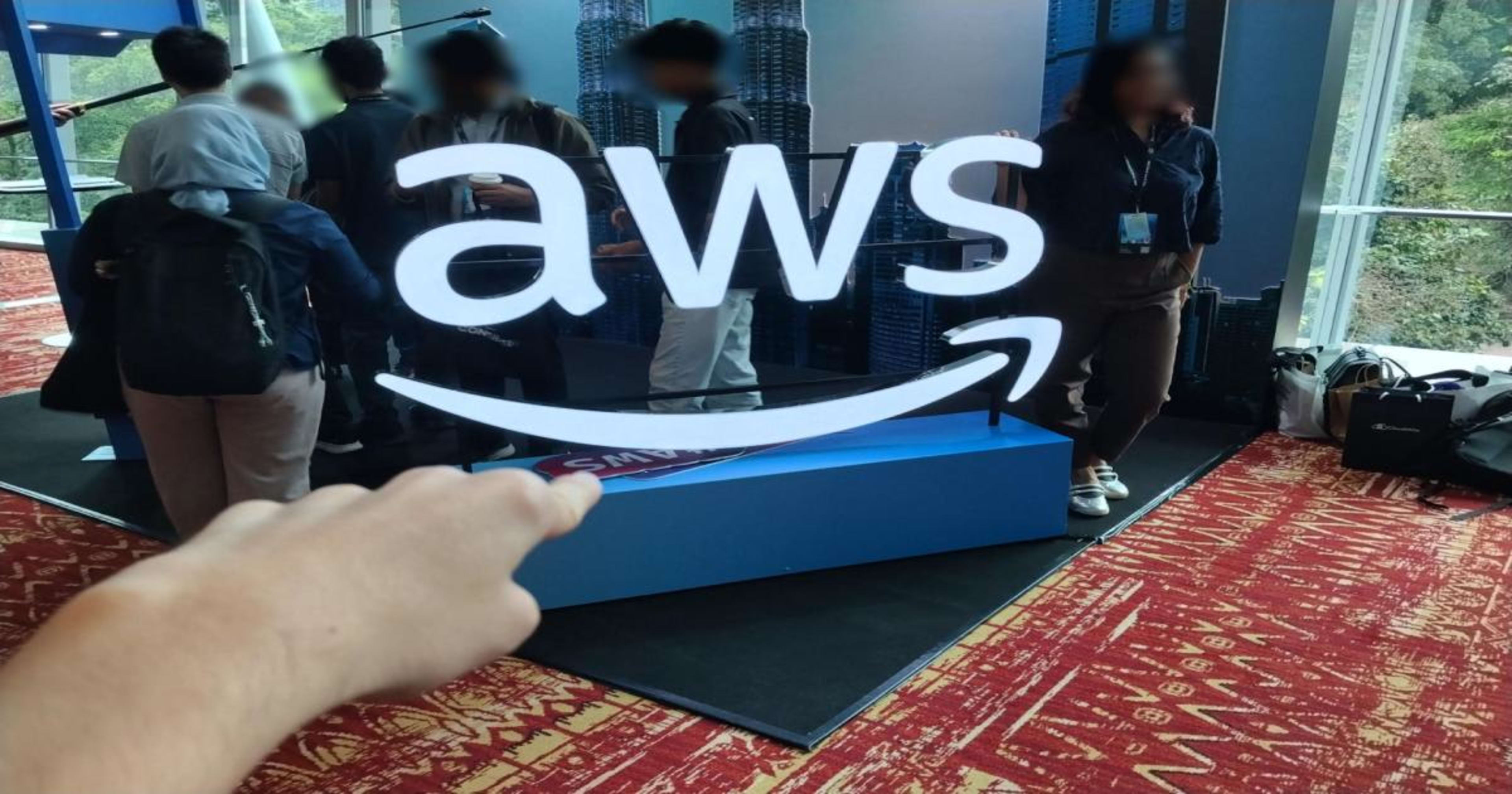
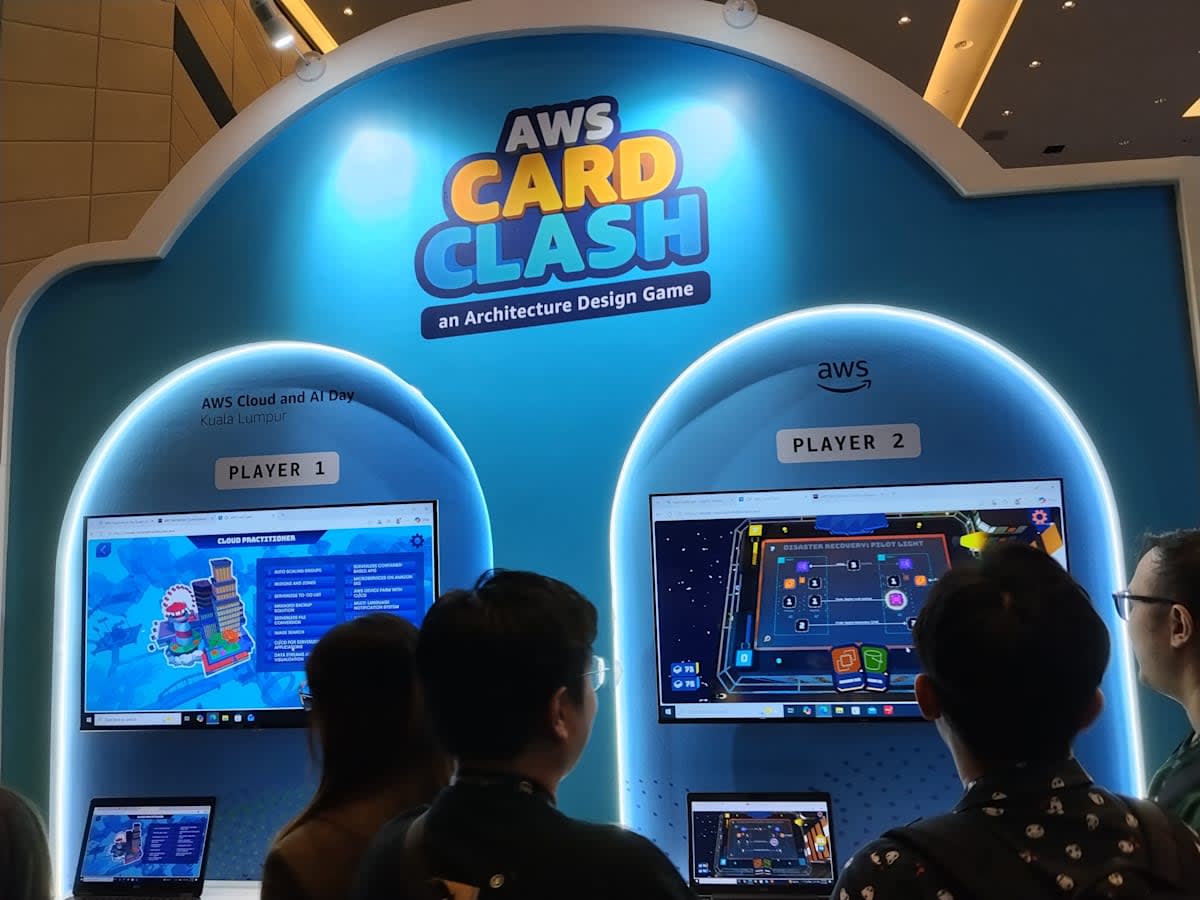
There were many more booths. I didn't visit all of them, but here are the photos I took:
AWS Card Clash, an architecture design game
A demo of a Malaysia power grid monitoring system
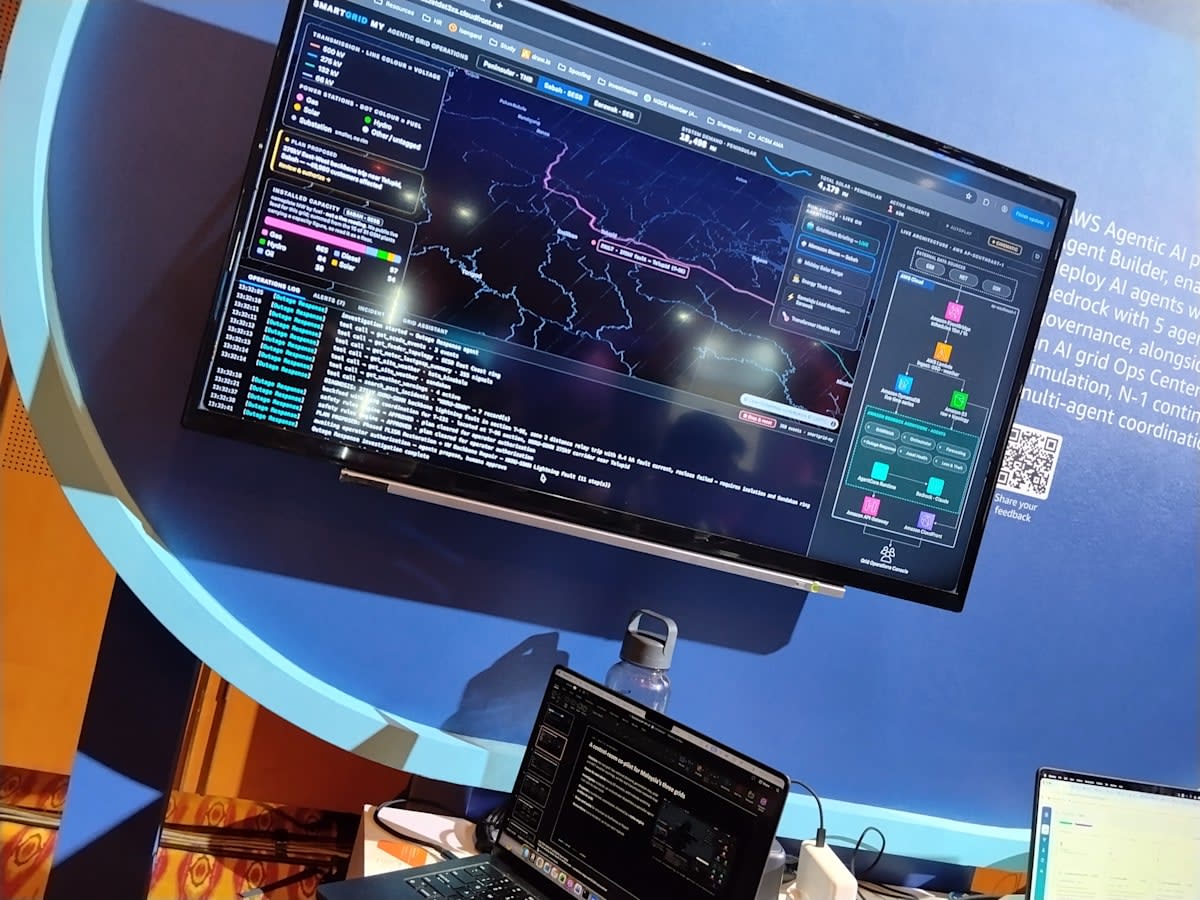
I chatted with the booth staff. This is a concept demo project of a Malaysia power grid monitoring system, where an AI agent gives suggestions and operations, and a human only approves them.
In Malaysia it rains really heavy and frequently. Although Malaysia rarely has earthquakes or typhoons, rain can eazily cause floods, and floods cause power cuts. So this kind of system helps to monitor and manage the power grid.
They also showcased another project: an AI agent builder application. Basically, it is an application that creates agents specific to a certain area to help you do stuff. When you create an agent template, you set things like database access control, the system prompt and the model (there were more settings, but I forgot). They mentioned the government is one of their clients, but I didn't ask for the details.
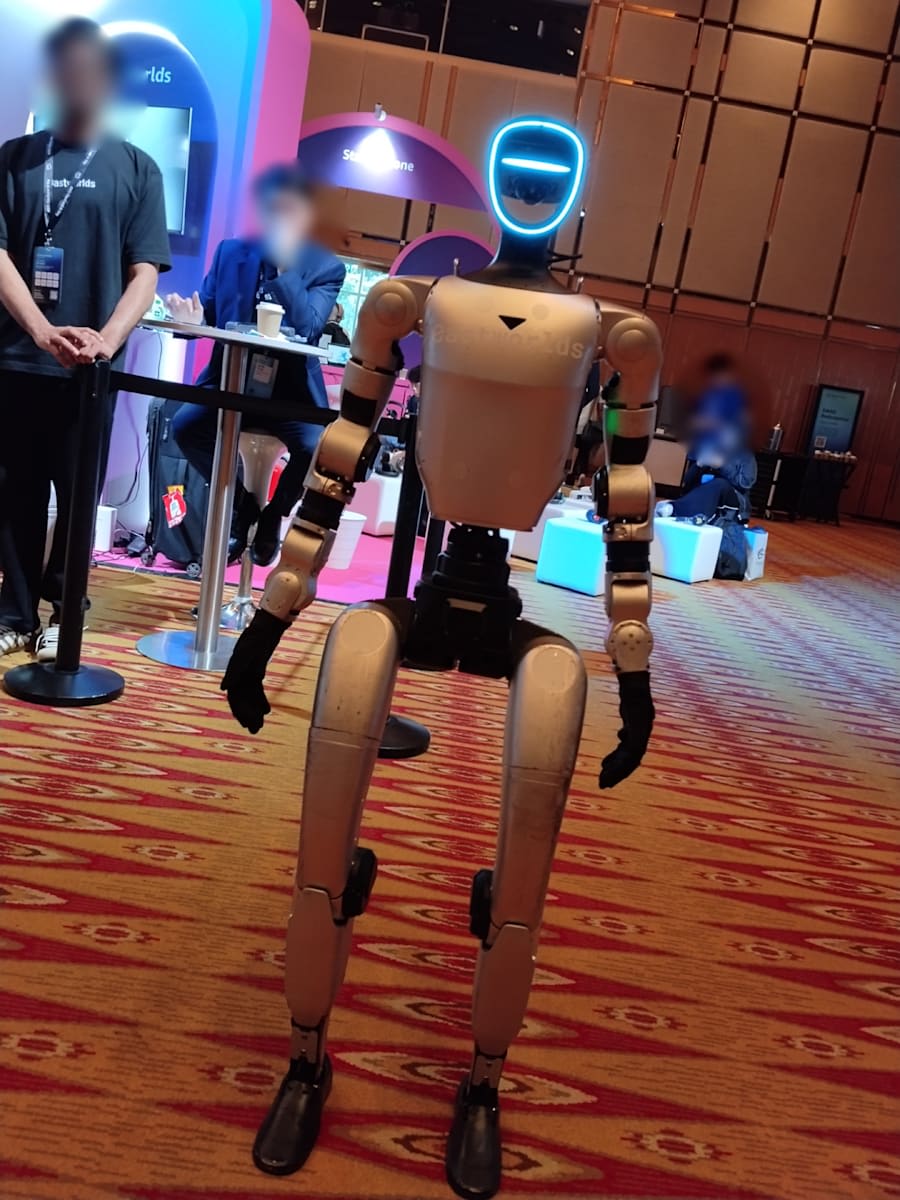
A robot in the another zone. Nothing special, I just took a photo~
Partner company booths. Most of the booths are company booths, like Noventiq and Galactic Network. I visited a few more too, but to be honestly I forgot the details (´・ω・`)
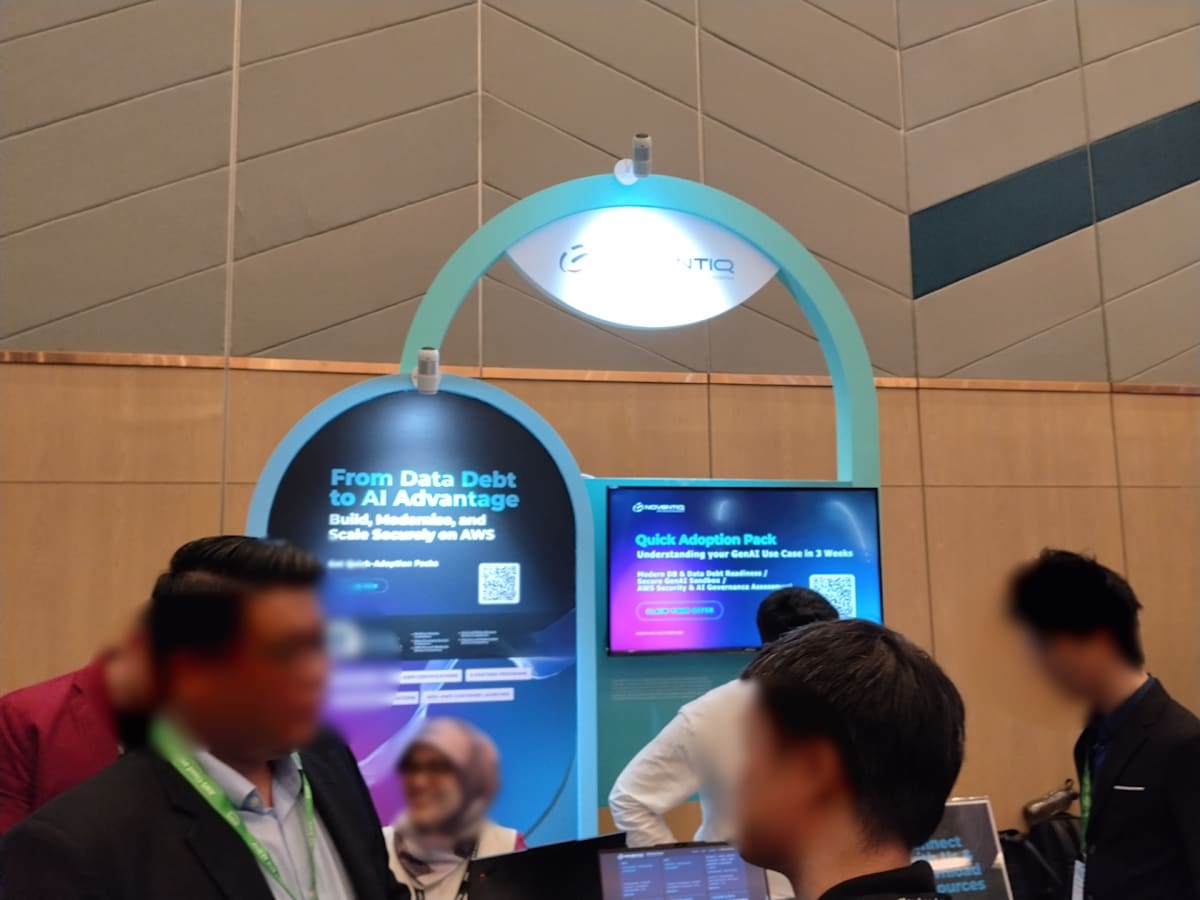
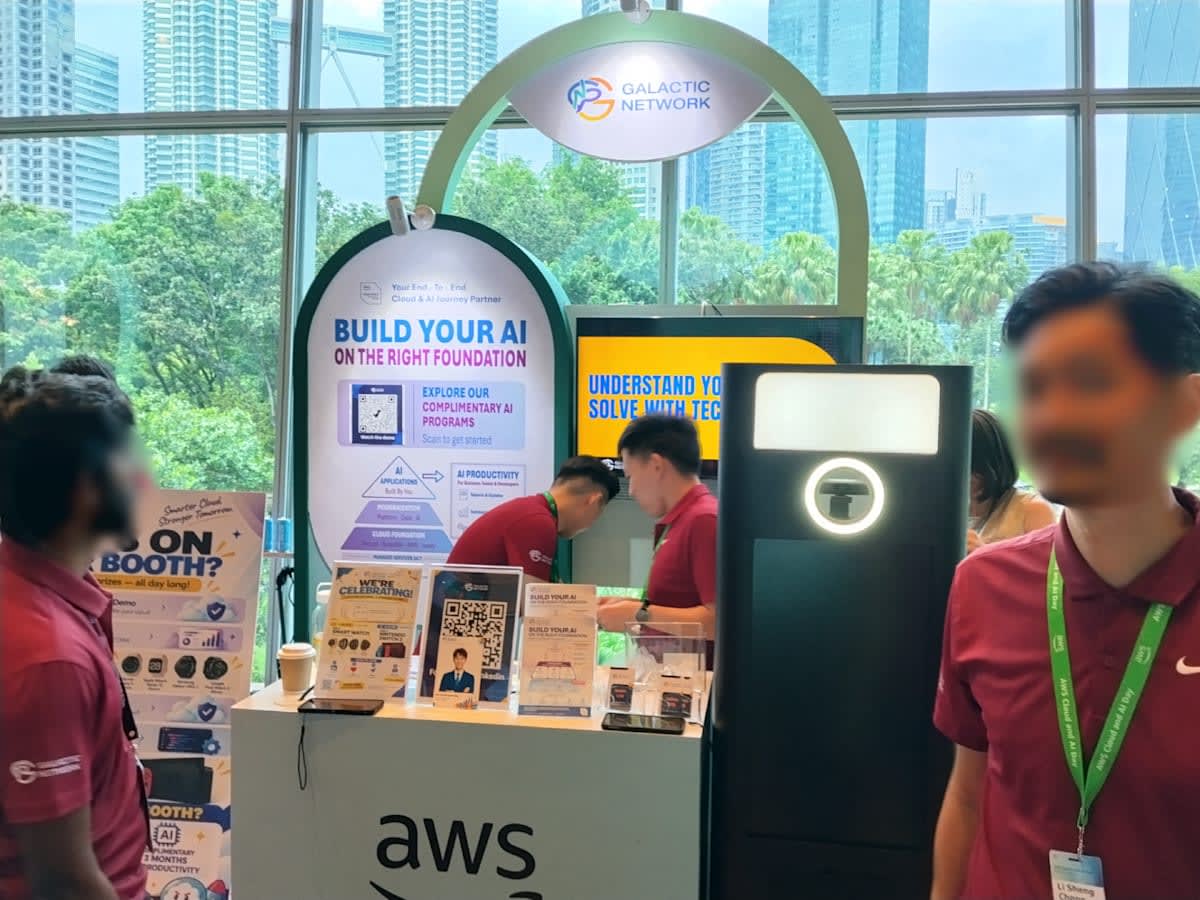
What inspired me most at the company booths is that they showcased their real demos, projects and POCs. It feels different when you see that this kind of solution exists, and that clients actually want it.
Sessions I joined
I joined 2 sessions. This section is about the Kiro one.
Structured Approach to AI coding with Spec-Driven Development on Kiro
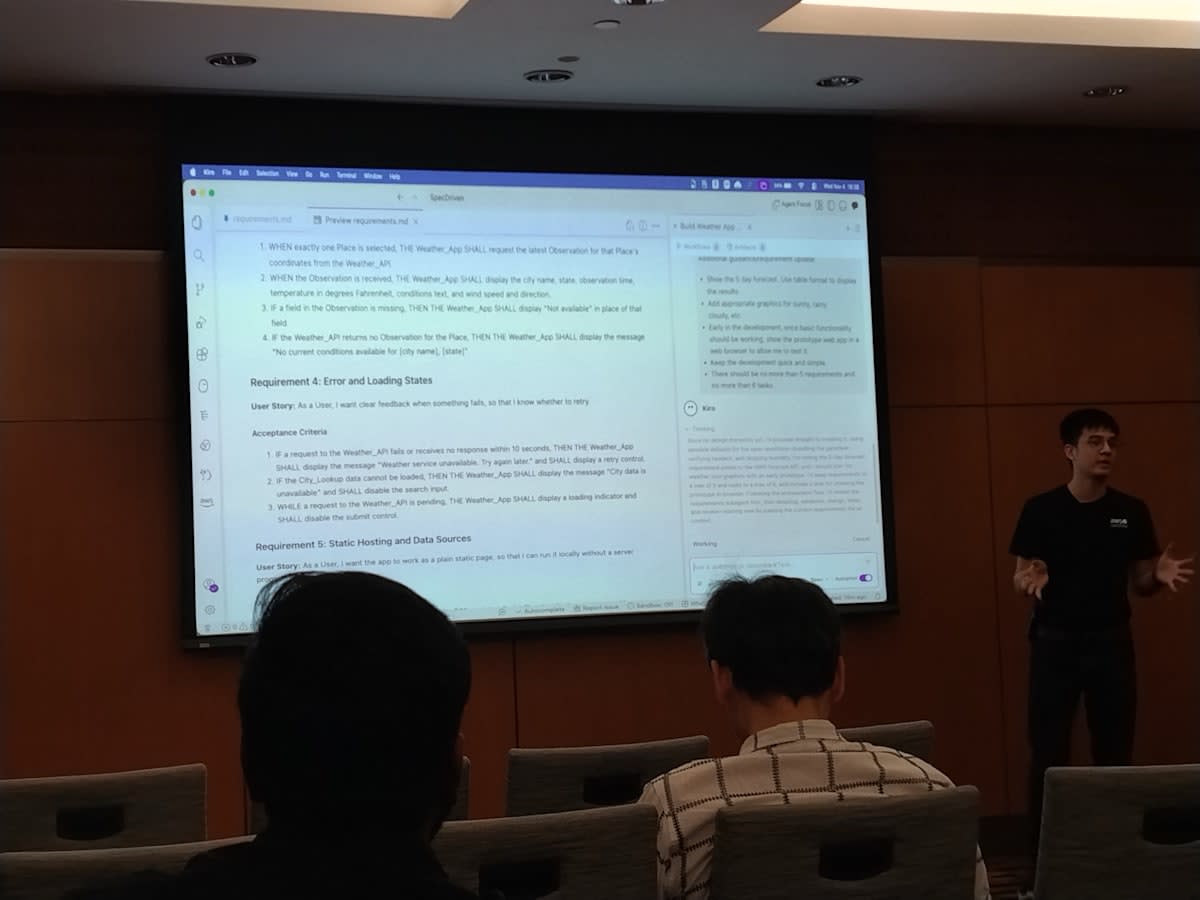
Below is a brief walkthrough of the session:
The intro
- He started by saying that developers nowadays don't only write code. We also do other things, like collecting requirements.
- Then he named the problem developers meet: requirement gathering.
Kiro vs other tools
- He compared Kiro with Codex and Cursor. Other tools just build the code. Kiro discusses the requirement with you first and creates a spec.
- Kiro follows the EARS standard when it writes requirements.
Live demo in Kiro spec mode
- He did a live demo in spec mode with an example case.
- He called the process from spec to code "compile".
- He mentioned that the spec documents Kiro generates can be shared with others, and they can develop from them even without using Kiro.
- He talked about how to choose the model and the effort level.
- He mentioned one limit of Kiro: if you edit the code by hand, the spec doesn't update itself to match.
More features
- He showed how to create a hook in the IDE.
- He showed how to create a steering file in the IDE.
- He talked a bit about orchestration with Kiro Crew, which I am super interested in.
Q&A
- Someone asked how to work with Kiro on a project with many microservices. He suggested one service, one spec.
- Someone asked if Kiro can do reverse engineering. He said he wasn't sure because he never tried it, but he suggested AWS Transform.
If you want to try Kiro yourself, these are my earlier posts:
Talking with the speaker
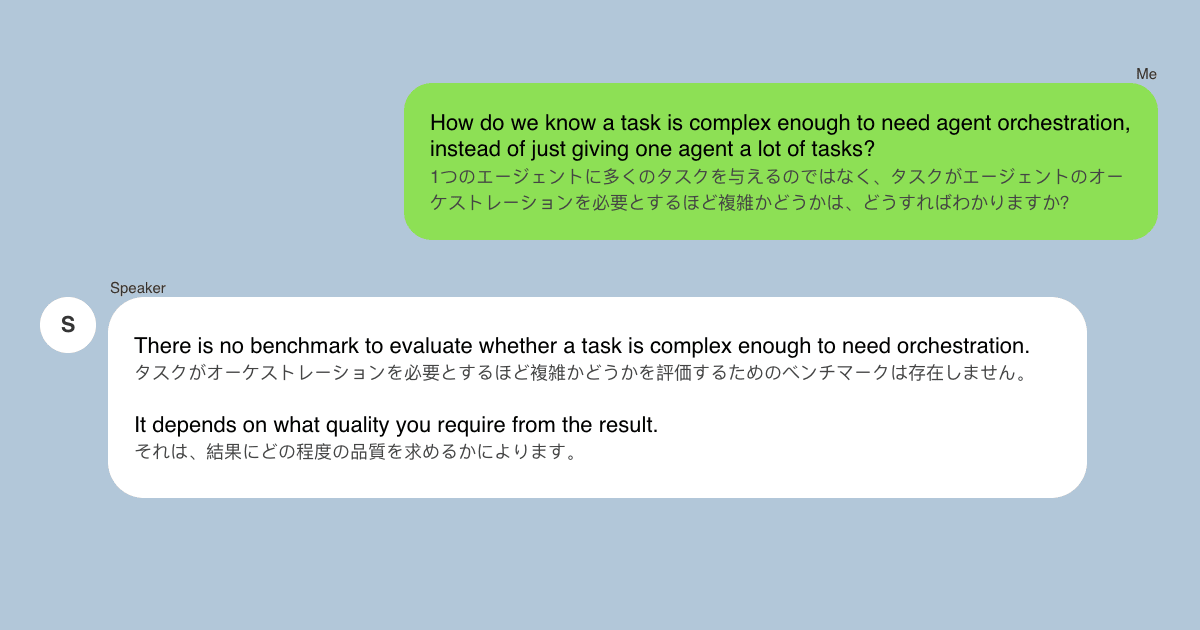
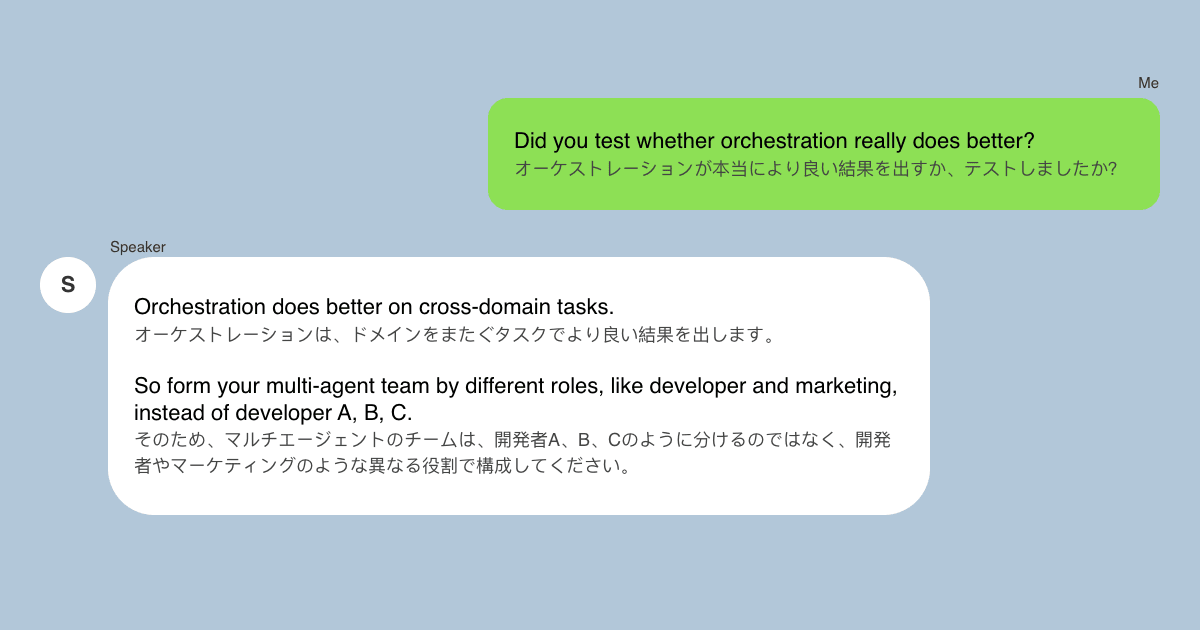
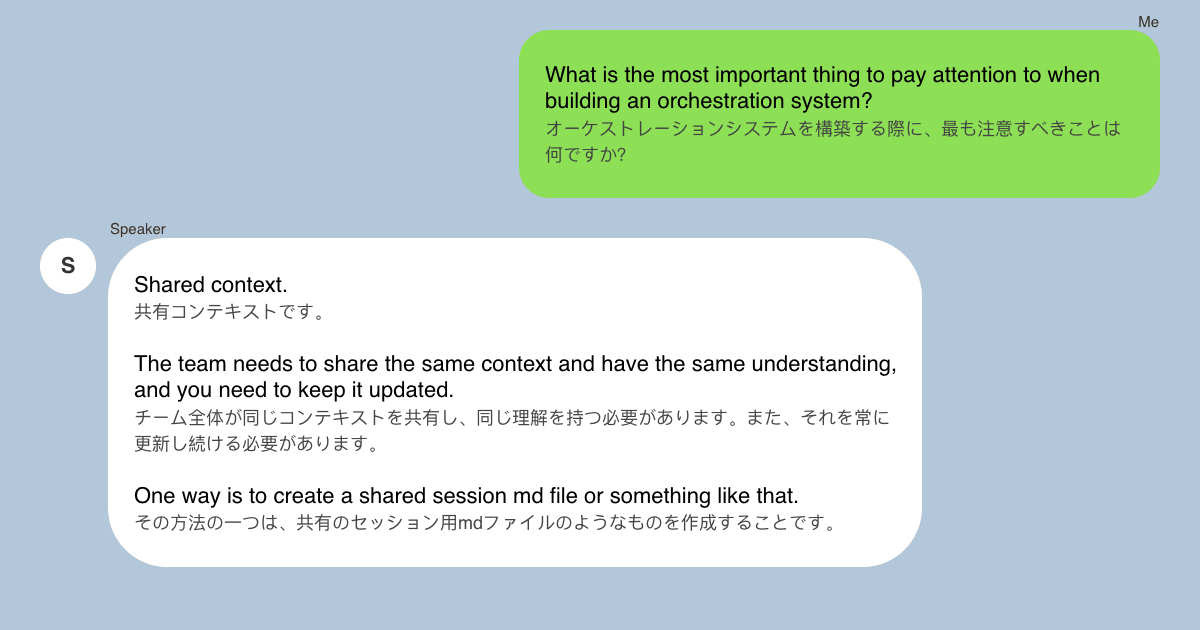
This is the most interesting part of my day! I asked the speaker one question during the session, then went to talk with him after the session and asked two more about agent orchestration.
What I felt
- Too many interesting things, not enough time. There were so many topics and booths that looked interesting, but I couldn't go through all of them!
- Free everything. Admission is free, and after lunch there was unlimited tea and coffee, plus dessert at the tea break. Very nice! (Can't count how many cup of tea i had drank...)
- Well organised. It was a bit crowded, but not packed. I could still walk at normal speed, and there were a lot of friendly staff organising the people.
Closing
My first big AWS event was a very good experience. I came home with a lot of insight, got inspired by the booth demos and the speaker, and learned something about how to give a talk. Hopefully I can master the "Shadow Cloning Jutsu(分身の術)" before next event, so I can see the things I missed~
Thank you for following along until here!
ByeBye~(∠・ω< )⌒★
Extra
Earlier I mentioned that I joined 2 sessions. The other one was Build Advanced AI-powered Search with OpenSearch MCP and Vectors
To be honest, it was too advanced for me and I don't know what they were discussing (;´∀`) What I got from it:
- There is a database search engine called OpenSearch.
- The presenting style, Chalk Talk: the speaker designs and explains the architecture live, using a whiteboard.